in the 1500's and 1600's, sassafras trees were important because they were thought to provide a cure for syphilis
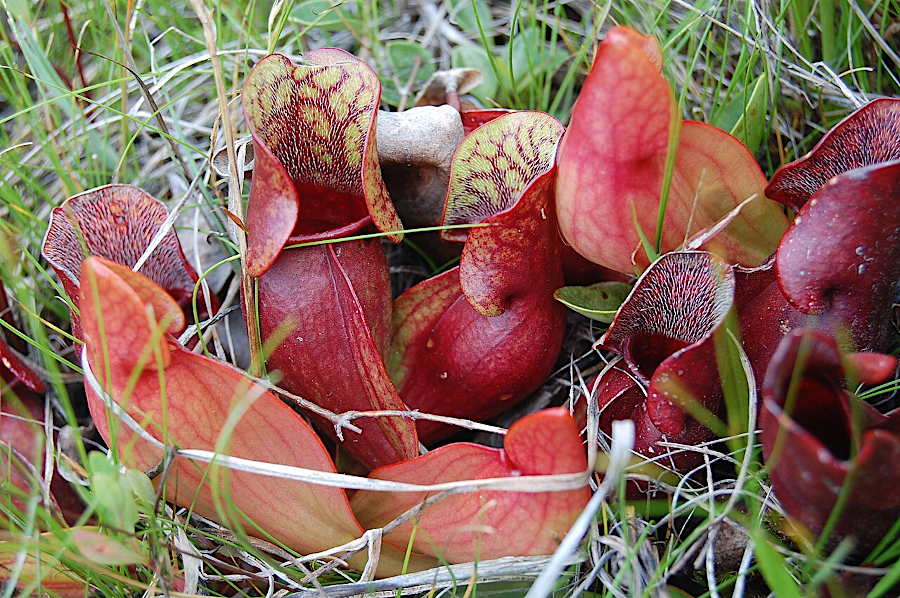
Source: Wikipedia, Sarracenia purpurea
in the 1500's and 1600's, sassafras trees were important because they were thought to provide a cure for syphilis
Source: Wikipedia, Sarracenia purpurea
Four native species of plants in Virginia have evolved to become carnivorous.
The purple pitcher plant (Sarracenia purpurea) lives in bogs and wet areas. Pitcher plants can live for 30 years, producing evergreen leaves annually.
The leaves form a watertight pitcher that traps rainwater and creates a pool at the bottom. Downward-pointing hairs growing on the leaves can capture flies, ants and spiders; even newts and salamanders can become trapped and drown in the pool. However, only about 1% of the animals that explore the pool of water at the bottom of the pitcher get trapped and drown.
Source: National Geographic, These Plants Eat Salamanders
In young plants, drowned animals are dissolved by enzymes released by the leaves. Older plants rely upon bacteria, microinvertebrates, and mosquito larvae in the water to dissolve the carcasses. Pitcher plants use photosynthesis, but the extra nutrition from digested animals is fundamental to the species.1
Other carnivorous plants in Virginia are sundews, butterworts, and the bladderwort.