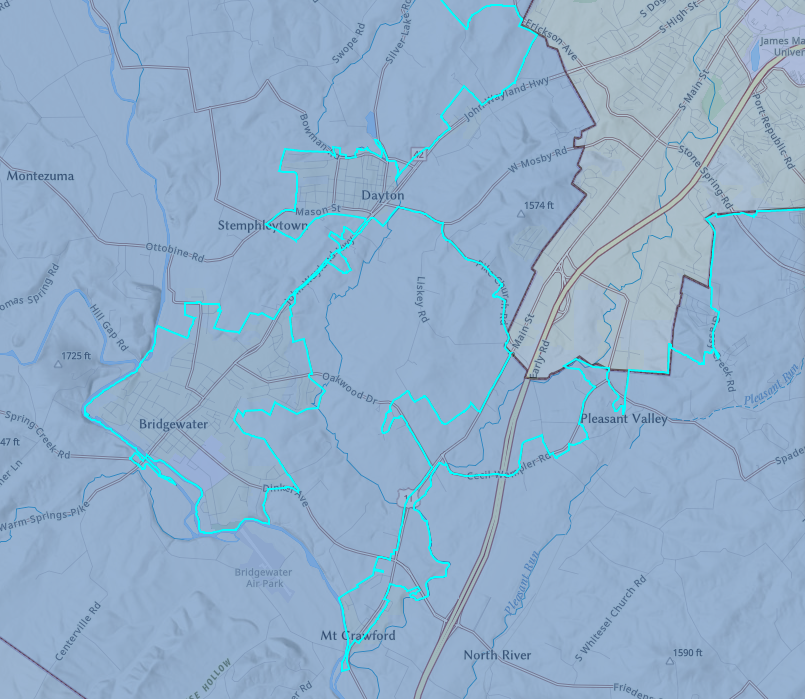
Harrisonburg Electric services territory outside the city limits
Source: Homeland Infrastructure Foundation-Level Data (HIFLD), Electric Retail Service Territories
Harrisonburg Electric services territory outside the city limits
Source: Homeland Infrastructure Foundation-Level Data (HIFLD), Electric Retail Service Territories
Virginia has "municipal" utilities, as well as "investor-owned" utilities and "co-ops." One government authority, a state university, and 14 local governments generate and/or distribute electricity to retail customers:1
The Town of Iron Gate once operated a municipal utility, servicing 227 meters. The town sold it to Dominion Energy in 1986.2
Only three of the state's government-owned utilities (the City of Franklin and the towns of Blackstone and Wakefield) are located east of the Fall Line. Five (the cities of Danville, Manassas, and Martinsville and the towns of Bedford and Culpeper) are in the Piedmont. The remaining eight (the cities of Bristol, Harrisonburg, Radford, and Salem; the towns of Elkton, Front Royal, and Richlands; and Virginia Tech) are located in the Valley and Ridge physiographic province.3
Municipal utilities purchase electricity from investor-owned utilities and distribute it through infrastructure (poles and wires) owned and maintained by the municipal utilities. The utilities also handle the billing and direct dealings with customers.
Some municipal utilities can generate a portion of the electricity they use. Radford built a hydroelectric plant on the Little River in 1934. Initially it produced the majority of the electricity sold by the utility, but as the city's population expanded the percentage shrank to 5%. In 2014, a flood damaged the generator and the city relied completely upon electricity purchased at wholesale prices from Appalachian Power.
City officials decided in 2017 to replace the 80-year old generator and controls. The land occupied by Radford University is tax-exempt, and the city has struggled to generate enough revenue to maintain services. The Radford Electric Department generates significant revenue for the city, and the mayor has stated:4
Richlands started its municipal utility in 1922. The town was created initially by the Clinch Valley Coal and Iron Company, and it launched the Richlands Water, Electric Light, Gas and Power Company in 1891. Five citizens purchased the bankrupt company's real estate in Richlands after the economic recession known as the Panic of 1893, and there were electric lights in town by 1907.5
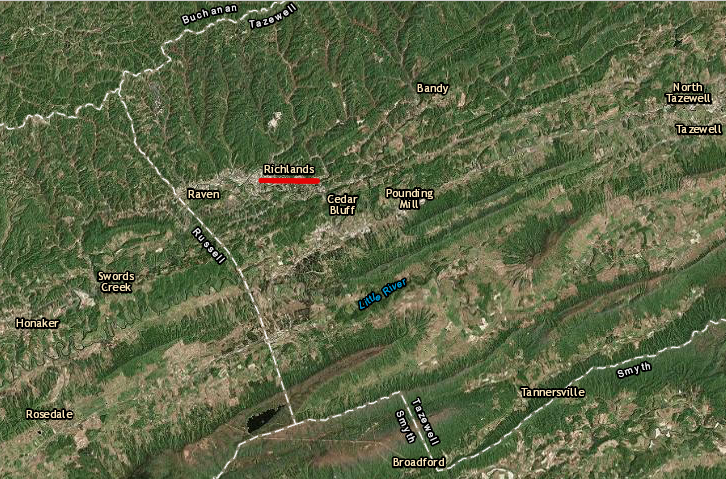
Richlands, at the edge of the Appalachian Plateau, operates a municipal utility that purchases electricity wholesale and distributes it to retail customers
Source: ESRI, ArcGIS Online
The State Corporation Commission (SCC) does not regulate the rates of municipal electric utilities, so they are "non-jurisdictional" utilities. If customers of municipal electric utilities feel rates are too high, they can campaign for City Council/Town Council candidates who will lower the rates. Customers have no option to appeal to the State Corporation Commission for rate relief.
Municipal utilities got started in different ways.
Manassas built a small dam on the Occoquan River to provide electricity to the rural town, after the utility in Alexandria refused to extend its lines to serve such a distant area. Today, sprawl has incorporated Manassas into Northern Virginia's megalopolis - but the city still owns the distribution facilities to provide power to residents. The city purchases power at wholesale rates, and the pricing system is designed to discourage high demand for short periods of time. Coal and nuclear generating plants run more efficiently when producing power at a steady rate, so the price for "base load" power is set relatively low compared to the cost for "peak rates" of high, but short, demand.
The city now uses a series of gas turbines to generate its own power at times of peak demand, typically on hot summer afternoons. The gas generators are expensive to operate, but they run only for short periods of time. The cost for the capital investment and operations of the gas turbines is still cheaper than paying a higher base rate throughout the year to the primary supplier (Dominion).
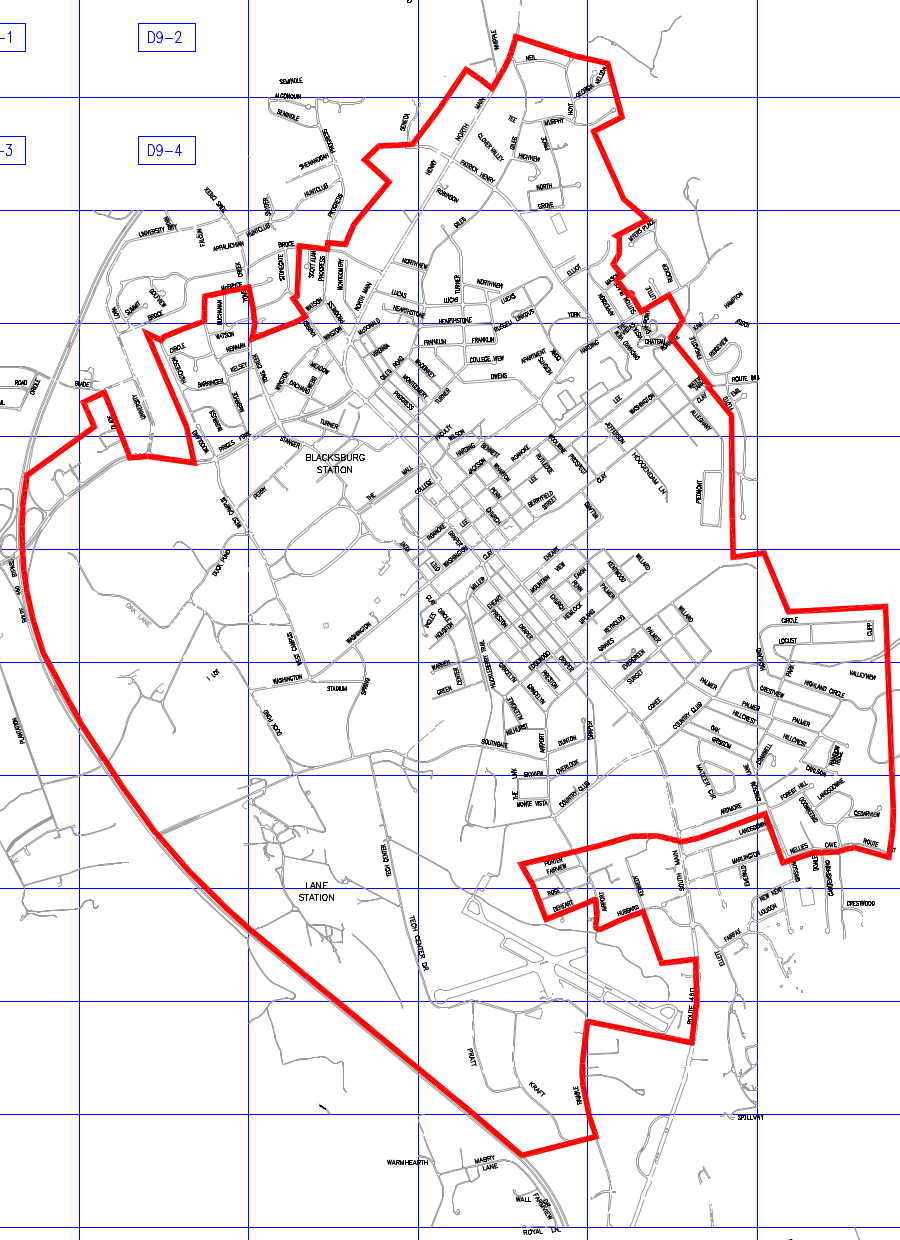
Virginia Tech provides electricity from the Virginia Tech Montgomery Executive Airport to the northern end of Blacksburg
Source: Virginia Tech Electric Service, Know if I'm eligible for service?