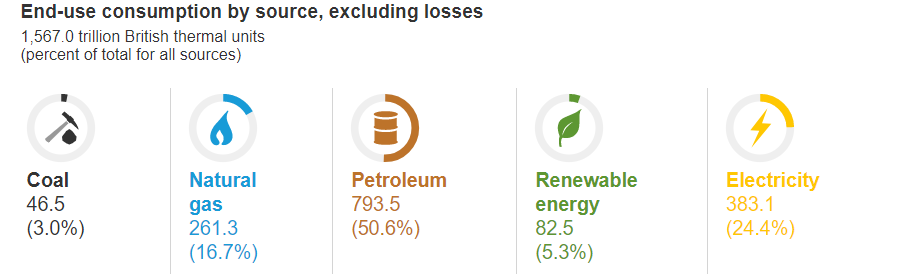
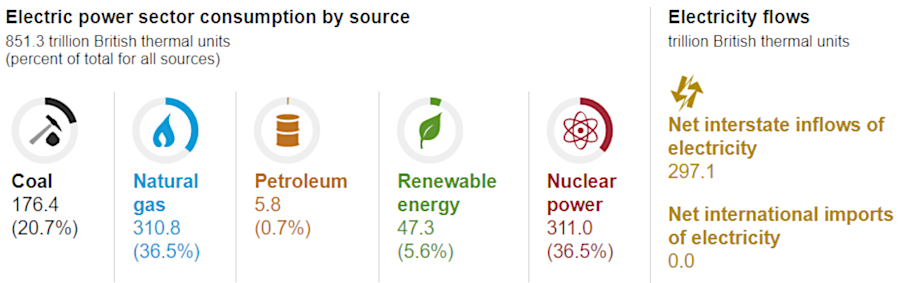
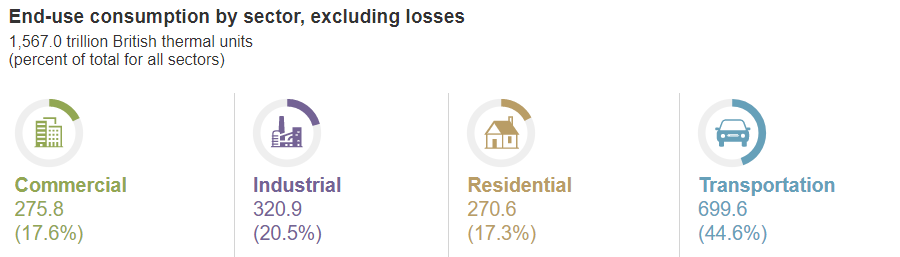
estimates of 2016 end-use energy consumption in Virginia
Source: US Energy Information Administration, Virginia overview
estimates of 2016 end-use energy consumption in Virginia
Source: US Energy Information Administration, Virginia overview
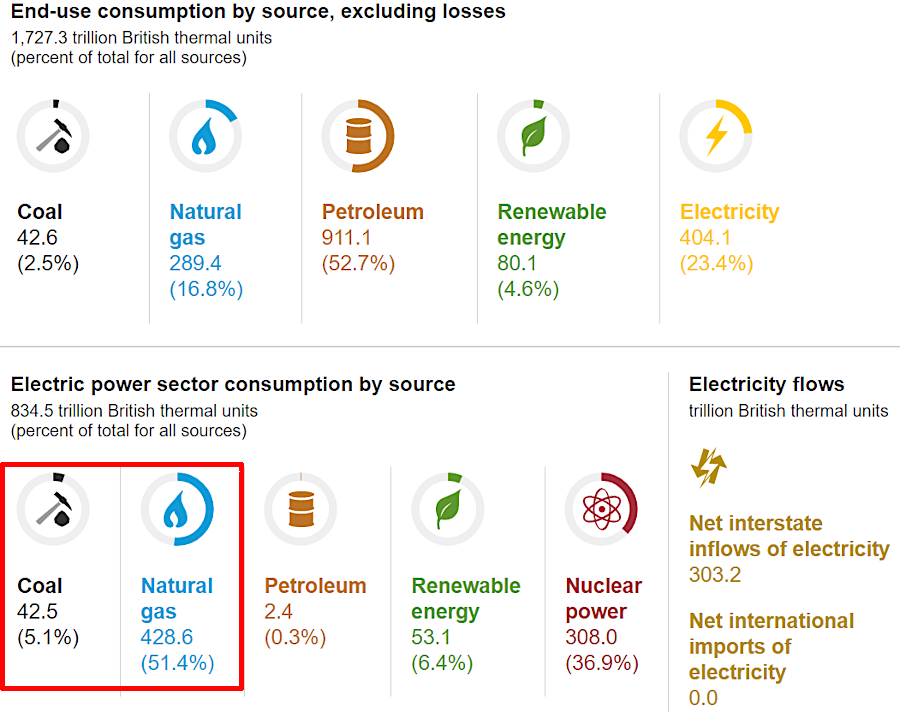
estimates of 2019 energy in Virginia showed natural gas replacing coal for electricity generation
Source: US Energy Information Administration, Virginia overview
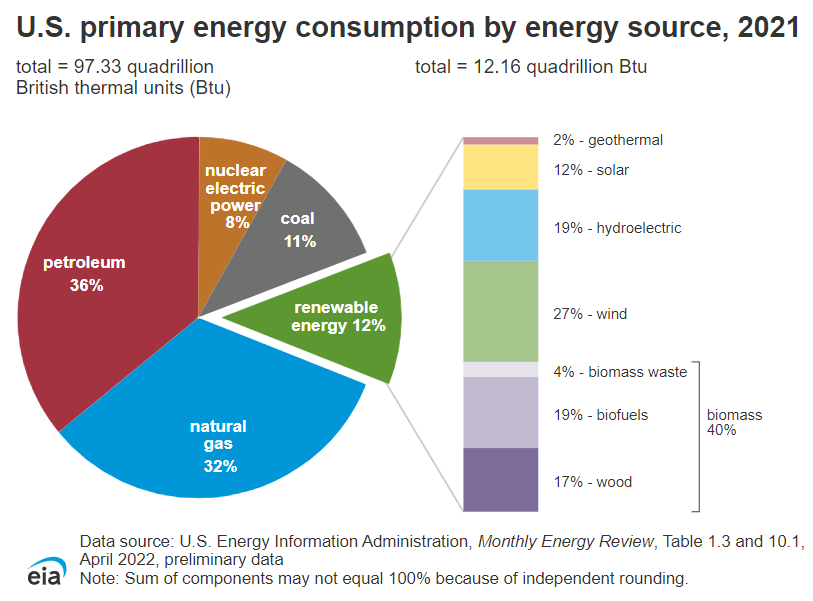
in 2021, natural gas and petroleum provided over 2/3 of the energy used in the entire United States
Source: US Energy Information Administration, U.S. energy facts explained
Virginia exports massive amounts of West Virginia coal, and some coal mined in Virginia, through the CSX terminal at Newport News and the Norfolk Southern terminal at Lamberts Point in Norfolk. Virginia coal mines in the southwestern edge of the state also send coal south by railroad for export through the port at Charleston, South Carolina. Most exported coal is metallurgical ("met") coal, and is converted to coke before being used to smelt steel.
Virginia coal used domestically is typically carried by train to power plants on the Ohio River. It is thermal coal, burned to generate steam that spins turbines and dynamos creating electricity.
Despite the coal production, Virginia is a net importer of energy; the state is not self-sufficient for petroleum, natural gas, uranium, or electricity:1
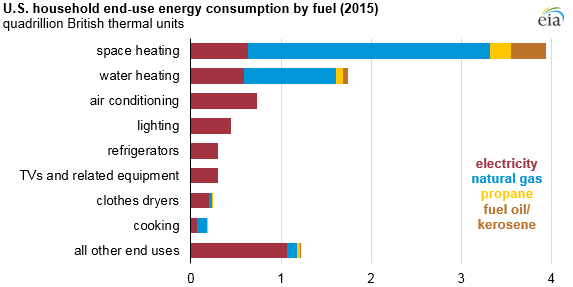
inside houses, most energy is used to heat/cool rooms and water
Source: US Energy Information Administration, Space heating and water heating account for nearly two thirds of U.S. home energy use
The state even imports coal to fuel power plants generating electricity at some industrial facilities, and to generate heat/steam (including on the campus of Virginia Tech). Much of the imported coal comes from nearby West Virginia. Low-sulfur coal is imported from as far away as the Powder River Basin in Wyoming so coal-burning facilities can meet air quality standards.
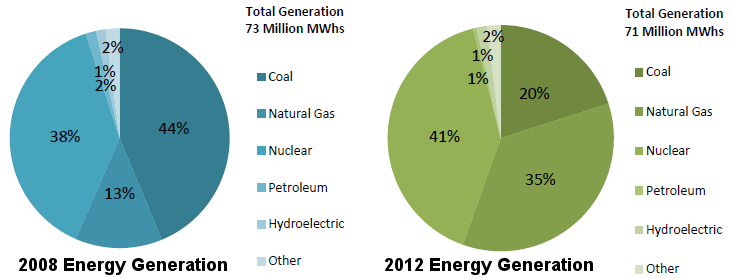
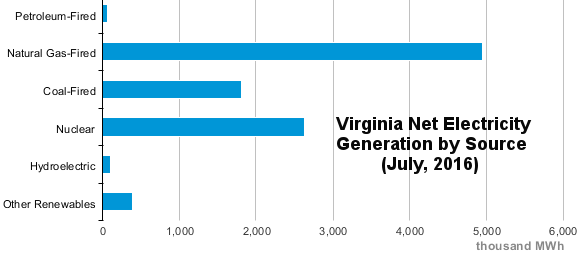
Virginia is shifting away from generating electricity by coal and towards use of natural gas - but use of renewable energy sources remains minor
Source: 2014 Virginia Energy Plan and US Energy Information Administration, Profile Overview
Statistics about energy are hard to comprehend and may not appear to be consistent if you confuse "energy" with "electricity." About 55% of total energy used in Virginia is imported from outside the state's borders - and most of that is gasoline/diesel used for transportation and natural gas used for heating/manufacturing/generation of electricity. Only 37% of the state's electricity is imported, in part because the state has four commercial nuclear reactors (two each at North Anna and at Surry).
According to the 2014 Virginia Energy Plan:2
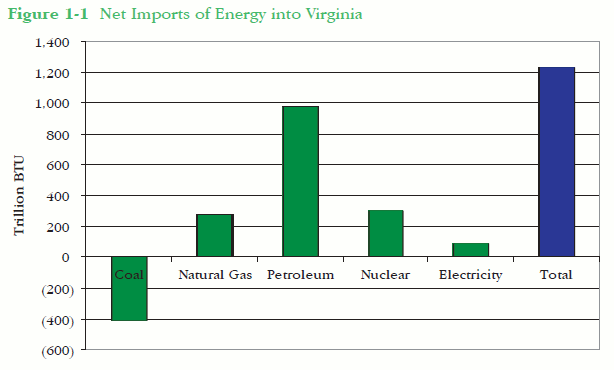
Virginia exports more coal than it imports, but the state is not "energy independent."
Virginia is dependent upon other states/nations for natural gas, petroleum, nuclear fuel, and even electricity.
Source: (Figure 1.1 in 2007 Virginia Energy Plan)
Other characteristics of energy in Virginia:3
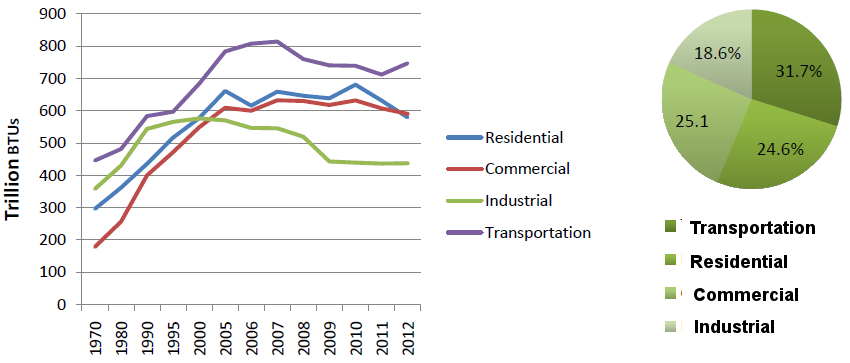
energy use by sector in Virginia
Source: 2014 Virginia Energy Plan
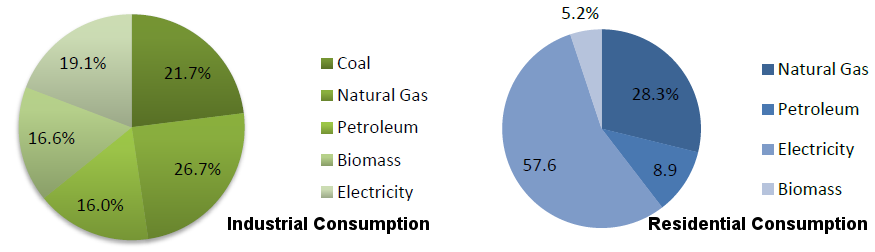
coal is rarely used now in the residential sector for heating, but is still used at factories for heat/steam
Source: 2014 Virginia Energy Plan
Liquid oil production in the state is very limited - there are just two tiny oil fields (Ben Hur and Rose Hill) in Lee County, plus liquids from natural gas production in the Roaring Fork field in Wise County. Oil production is too small to justify a wide network of wells with pipelines connecting them. Instead, oil is pumped from underground, stored in metal tanks at each well, and collected by trucks that drive to each well.
Virginia also produces substantial amounts of natural gas, especially methane (CH4) from coal seams that are too thin/too deep to mine for the coal. Expansion of coalbed methane production in Buchanan and Dickenson counties has driven the increase of in-state production.4
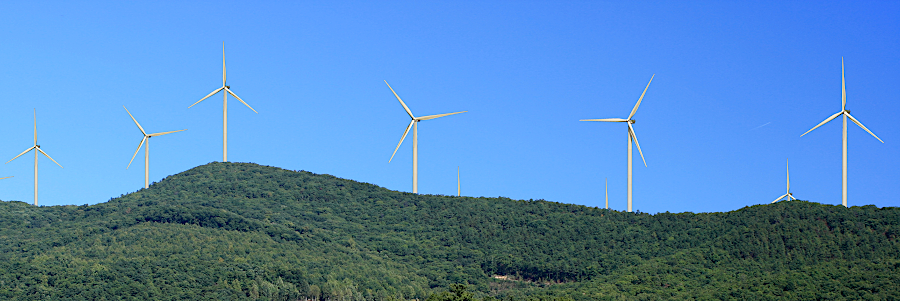
wind turbines on mountain ridges alter the scenic landscape
Source: Apex Clean Energy, Rocky Forge Wind
The coal-bed wells are "fracked" to stimulate production, but the process involves pumping nitrogen gas into the geologic formations rather than vast quantities of water. Gas is trapped inside shale formations in Rockbridge County and in the Taylorsville Basin northeast of Fredericksburg, but the cost to extract that gas has been too high to justify development. In addition, local opposition to shale gas development is clear, and the risk of adverse zoning decisions could also be a deterrent.
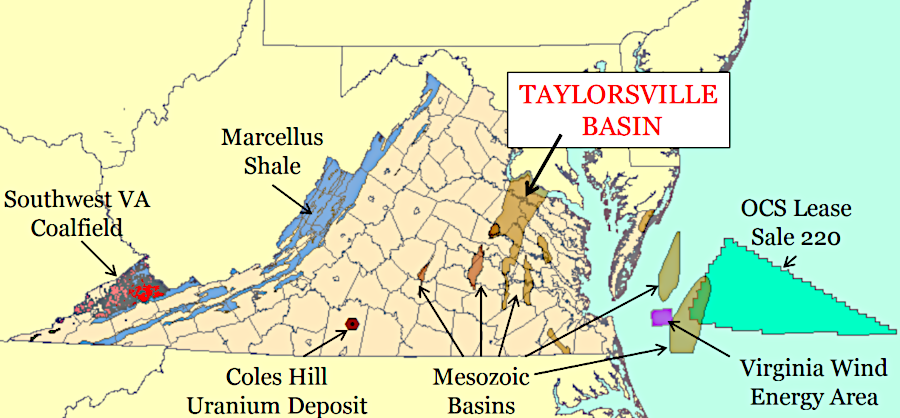
the state geologist identified "Some Potential Future Energy Resources" in 2014 - and at that time, omitted solar
Source: Virginia Department of Mines, Minerals and Energy, Potential Natural Gas Drilling in the Taylorsville Basin: Geology, Regulations, and Resource Protection
Though coalbed methane production will increase in the Appalachian Plateau, Virginia will always be a net importer of oil and gas as long as cars and trucks use an internal combustion engine powered by gasoline/diesel.
Virginia is also a net importer of electricity, even though that fuel is rarely used in the transportation sector. Electricity is produced in only a handful of locations in Virginia, but a complex distribution system of power lines built in the last 80 years carries it to virtually every house in the state.
For years, Dominion Energy has included in its annual Integrated Resource Plan an assumption that electrical demand will continue to grow, so the utility needs to build new power plants. The increased efficiency of appliances and improved insulation of houses has been offset in part by the increased use of electricity per capita due to electronic equipment such as computers, and Virginia's total population has been steadily increasing. Even if electricity use per capita declines, Dominion Energy has assumed that the increased number of consumers justifies increased investment in new power plants.
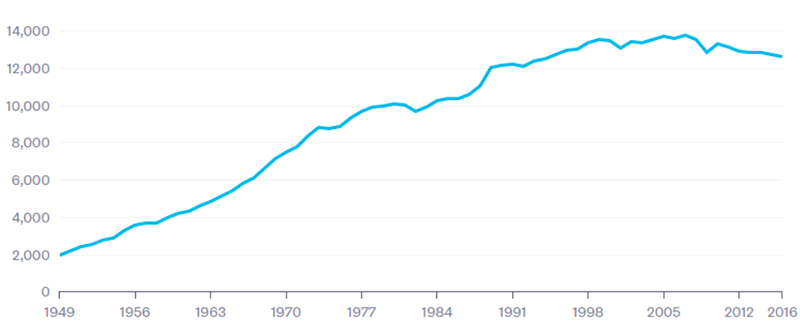
since the start of the 21st Century, per capita electricity generation in the United States (measured in kilowatt-hours) has been dropping
Source: Bloomberg, The De-Electrification of the U.S. Economy (April 12, 2017)
Starting in 2017, the two major investor-owned utilities in Virginia identified solar power plants as a major future source of electricity generation. In previous years, the utilities were reluctant to commit to renewable energy, citing concerns regarding the ability of the grid to distribute electricity generated only intermittently by sun and wind. The Eastern Renewable Generation Integration Study concluded in 2016 that the grid can accommodate up to 30% wind and solar/photovoltaic (PV) power, and the low cost of solar spurred reconsideration of that source.5
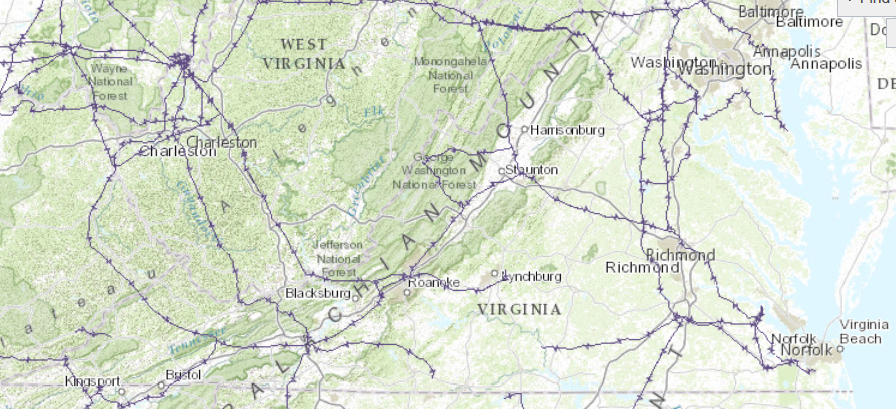
high voltage transmission lines greater than 345 kilovolts carry energy from power plants west of the Blue Ridge to population centers, especially from Washington to Norfolk (note the absence of such lines on the Eastern Shore and in the Piedmont)
Source: U.S. Energy Mapping System
In Virginia, the State Corporation Commission has regulated electrical utilities since 1914. Virginia attempted to deregulate utilities in 2003-2008, allowing customers to choose their energy supplier. That effort ended after deregulation failures in other states, especially California, caused market imbalances and excessive peaks in prices charged to customers.6
One result of re-regulation was that Dominion Energy was able to invest in multiple facets of the energy marketplace, and design its investments to maximize profits. The utility got State Corporation Commission approval to build new power plants fueled by natural gas, increasing demand for that fuel substantially in areas where gas pipelines were limited. Dominion then proposed to build the Atlantic Coast Pipeline. The transmission of natural gas is also regulated, but that business is even more profitable than generating/distributing electricity.7
Both physics and government regulations shaped where power plants and power lines were built in Virginia. If you look at Virginia as an economic geographer, you will discover patterns of human activity and resource allocation that can be mapped or related to locations. The geography of electricity - the primary form of energy used in the state, other than for automobiles - stimulates such questions as:
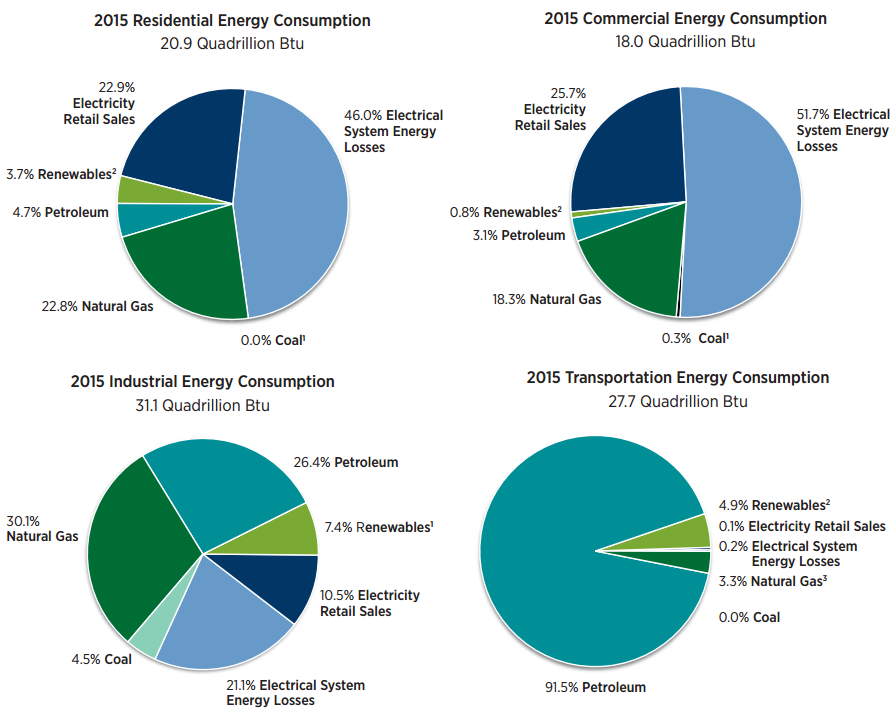
national statistics show that petroleum remains the dominant fuel in the Transportation sector
Source: US Department of Energy, 2015 Renewable Energy Data Book (U.S. Energy Consumption)
Some industrial plants and large organizations co-generate steam and electricity at their facilities. Virginia Tech has used its coal-fired power plant to supply power for both the campus and local customers since 1890. A few waste-to-energy incinerators burn garbage and create electricity at the same time, such as the facility in southern Fairfax County at Lorton.
There are even a few back-to-the-earthers living in Floyd County and other rural locations in Virginia (plus off-the-grid owners of some very expensive homes in Loudoun County) who generate their own electricity through solar power or small Pelton wheels in the creeks. However, most Virginians rely upon the grid of power lines to deliver electricity generated somewhere else to their house or business.
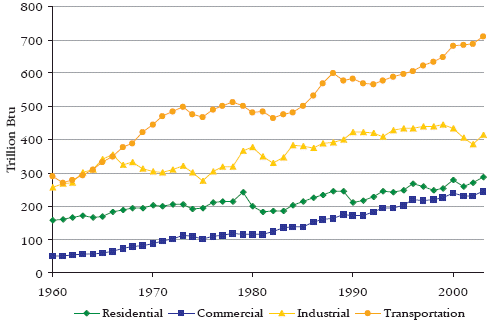
Virginia energy use trends, 1960-2003
Source: Figure 1-4 in Virginia Energy Plan (2007)
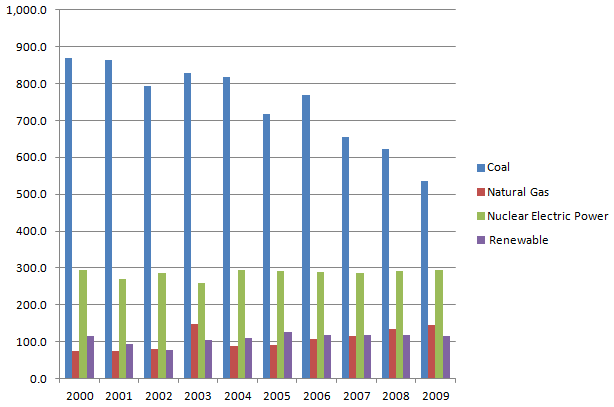
Energy Production Estimates in Trillion BTU, Virginia, 2000-2009
Source: US Energy Information Administration, State Energy Data System - Virginia
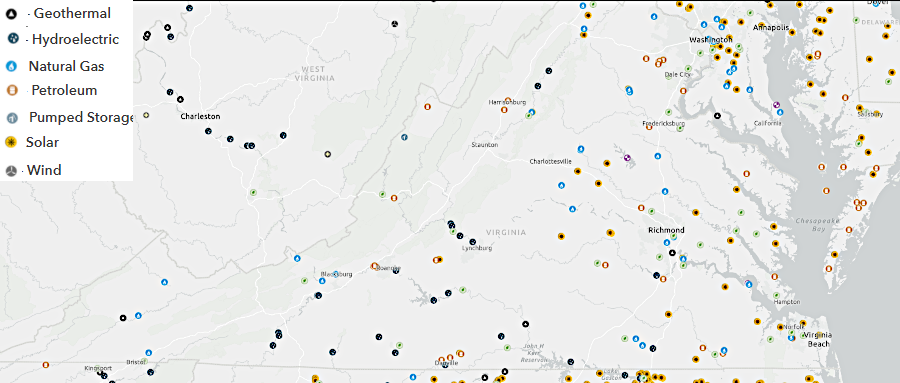
Virginia had a variety of energy-generating facilities in 2020
Source: US Energy Atlas, Potential Energy Disruptions from Hurricanes, Cyclones and Typhoons
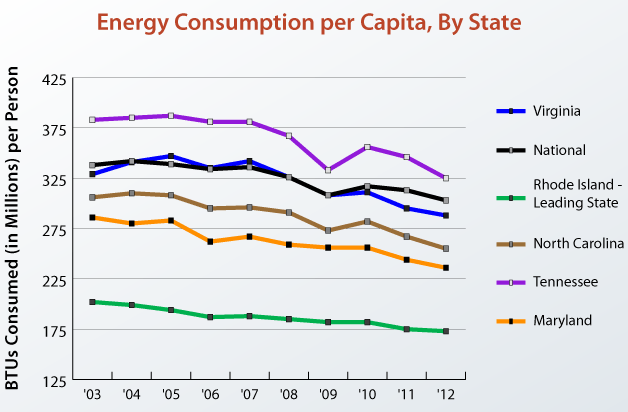
annual energy consumption per person in Virginia is below the national average and declining as cars, appliances, and various buildings become more energy efficient
Source: Virginia Performs, Energy
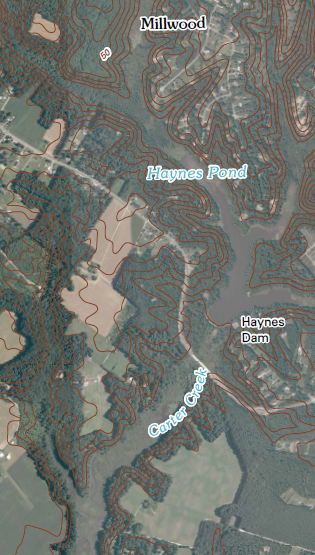
dams on Carter Creek in Gloucester County have provided waterpower for mills to grind grain into flour since colonial times
Source: US Geological Survey (USGS), Clay Bank 7.5x7.5 topographic quagrangle (2010)
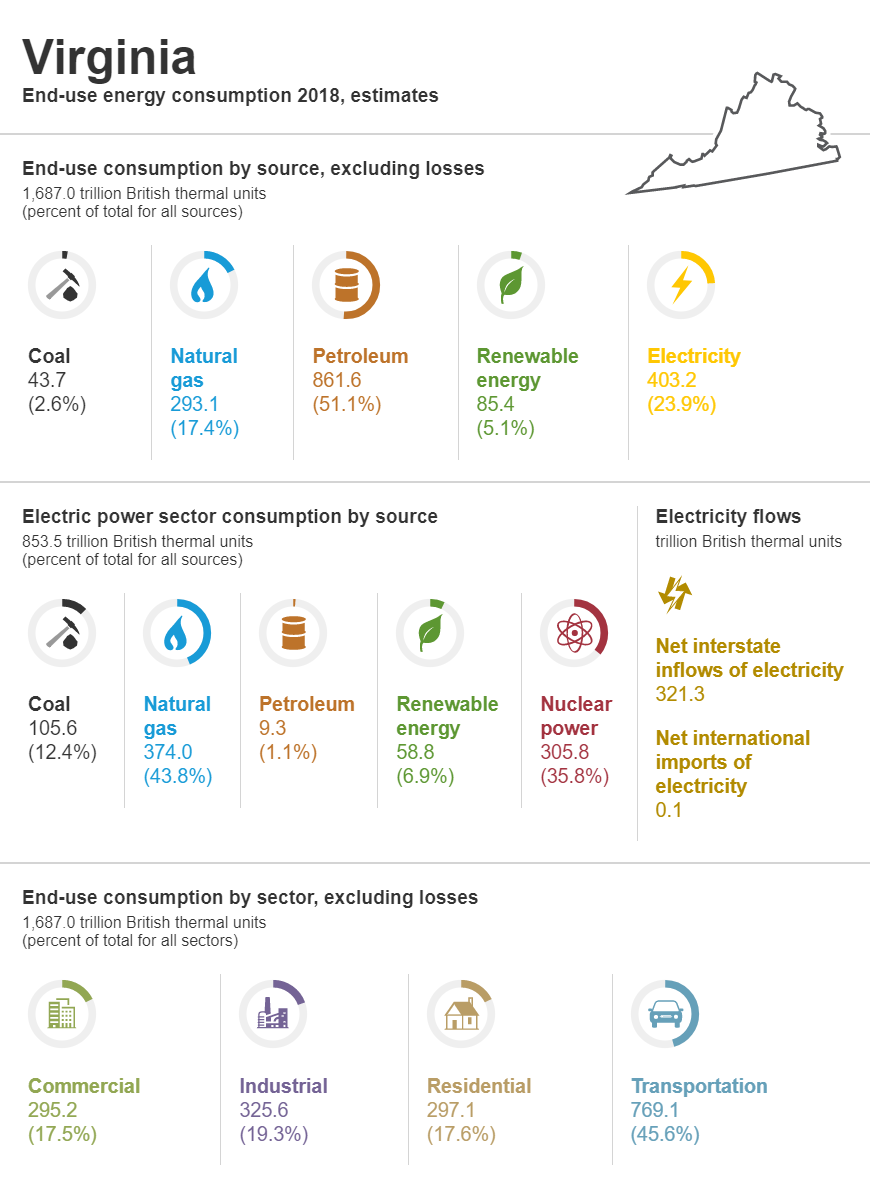
estimates of end-use energy consumption in 2018 reveal the continuing decline of coal
Source: US Energy Information Administration, Virginia overview