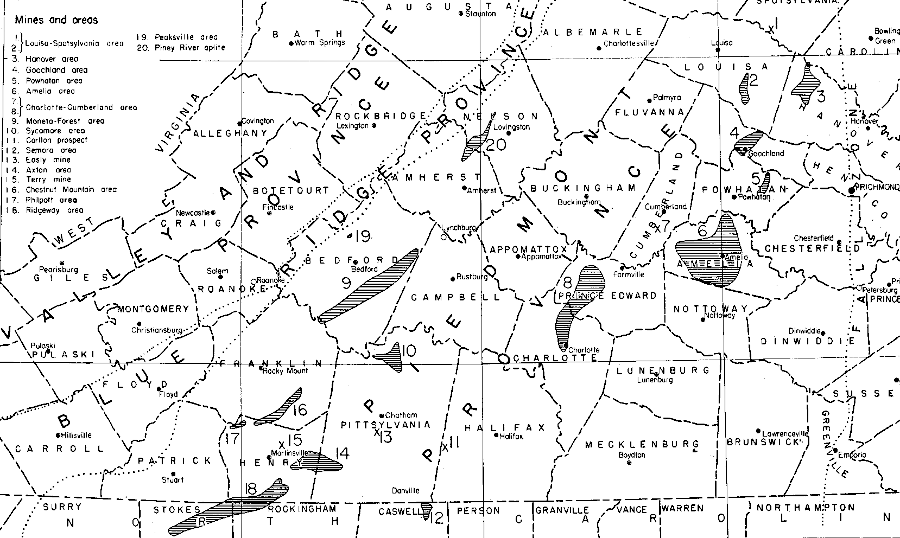
known mica and feldspar deposits in Virginia in 1962
Source: Virginia Energy, Mineral Resources Report 003: Mica and Feldspar Deposits of Virginia (Figure 1)
known mica and feldspar deposits in Virginia in 1962
Source: Virginia Energy, Mineral Resources Report 003: Mica and Feldspar Deposits of Virginia (Figure 1)
Mica crystallized within the granite and schist of island arcs that were accreted to the edge of the North American continent during the Taconic, Neo-Acadian, and Alleghanian orogenies as the supercontinent Pangea formed. The silicon, oxygen, and aluminum atoms crystallized in parallel layers that are weakly bonded to each other. Most often in prgmatites, crystals can grow into sheets or "books" more than a foot long in which the layers can be split easily.
Biotite, chlorite, and muscovite minerals decompose into secondary mica as ions move during the processes of weathering. Mica decomposes further into kaolinite clay.
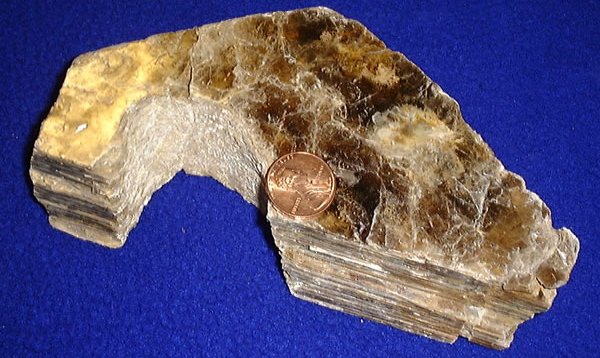
mica crystallizes into layers which can be split easily into sheets of translucent rock
Source: U.S House Subcommittee on Energy and Natural Resources, Minerals and Materials Photo Gallery
Erosion has carried flakes of mica downstream for hundreds of millions of years. Those flakes have been incorporated into Piedmont and Coastal Plain clays and sedimentary formations.
The early Europeans explorers were disappointed to realize that the shiny, glittering grains they saw in mineral samples were flakes of mica rather than gold. In North Carolina's Blue Ridge, the Sink Hole Mine may have been producing mica when Hernando de Soto marched through the area in 1540. Shiny materials such as mica and copper were rare in Virginia prior to the arrival of European colonists, so the mica was probably produces as a prestige good to be traded to the Native American elites.
John Lederer discovered some "Isinglas" (mica) in 1669 at the headwaters of the Pamunkey River:1
Mica ("isinglass") was originally used for windows and peepholes in stoves and in lamps, since it was both translucent and heat resistant. After the Civil War, the mineral was especially valued for its electrical insulating characteristics.
As described in a 1962 report:2
In Virginia, commercial mining of mica began in the 1880's and lasted until the end of World War II. Most of those mines were located in the Piedmont physiographic province. In the Blue Ridge of North Carolina, the Spruce Pine Mining District was particularly productive.3
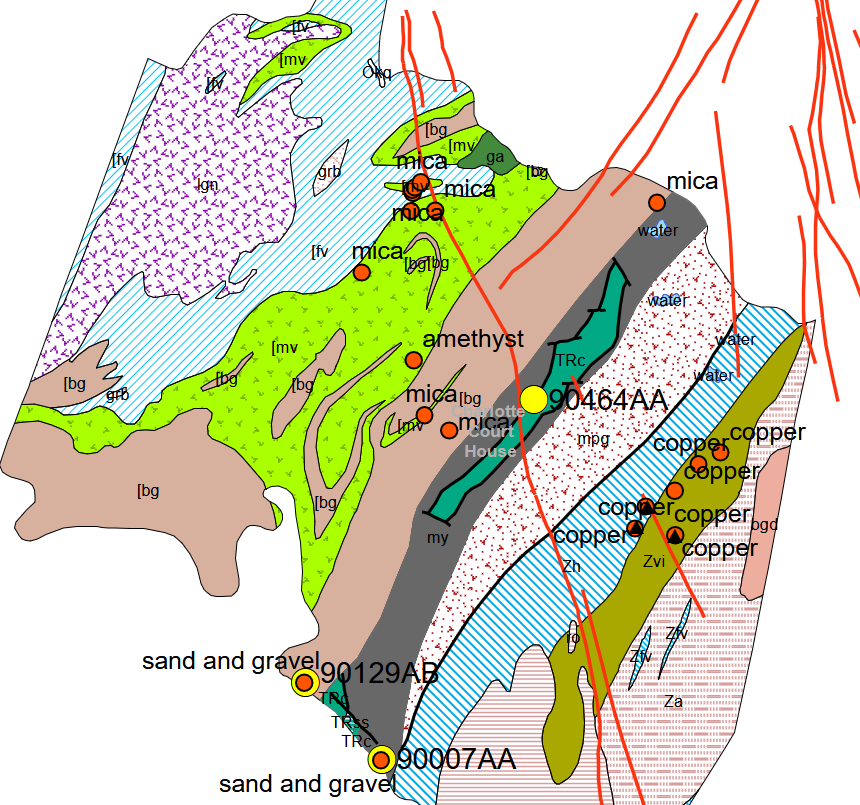
the Henry Moore and Vassar mines in Charlotte County produced mica when demand peaked during World War II
Source: Virginia Energy, Mineral Resources and Industries in Charlotte County, Virginia