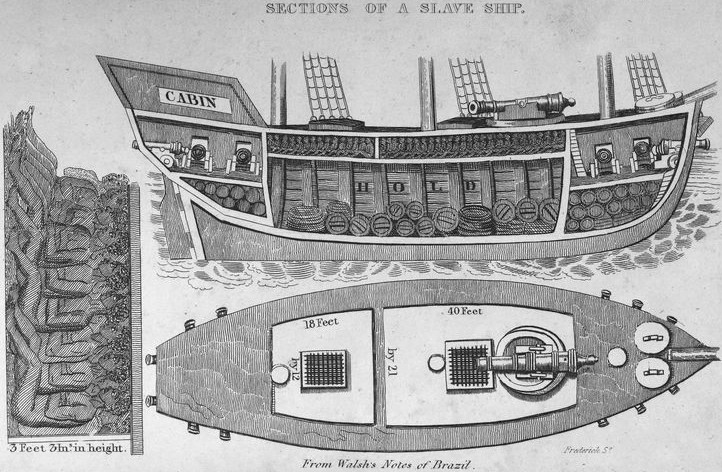
slave ships packed humans into holds just below the deck, for a miserable trip across the Atlantic Ocean
Schomburg Center, New York Public Library, Sections of a Slave Ship, from Walsh's notes of Brazil
slave ships packed humans into holds just below the deck, for a miserable trip across the Atlantic Ocean
Schomburg Center, New York Public Library, Sections of a Slave Ship, from Walsh's notes of Brazil
Portugal established the first trading posts in the western coast of Africa for exporting people as merchandise to Europe. After Spain colonized the Caribbean and then Central America, the royal government issued a license authorizing import of enslaved people from Africa. That license, known as the "asiento," enriched the crown and helped manage the number of imported people to Portugal and other European countries.
The first Africans were brought to the Western Hemisphere primarily by Portuguese and Spanish slave ships. They were delivered to colonies in Brazil, Central America, and the Caribbean islands throughout the 1500's and 1600's.
English privateers and pirates began seizing people from Portuguese slave ships in the 1560's. The stolen "property" was sold to Spanish buyers in the Caribbean. The English acquired the asiento in 1713 as one of the deals to end the War of the Spanish Succession.1
Even though King James I signed the Treaty of London and ended the Anglo-Spanish War in 1604, the Spanish anticipated that the Jamestown colony would be used for privateers and pirates to seize Spanish ships. Such captures created an immediate return on investment for English sea captains, their crews, and the investors who financed the expedition. In contrast, colonial settlement in North America - where there were no societies such as the Aztec and Inca from which to steal accumulated gold and silver - would be marginally profitable.
In 1619 the Earl of Warwick obtained a letter of marque from the Due of Savoy that qualified him to send a privateer out to capture Spanish ships. The earl and Virginia's deputy governor, Samuel Argall, both invested in sending the Treasurer from Jamestown. The letter of marque was outdated because the war between the Duke of Savoy and Spain had ended, but Governor George Yeardley did not object to use of the colony by an investor seeking a quick profit.
The Treasurer partnered with a Dutch vessel, the White Lion, which had a letter of marque from Prince of Orange. In late July or early August, 1619, the two privateers seized a ship in the Caribbean that was delivering Africans to become enslaved, the Sao Joao Bautista. It was transporting people from the kingdom of Ndongo (today part of Angola) to Vera Cruz.
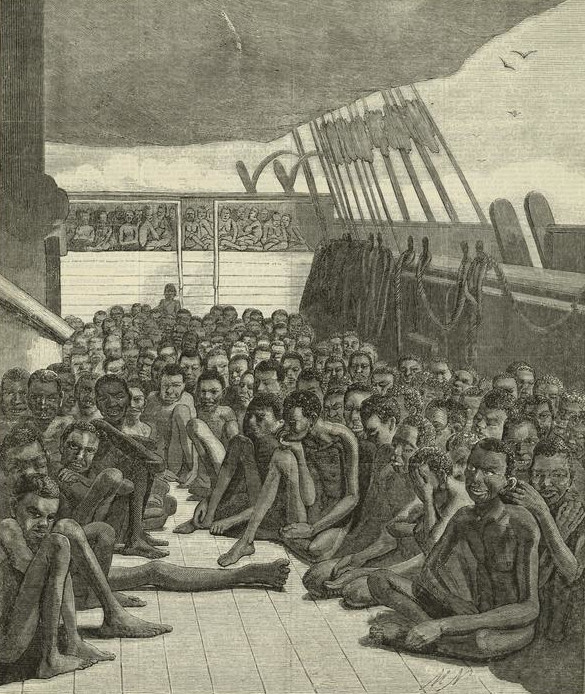
slave ships which allowed people on deck were at risk of a mass uprising
Schomburg Center, New York Public Library, The slave deck of the bark "Wildfire"
The White Lion and the Treasurer took 50-60 of the roughly 350 captives that were on the Sao Joao Bautista. The White Lion sailed to Point Comfort and, according to John Rolfe, sold "20 and odd Negroes to the Virginian colonists.
The governor and the cape-merchant Abraham Piersey, who was responsible for managing the company's supplies, may have purchased most of the Africans in exchange for providing supplies to the ship. There was little or no cash in the colony, so the transaction would have been a barter exchange.
The Treasurer came to Point Comfort after the White Lion had left. Captain Elfrith apparently sold an additional a few more people but sailed away with most of its captives still on board. Apparently:2
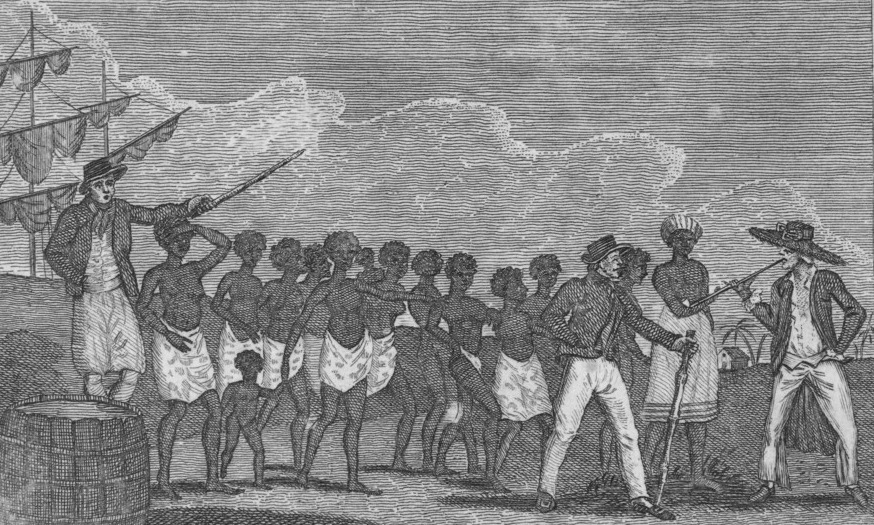
the first Africans imported to Virginia originated from the Ndonga kingdom in West Africa
PICRYL, Negroes just landed from a Slave Ship
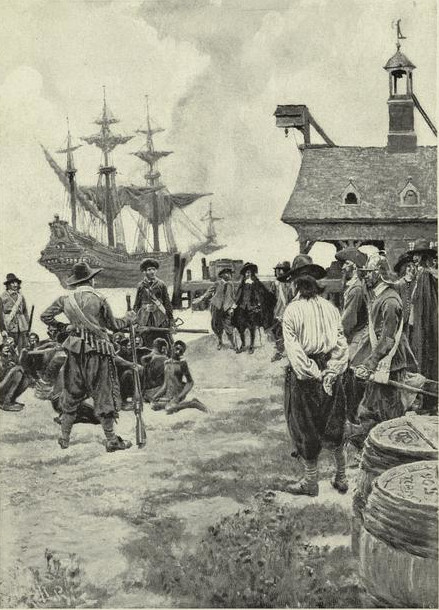
the first Africans arrived in Virginia in 1619
Schomburg Center, New York Public Library, Landing negroes at Jamestown from Dutch man-of-war, 1619