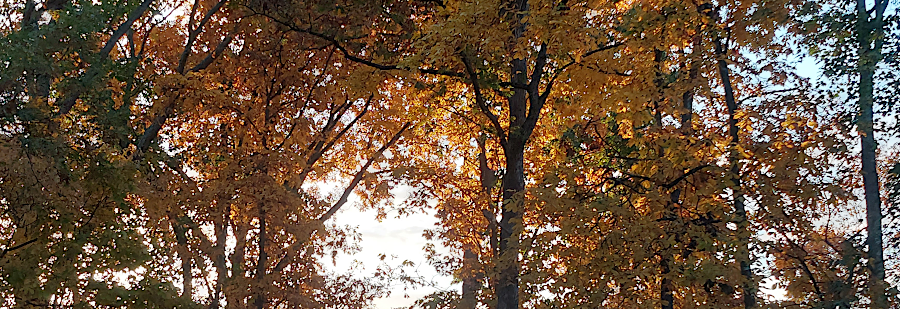
English colonists discovered what appeared to be endless forests in Virginia
English colonists discovered what appeared to be endless forests in Virginia
In 1607, Captain Newport led 106 other English colonists to a Virginia that was covered by oak-hickory forests. The forests were recognized as a valuable resource for wildlife habitat and food (deer and turkey were the most-hunted species), for fuel, and for building materials.
Virginia looked very different at the last glacial maximum 18,000 years ago. The ice sheets had stopped in Pennsylvania, roughly along the line of the Ohio River and I-80. Virginia was not glaciated. However, the colder climate dramatically reshaped the vegetation and shoreline of Virginia. Cold dry winds blew off the ice sheet, and growing seasons in Virginia were short. Thermokarst lakes on the Coastal Plain evolved into "Carolina bays."1
During the Ice Age, Virginia remained heavily forested; studies of sediments in old ponds show lots of tree pollen. There was very little bare tundra comparable to the current Arctic National Wildlife Refuge, though the mountain ridges may have had a tree line above which only shrubs, grasses and forbs grew.
There was a very different mix of tree species than today. Because the Ice Age climate was so dramatically different, the vegetation was different.
During the Ice Age, forests of Virginia had a high percentage of spruce (Picea) trees. These evergreen conifers are common in Canada today, with a belt of spruce and fir trees south of the tundra. Those cold-adapted species still can be found along the high crest of the Appalachians south into Tennessee.
As the climate has warmed over the last 18,000 years, other species have gradually out-competed spruce and fir. Hardwood species, warm-loving pine trees, and eastern red cedars occupy lower elevation land. The spruce and fir that still grow at cooler elevations are disappearing. As global warming speeds up, the rate speeds up at which the remains of the Ice Age forest will disappear from Virginia.
Today, there are belts of spruce and fir on the southern edge of the tundra in Canada north of the eastern deciduous forest. No such pattern existed 18,000 years ago. At the peak of the Ice Age, it is likely that broad-leaved trees (chestnuts, oaks, hickories, maples, willows) were living in wind-sheltered river valleys in Virginia together with various conifer species. The deciduous species were not pushed south into the Carolinas by the cold climate. Apparently there was a diverse mix of species that composed the forest of Virginia during the Ice Age.
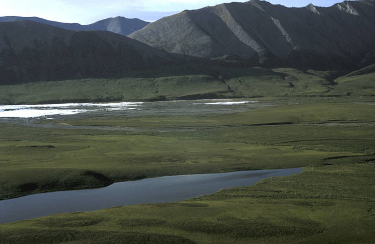
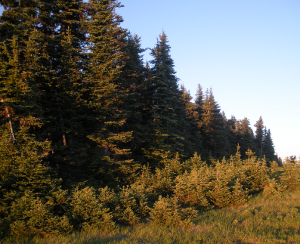
vast treeless plains and spruce-fir forests disappeared from Virginia after ice age ended
However, arguments are still raging regarding what the Virginia forest looked like. Pollen grains have been collected from sediments that accumulated in various lakes and bogs during the ice ages. Spruce pollen is found as far south as Louisiana, while in Virginia there is a high percentage of pollen warm-species trees such as oak and hickory. Other evidence, such as indications of sand "blowouts" on the Coastal Plain, suggest that Virginia's vegetation about 15,000 years ago was an open pine woodland. Spruce and fir were part of the forest mix, but not isolated in thick bands that excluded broad-leaved trees.
The first Virginians arrived in the state about 15,000-20,000 years ago. Especially east of the Appalachians, they probably found a mixture of pines and prairie - not a thick, closed-canopy conifer forest such in Ontario or the temperate forest that covers Virginia today. The earliest Virginians found bison, mastodons, and elk grazing in Virginia's savannas, and had only scattered trees to screen the approach of hunters with spears.
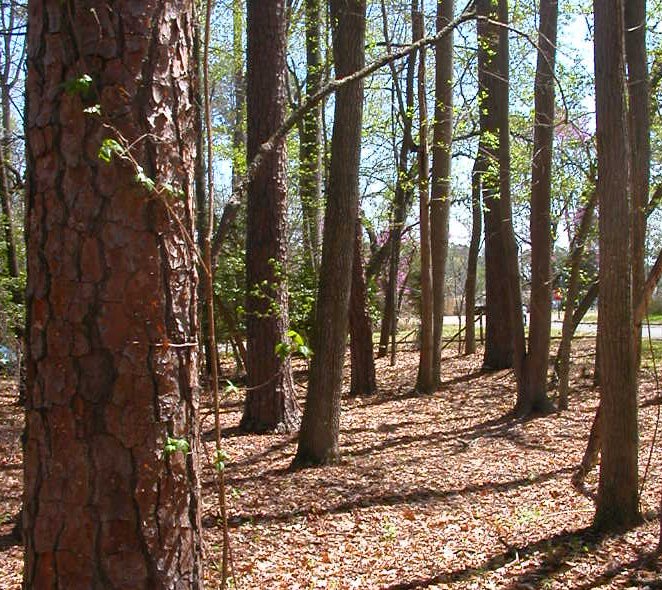
open forest at Jamestown, perhaps similar to vegetation density in 1607 (but trees are much smaller today)
As the climate changed and as the temperate forest cover expanded across Virginia, the first people adapted to the change. In the Shenandoah Valley and Dismal Swamp areas, they limited the forest growth on purpose by setting fires often. This increased the acres of grassland, which increased the number of deer and elk.
The prehistoric fire ecology of the Shenandoah Valley is not completely understood, but it is clear that Native Americans were aware of the environmental impacts of fire. The first settlers set the woods and grasslands on fire to create the desired habitat. Increasing the number of natural fires reduced the brush and "opened up the woods" for hunting, as well as stimulated the growth of species that like the ecotone between open fields and thick forests.
Three English ships sailed up a river that the colonists named the James in 1607. Those new settlers found a substantially different Virginia from what greeted the first arrivals 15,000-20,000 years earlier. The climate had changed in those millennia.
By chance, the English arrived during the worst drought in the last 400 years - but they still arrived in a wetter, warmer Virginia than the Paleo-Indians who were the first discoverers.
The colonists who arrived about 400 years ago also found a significantly smaller Virginia compared to the first humans to settle here. The Virginia shoreline has retreated westward nearly 40 miles since the end of the Ice Age.
The rising water level of the Atlantic Ocean drowned what is now the Outer Continental Shelf and the mouths of the James and Susquehanna River valleys, forming the Chesapeake Bay in its current shape about 3,000 years ago. The Native Americans witnessed this major environmental change long before the Susan Constant, Godspeed, and Discovery sailed between Cape Charles and Cape Henry in 1607.
The vegetation of Virginia reflects the climate of the state; as the climate has changed over time, so has the vegetation. The climate got warmer and wetter after the Ice Age, and broad-leaved trees replaced spruce and fir. The Eastern Deciduous Forest became the dominant forest type in most of Virginia during a global warming period that has lasted until today.
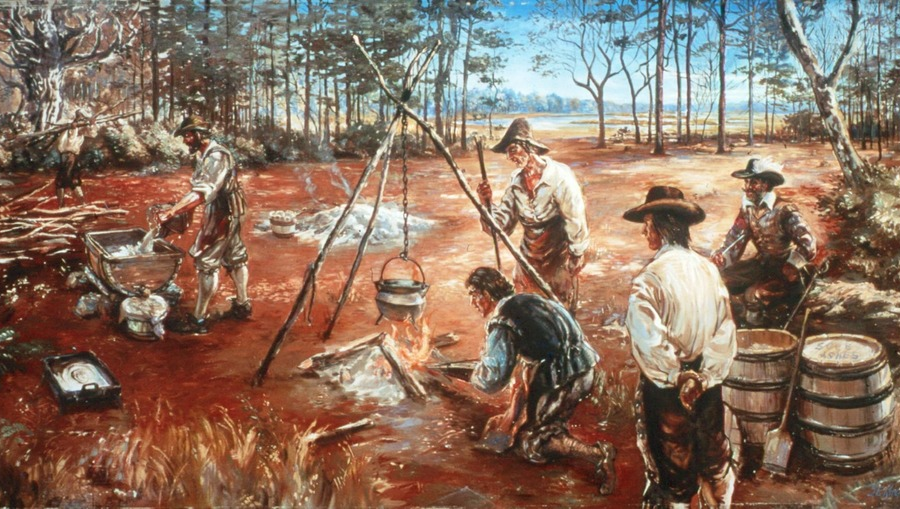
English colonists burned hardwood trees to extract potash, used in the production of soap
Source: National Park Service, Potash and Soap Ashes (painting by Sidney E. King)
Some spruce and fir forests have survived on the cooler ridgetops in the Blue Ridge and Appalachian highlands. Pines became a major component of the forests on the Coastal Plain, outcompeting the broad-leaved trees. On the sandy Coastal Plain rainwater rapidly drained from the surface and below the root zone, so drought-adapted pine species had a competitive advantage east of the Fall Line.
Soils and the availability of water (along with other factors, such as the slope of the land) will determine what species we see in different locations within Virginia. We see bald cypress trees in swamps vs. oak and hickory trees on dry ridgetops, because the plants have evolved to live in different conditions.
Because Virginia has about 40 inches of rain annually, it has many creek valleys and swamps where the moisture-loving trees thrive. For example, cypress trees have two obvious adaptations to growing in swampy areas. Their trunks swell at the base for stability, and "knees" that presumably provide greater oxygen grow around the base of bald cypress trees.
Trees that prefer uplands rather than stream valley lack the genes for those adaptations. The roots of mockernut hickory trees would literally drown if growing in an area covered by standing water for long periods of time. The impact of water levels on roots is demonstrated when humans or beavers dam a creek. Nearly all trees in the flooded reservoir will drown, creating a ghost forest until the dead trees finally fall over. If a dam remains long enough, then a different sort of forest will grow where hydric soils gradually develop.
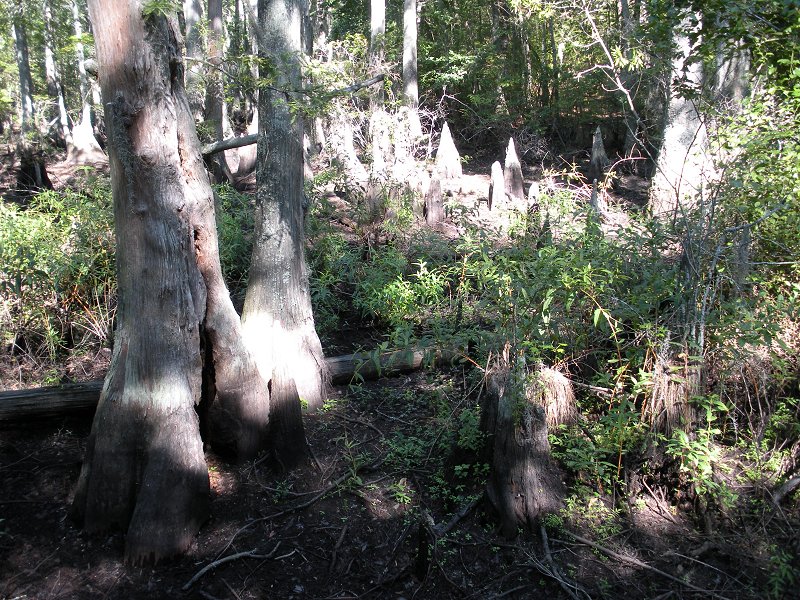
cypress roots and swelled tree bases in swamp at First Landing State Park (City of Virginia Beach)
The climate has shaped the forests of Virginia since tree-like species evolved 400 million years ago, after the first plants on land fought for light. Natural forests in Virginia today are adapted to dry summer droughts and light woodland fires that burn the leaf litter about every decade.
Before the Europeans arrived, it was common for small fires to move through patches of Virginia forests every 7-10 years. Native Americans and early European explorers would commonly travel through recently-burned forests where the undergrowth had been removed by fire, but the protective bark on trees was only lightly scorched. West of the Allegheny Front, natural forest fires were more intense but rarer, burning the forests of what is now West Virginia with mixed severity every 35-100 years.
Today, we have replaced much of the original forest with open fields or developed suburbs, and altered the species composition in fourth and fifth growth forests. Originally the colonists cleared the forests for agriculture because tobacco plants, just like corn/beans/squash, require full sun in order to grow. Later row crops, such as wheat, soybeans, and tomatoes, plus grass for pastures that support grazing cattle, have a similar requirement for bright sun.
Sun-loving plants are at the bottom of the food pyramid. Otherwise, if people ate ferns for every meal, farmers in Virginia might have developed shade-grown agriculture in Virginia.
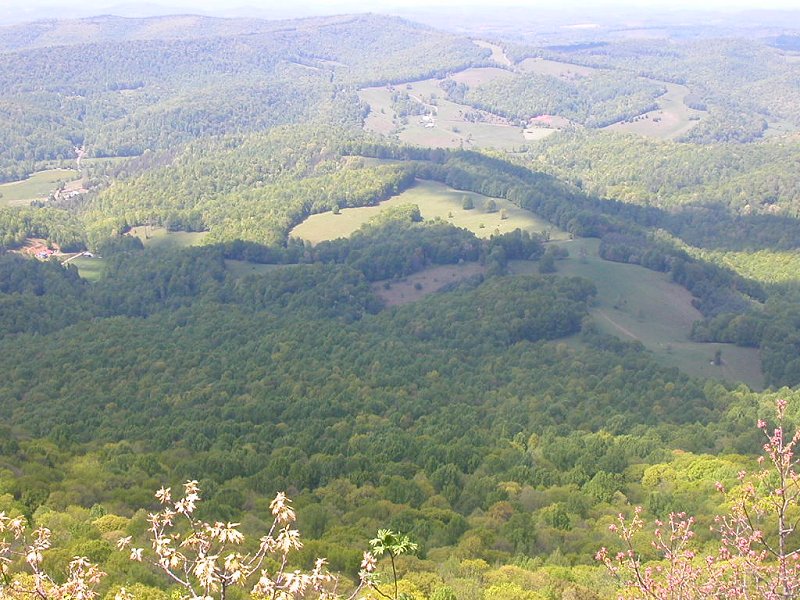
pasture and forests visible from Buffalo Mountain (Floyd County)
Starting in the 1600's, Virginia households cleared the forests for firewood. It was the primary fuel source for houses and industry until after the Civil War. In the last century, roads and housing developments have reshaped the patterns of fields and forests dramatically. The great expanses of unbroken woods have been replaced with small woodlots separated by roads, open pastures, and housing developments.2
Changing the pattern of fields and forests has had a major impact on wildlife. When roads are built through a forest, trees are replaced with pavement and grass medians. Each development fragments the remaining forest into smaller sections. Changes in the habitat, the environment that provides food and shelter for various species, created changes in the species mix within the forests.
Some birds such as the wood thrush or "liquid throat," with a distinctively melodious song, require deep woods for successful nesting. For some species, forest fragmentation patterns are significant separate and apart from the total acreage that is still forested.
Brownheaded cowbirds won't penetrate far from the edge of the forest to lay their eggs in a nest. When a wood thrush lays its eggs in a nest constructed deep in the woods, no cowbird will fly in there and add its egg to the nest. Ifa road is carved through the woods, however, a cowbird is much more likely to lay its egg in the wood thrush nest. The early-hatching cowbird will then push the thrush eggs out of the nest, and the thrush parents will end up feeding a nestling of another species.
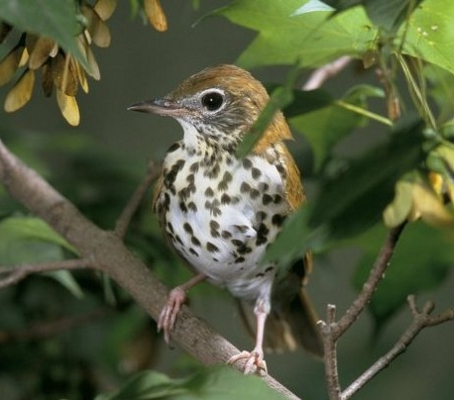
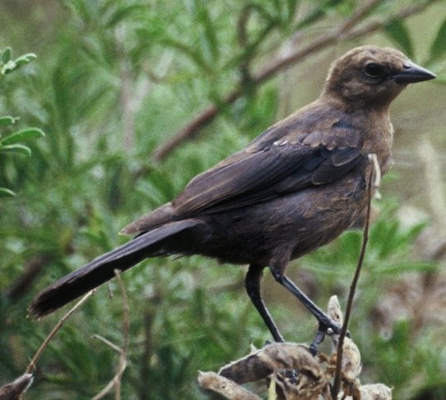
Wood Thrush and female brown-headed cowbird
Source: US Fish and Wildlife Service
The climate of Virginia could change again. If global warming does actually occur, altering the current pattern of biomes across the world, then the remaining pockets of spruce and fir could disappear from Virginia's mountains. Grasslands could replace the temperate forests in Virginia. In a few centuries, the state's vegetation patterns could resemble the sand hills of Nebraska or the oak forests of the Sacramento Valley.
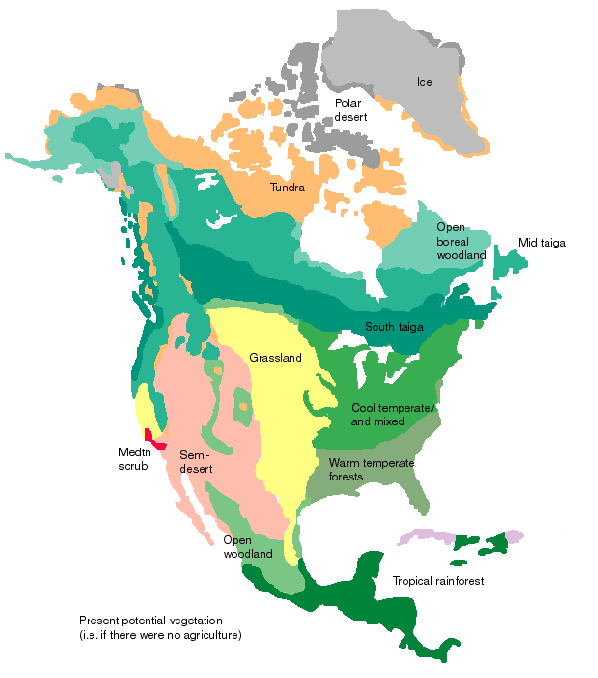
potential natural vegetation - assuming no transformation by agriculture and human development
Source: Oak Ridge National Laboratory, North America During The Last 150,000 Years