History-Oriented Tourism
"Why do people go to a place just like the last place they were?"1
Most Virginia communities highlight the historical associations that make nearby places "special." Some historical sites are clearly significant, a "must-visit" place for tourists in the area. Places such as Mount Vernon, Monticello, and Williamsburg are a destination attracting tourists from overseas.
Most homes of the Virginia-born Presidents have been converted into house museums. The preservation of Mount Vernon triggered much of the American movement to save historic sites.
Of the many presidential homes in Virginia, only the Oak Hill residence of President Monroe in Loudoun County is still closed to public access. Most Americans may not remember that "Tippecanoe and Tyler too" were both born in Virginia, but drivers along Route 5 quickly discover that Berkeley Plantation and Sherwood Forest are open for viewing.
They are rare remnants of structures built in the 1700's. Tourists interested in Virginia buildings constructed before the American Revolution can see brick mansions built by the gentry living east of the Blue Ridge, stone houses in the Shenandoah Valley intended to do double duty as forts in case of attack by Native American raiders, and buildings restored in Colonial Williamsburg. Original houses built by nearly all other Virginians, including quarters for the enslaved, are more difficult to find.
The loss of those historic structures, housing the poor and middle class of the 1700's, would suit Thomas Jefferson. He grew up when farm houses were wooden two-story structures widely scattered across the landscape, heated with wood fires and at risk of burning down each winter. Each county had a small town with a courthouse, tavern, stables, and small cluster of homes for the few permanent residents who lived there between court days.
Jefferson's architectural sensibilities were offended:2
- It is impossible to devise things more ugly, uncomfortable, and happily more persishable.
The local history of many Virginia communities may also have nationally significance - though many such sites across Virginia have not been preserved. Few Virginia structures constructed before the American Revolution remain, so simply being "old" makes some sites distinctive.
The first southern rebel killed in the Revolutionary War died at Kemp's Landing, in what today is the City of Virginia Beach, during a skirmish in November, 1775. The site is also has significance for civil rights. After his victory in the "battle" of Kemps Landing, Lord Dunmore publicly announced his plan to free slaves who fought for the Loyalist side, and to create the Ethiopian Regiment to fight for the British. Later, the courthouse for Princess Anne County was built there, since it is the watershed divide between the Eastern Branch of the Elizabeth River and the North Landing River.
Places change over time, and "old" Kempsville disappeared as suburban sprawl altered the area. Nearly 250 years later, the integrity of the site had been altered so significantly by modern development that Kempsville did not qualify for designation as an official Historic District.
Many of the significant historic sites across Virginia have been recorded on state and national registers that started in 1966. According to the Virginia Department of Historic Resources:3
- Broadly speaking, to be eligible for listing in the National and State Registers, a property must:
- - Be at least 50 years of age, unless it possesses exceptional significance
- - Satisfy at least one of the four National Register Criteria
- - Demonstrate integrity through retention of historic materials, appearance, design, and other physical features
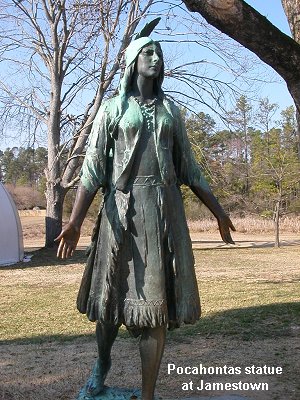
historically-inaccurate image of Pocahontas as a Great Plains princess is reflected in statue at Jamestown
When the Bicentennial was celebrated in 1976, John Warner (later elected to the US Senate from Virginia) convinced communities across America to celebrate their heritage even if the area was unsettled by Europeans until long after the Revolution. With some creative thinking, places like Van Buren, Missouri discovered that they could recreate the initial journeys of William Henry Schoolcraft, early explorer of the Ozarks, even though the first European exploration occurred there 40 years after the Declaration of Independence was signed.
Few Virginia localities had a problem identifying that they had significant moments in colonial history. A substantial number of Virginia sites, not just Williamsburg, had some Revolutionary War tie to commemorate:
- "Great Bridge" in the modern city of Chesapeake was an early Revolutionary War battle site, where rebellious Virginians defeated British forces loyal to Governor Dunmore. Tourists driving Route 168 to Nags Head travel past it to the North Carolina border - and that's why the highway is called Battlefield Boulevard.
- The Town of Haymarket in Prince William County, known more for its association with the Civil War, could celebrate the passage of "Mad Anthony Wayne" and the Pennsylvania Line. They were coming south to aid Lafayette's small band, as it tried to block Cornwallis from traveling unfettered through central Virginia in 1781.
- Colonial Heights got its name because Lafayette placed artillery there in 1781. He was targeting British forces near Petersburg under General William Phillips and Benedict Arnold, who captured the new capital of Richmond before Cornwallis arrived in Yorktown. Phillips died from disease, and on his sickbed reportedly complained about the shelling, saying "Won't that boy let me die in peace?"
- Shenandoah County residents knew that George Washington considered Fort Valley between the Massanutten mountains as a possible winter camp, if Valley Forge had been unsuitable.
- In Mathews County, Gwynn Island was the final land base for the last colonial governor, Lord Dunmore, before the Virginian's forced him to leave the state completely.
- In Louisa County, everyone knows Paul Revere was captured early on his famous ride away from Boston, but in Louisa Jack Jouett succeeded in cross back roads from the tavern at Cuckoo to Charlottesville - and in time to warn Governor Thomas Jefferson and the retreating General Assembly that the British were coming.
- (The British were Colonel Banastre Tarleton's Legion, highlighted in the summer of 2000 by the movie The Patriot. "Butcher" Tarleton earned his name slaughtering most of the 350 men - many of them Virginians - under Colonel Abraham Buford at Waxhaws near the North Carolina-South Carolina border. If you were the tourism director at Waxhaws today, how would you "market" your area to tourists?)
- In Augusta County, there's a tradition that the top Virginia officials fleeing across the Blue Ridge to escape Tarleton were refused lodging by a local woman. Jefferson's requests for shelter were rejected - until she recognized Patrick Henry, a far-more popular man than any of the others.
At South Boston in Halifax County, there is a historical marker on the south end of town overlooking the Dan River. The Bicentennial gave local residents a chance to remember that their town was named to honor the patriots who started the ruckus in Boston. In 1781, the war came to them.
General Nathaniel Green and the American army crossed the Dan River there, ending a retreat from Lord Cornwallis across North Carolina. The Americans outran the British, and seized all the boats after crossing the Dan; that blocked Cornwallis from destroying the small remnant of the Continental army in the South. Most of the army, including the Virginia Line, had been captured in the fall of Charlestown in 1780 - but what remained was able to get reinforcements, recross the Dan River, and fight Cornwallis at the Battle of Guilford Courthouse.
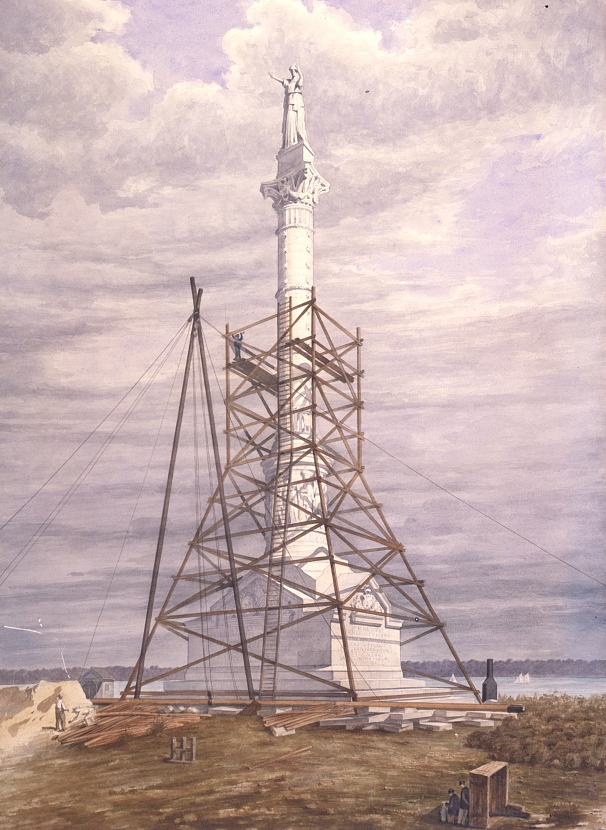
the monument built to commemorate the 1781 victory at Yorktown is still a tourist attraction
Source: Library of Congress, Yorktown Monument (Alliance and Victory Monument), Yorktown, Virginia. Rendering
Of course, not all Virginia locations could celebrate where Lafayette rode (there's still a "Marquis Road" in Louisa), or where the British cavalry captured supplies during the Revolutionary War (such as at Five Forks on the James - and numerous other locations downstream to Norfolk). Roanoke, for example, was just a salt lick at the time of the Revolution and the 1861-65 Civil War.
Virginia's heritage was not purely patriotic in the Revolution, either. Montgomery County sided more with the Loyalists, and the Wilderness Road across Cumberland Gap was busy with those fleeing to the Kentucky frontier to avoid the draft and the economic disruption. Norfolk residents had their own conflicts to resolve in 1976 - honor the Virginia patriots that established independence, or blame them for burning the town almost to the ground at the start of 1776 to keep the British from using Norfolk as a base of operations.
In Northern Virginia, President Madison and his wife Dolly retreated from Washington to Northern Virginia in 1814 when the British burned the capital. McLean residents know the story of how Dolly Madison rescued the Gilbert Stuart portrait of Washington. Local history highlights that she delivered it to a still-existing McLean home for safekeeping, but commercial tourism businesses lead guided tours to Arlington Cemetery and other famous locations rather than the home where a portrait of Washington spent the night.
Many old-line Virginia families know their American history and Virginia geography in part through their family genealogy. The Lees and Carters and Byrds and others who kept sending generation after generation to the House of Burgesses, and who developed the intellectual rational for the American Revolution, bought great tracts of lands and built huge mansions on their Tidewater plantations in the 1700's. The main houses were intended to be showplaces.
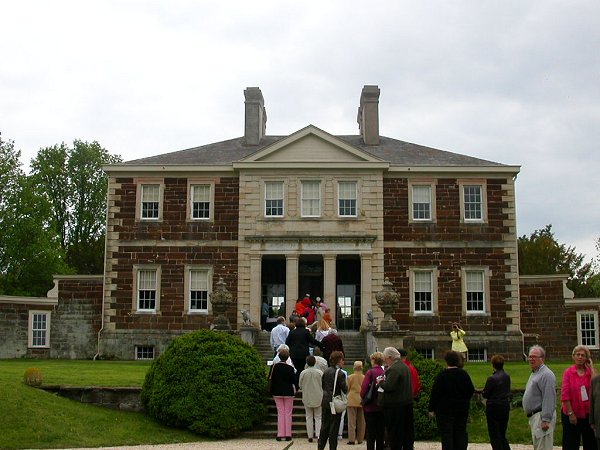
2006 Garden Week tour of Mt. Airy on the Northern Neck, home of the Tayloe family for 250 years
They still are, and are open for tours as modern tourist attractions. An amazing number of buildings that were central to the Virginia gentry have been preserved. Route 5 between Richmond and Jamestown is the site of numerous historic residences that are open to the public. Historic homes are concentrated in Tidewater - but they are not limited to that area. In Loudoun County, you can tour Oatlands, the home of George Carter. In Montgomery County, the Association for the Preservation of Virginia Antiquities (APVA) keeps Smithfield Plantation, Col. William Preston's home, open as a house museum.
The Memorial House at George Washington Birthplace National Monument illuminates how "history" can change over time. The structure was built by the Wakefield National Memorial Association to honor the 200th anniversary of Washington's birth. Foundations excavated at the site guided construction of a large manor house, typical of the families that produced a person of George Washington's significance.
In 1732, Augustine Washington's family had social status far higher than that of indentured servants and owned land, but the family was not part of the elite First Families of Virginia (FFV's). Later archeology revealed a different set of foundations for a smaller structure which was probably George Washington's actual birthplace. However, in the 1930's everyone knew George Washington would end up being perhaps the most significant Virginian of the colonial era. His "Memorial House" built to commemorate his 200th birthday should be an impressive structure reflecting that importance - but two centuries earlier, he was just another child born to a family of struggling colonists.
How the gentry developed, how English colonists established slavery, how the enslaved resisted the control of overseers, how technology transformed agricultural practices, how cities evolved - all those stages in human development can be accessed by visiting a particular location that offers a snapshot in time. Historic sites can be used as time machines for visiting the past and envisioning the future.
Visiting more than one site, and studying more than just one exhibit, is essential in order to gain context for understanding any of Virginia's many distinct places because:4
- Historic preservation preserves outcomes, but not the processes by which we got the outcomes.
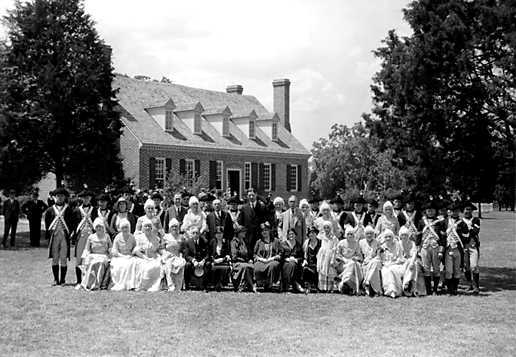
in 1732, George Washington was born in a more-modest building that the Memorial House built in the 1930's on Pope's Creek in Westmoreland County
Source: National Park Service, George Washington Birthplace National Monument
The mansions are well worth visiting, but of course the preserved homes are only part of the story. Virginia is littered with sites that are mentioned in American history textbooks, such as Jamestown and Appomattox, plus a few that are discretely omitted.
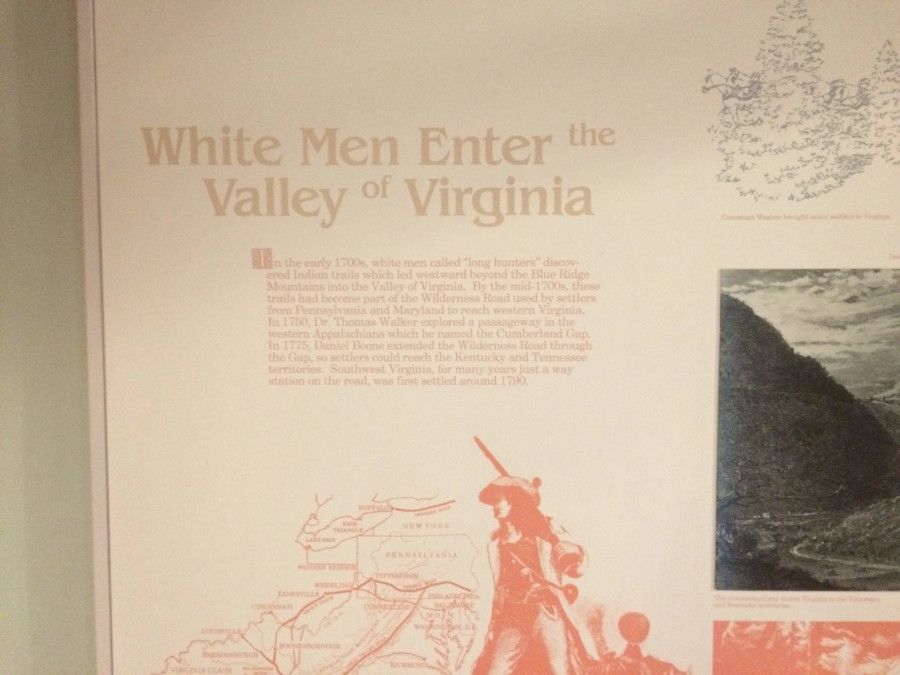
an exhibit at the Southwest Virginia Museum Historical State Park reflects how much white men are emphasized at Virginia heritage sites
What's missing? The slave quarters, housing the laborers who made the gentry so wealthy, were intended to be out of sight, back of the "big house." Now visitors to the historic homes are being offered a chance to learn about the other residents on the plantations, and to see archeological excavations of the foundations of the other structures so the people whose houses are now "out of sight" won't be "out of mind."
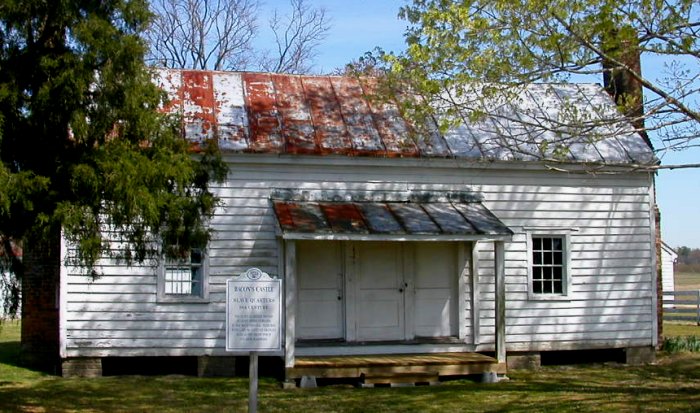
slave quarters with interpretive sign
at Bacon's Castle (Surry County)
Before the 21st Century, historic sites associated with women and minorities and the laboring classes were rarely listed on the brown signs posted along the interstate highways or on state historical markers. Two relatively well-known "black history" sites in Virginia that received attention were the Booker T. Washington home in Franklin County and the Maggie Walker house in Richmond.
Former Governor Wilder tried to establish a museum of slavery, a project that was still in process three decades after he left office. A museum in the former Prince Edward County high school tells the story of the county that closed its public schools for four long years to block desegregation. A number of local historic sites, such as the Manassas Industrial Institute school foundations in Manassas and a similar "institute" in Christiansburg, are being preserved as Virginia communities recognize the whole breadth of their cultural heritage.
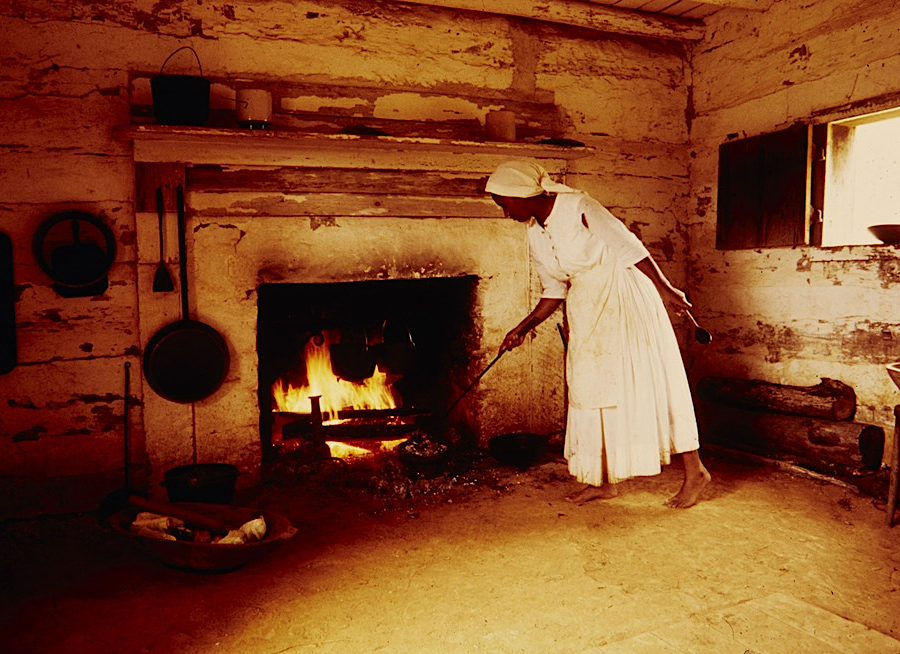
interpretation at the Booker T. Washington National Monument requires dealing with sensitive, modern social issues as well as history
Source: National Park Service, NPS History Collection - Booker T. Washington National Monument
Carter G. Woodson started the Association for the Study of Negro Life and History and launched the Journal of Negro History before the United States entered World War I, but only since the 1960's have most social historians explored in depth the lifestyles of all cultural groups. Archeologists who recover animal bones, small beads and other "material culture" from slave quarters excavations can help interpret the eating habits and religious practices, but the documentation of Virginia history once was heavily slanted towards the lifestyles of the rich and famous.
Tourists can now learn about Virginia's enslaved workers, poor farmers, and women through expanded interpretation at the mansion houses as well as at sites focused primarily on women and minorities. By 2023 there were over 50,000 archeological sites and almost 225,000 architectural resources recorded by the Virginia Department of Historical Resources.5
Some of the expanded acknowledgement and interpretation reflected cultural shifts, with a greater interest in women and minorities. In addition, recruiting visitors requires tourism site managers to cater to a broader audience. Increasing descriptions of life outside of the "big house" expands the number of stories to tell, and encourages more people to visit places like Mount Vernon and Monticello.
Local Prince William officials once advertised that it was the most popular "tourist" site in Virginia in 1999, attracting 24 million visitors. Even when statistics distinguished between local residents vs. tourists who travel at least 50 miles, for years Potomac Mills was one of the most-visited tourist destinations in Virginia.6
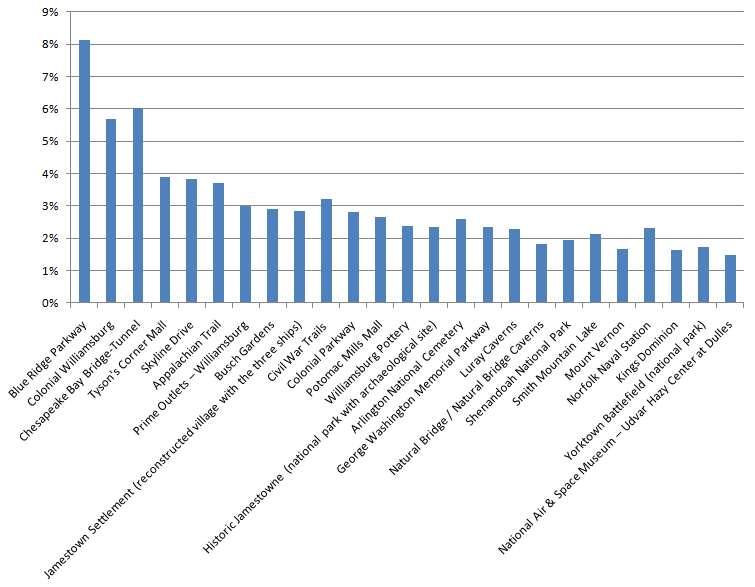
25 most visited Virginia tourism sites in 2007-08
Source: Virginia Tourism Corporation Travel Data, FY2007-2008 Profile of Leisure Travel in Virginia
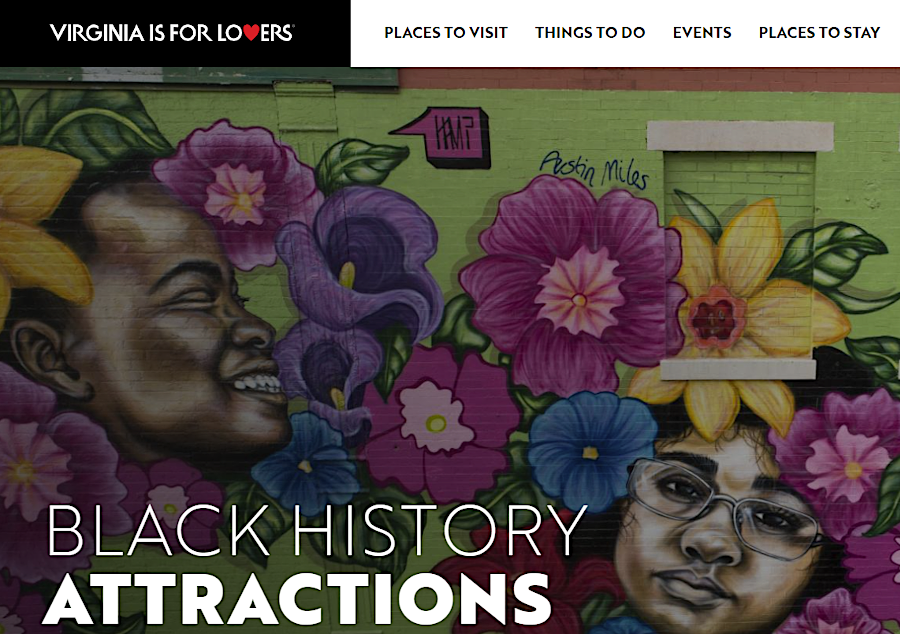
tourism officials now advertise opportunities to discover the diverse sources of culture that have created modern Virginia
Source: Virginia Tourism Corporation, Black History Attractions
Virginia communities highlight sites associated with the Civil War; events during that historical period make many places distinctive. There was a dramatic revival of interest in "the late unpleasantness" after the broadcast of The Civil War by Ken Burns on public television. Extraordinary amounts of private and public money have been spent to preserve battlefields.
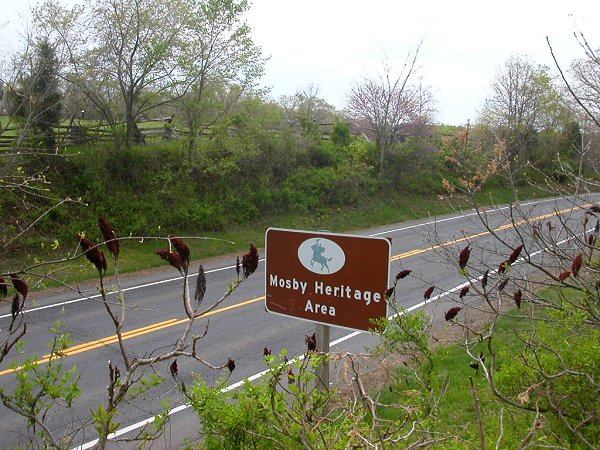
eastern edge of Mosby Heritage Area, on Manassas National Battlefield Park
Some places played, at best, a minor role in history. Prince William County purchased Rippon Lodge, the oldest (or second-oldest) home in the county, for $1.2 million in 2000. George Washington did sleep there but not much else happened there to make the house special. In that one county, however, nearly all the other houses from that time have been destroyed over the years. The county may never attract enough visitors, or earn enough revenue from other activities at Rippon Lodge, to repay the debt - but historic preservation is primarily an educational process rather than a money-making opportunity.
In a more quirky circumstance, Stonewall Jackson's arm was amputated in 1863 at Chancellorsville and buried in the cemetery at Elmwood in Spotsylvania County. The site is now visited regularly by Civil War "buffs," in addition to his grave in Lexington. The new Denver International Airport has a map of all the states, with one item highlighting what makes each state special. Guess what is highlighted for Virginia...
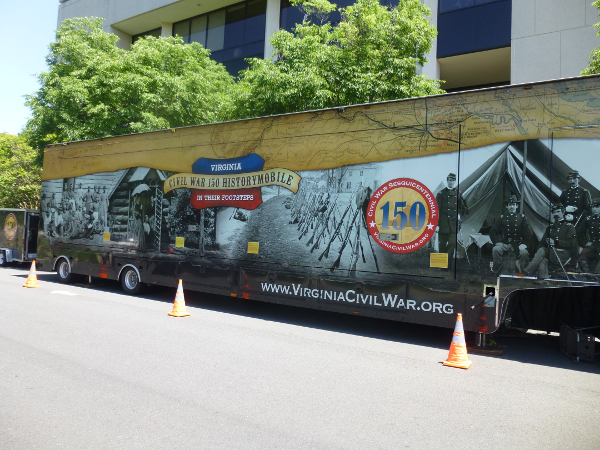
the Virginia Tourism Corporation used the 150th sesquicentennial of the Civil War to encourage tourism across the state in 2011-15
There are plenty of other sites where soldiers killed time rather than each other, such as campsites around Centreville in Fairfax County. Nearly all signs of the time that Confederate and Union soldiers were stationed in Centreville have been destroyed by suburban sprawl, but a few trenches have been preserved.
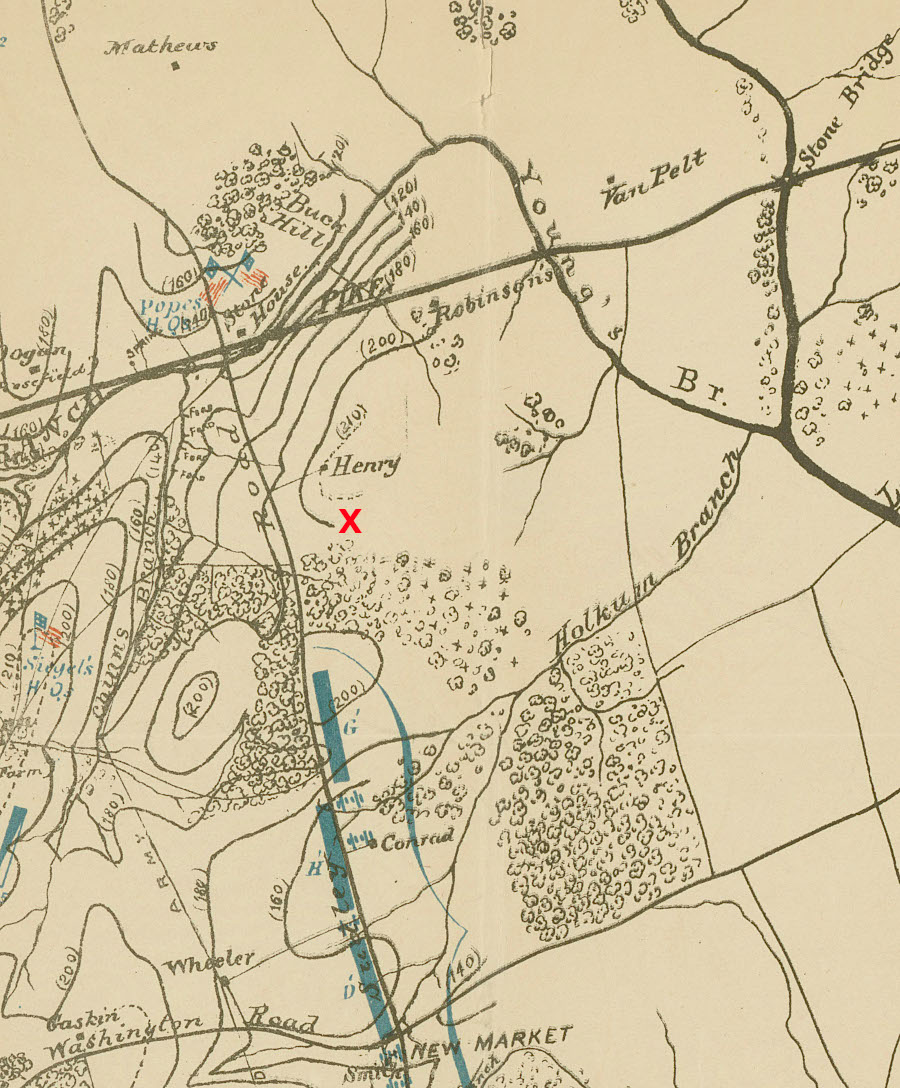
the National Park Service built a visitor center (red X) on Henry Hill, center of the deadly First Manassas battle on July 21, 1861
Source: National Archives, Map of the Battlegrounds in the Vicinity of Groveton near Manassas
Funding for historic preservation may be based on tourism, but this can generate conflicts in a community. The tourists may outnumber the faithful at colonial churches still used for worship, such as Christ Church in Lancaster County (built by "King" Carter) and St. John's Church in Richmond (site of Patrick Henry's "Give me liberty or give me death" speech). The Warrenton town council debated plans to make Col. Mosby's home there into a public museum, because it would create new traffic that would disturb the residential neighborhood.
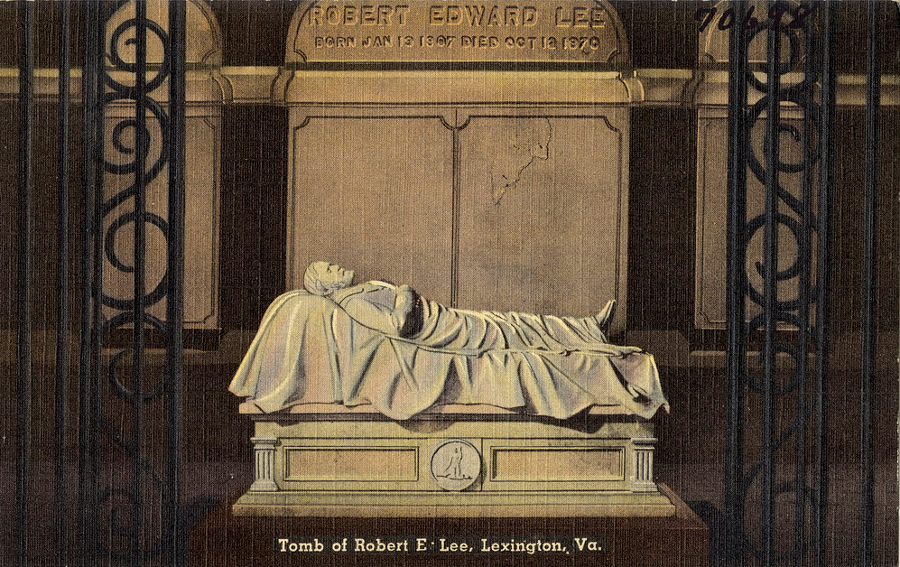
a pre-World War II postcard shows the burial site of Robert E. Lee as a tourist attraction in Lexington
Source: Boston Public Library, Tomb of Robert E. Lee, Lexington, VA
Not every Virginian thinks every historic site needs to be protected from change. Fairfax County approved the development that would destroy the historical integrity of earthworks at Centreville. Adjacent Prince William County rejected the original request to protect the Bristoe battlefield, where thousands of Confederates died and may still be buried in unmarked graves, before finally accepting a proposal that created Bristoe Station Battlefield Heritage Park.
Some old-line families do not cherish every square inch where patriots rebels in either the American Revolution or the Civil War once trod. To them, it is normal to be surrounded by historical sites that others consider unusual. When confronted with an enthusiastic child gushing over the fact that the Confederate retreat from Petersburg had crossed the old family farm, one Virginia matron remarked casually, "Son, Robert E. Lee retreated all across Virginia..."
The significance of some Virginia sites extends to different eras. Visitors to the place where Cornwallis' surrendered at Yorktown have to recognize which trenches date from 1781 and which trenches were constructed in 1862 during the Peninsula Campaign. Along the Potomac River, the home built by Martha Washington's grandson, George Washington Parke Custis, is now part of Arlington Cemetery. The mansion is surrounded by Civil War graves placed there by a Union general who wanted to ensure it would never be used as a family residence again. However, some colonial mansions are still the home of descendants of the "first families" of colonial Virginia.

Sometimes, historical preservation comes second. Charles Carter at Berkeley raised historical preservation concerns with his decision to allow the James River wharf to be used for transporting garbage (yes, garbage) from barges to a mega-landfill in Charles City County. The amount of land affected is minor - and to the Carter descendant, it does nothing to detract from the colonial or Civil War history associated with Berkeley Plantation. (The bugle tune for "Taps" was developed there in 1862, as the Yankees were preparing to retreat from their failed assault on Richmond.)
Even the Pamunkey and other tribes once isolated on reservations have discovered that tourists are good business, though not necessarily good historians. Virginia's Native American celebrations have included many characteristics of the Plains Indians tribes; tourists expect high-feathered headdresses and even teepees as seen on the old Westerns. If the Native American descendants dressed like the natives that John Smith saw, nearly 400 years ago, their rituals might be viewed as obscene by today's standards.
Plans to create museums that would grow into tourism destinations do not always succeed. A tank museum opened in 2003 at a former manufacturing site near Danville, but it failed to attract enough visitors. In 2014, the tank museum relocated to Ohio, near the Lima Army Tank Plant and other military facilities. Danville is not on an interstate highway, and the thinly-populated region did not generate enough visitors.7
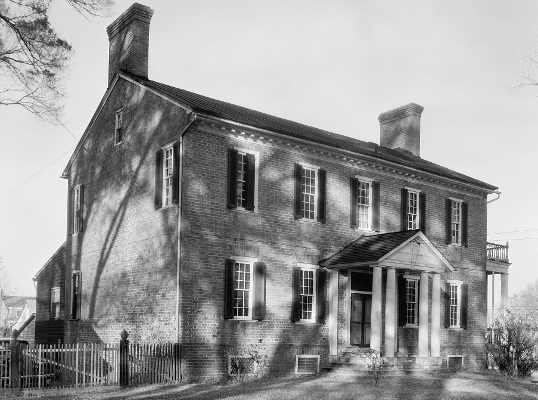
Singleton House/Pleasant Hall in Virginia Beach, built in 1779, is an isolated historic site in Kempsville, an area where the rest of the landscape reflects modern development
Source: Library of Congress, Pleasant Hall, Kempsville, Princess Anne County, Virginia
Another museum with a similar target audience, the National Museum of Americans in Wartime, has been planned since the 1990's for a location near the National Museum of the Marine Corps on I-95 in Prince William County. A developer contributed 70 acres of land, but the proposed facility needs more donors to contribute more funds before that museum is ever built.8
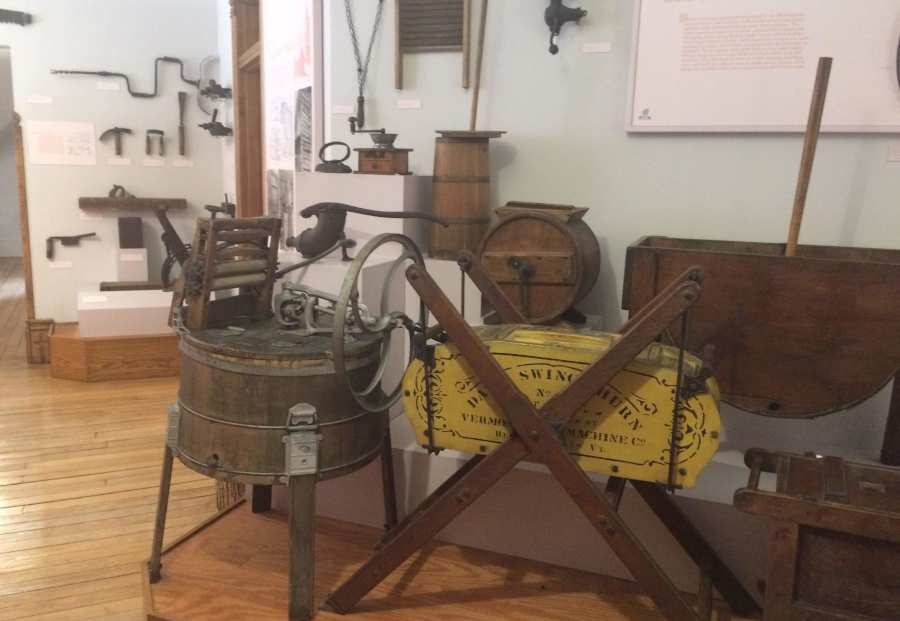
old technology is highlighted in many museums, including the Southwest Virginia Museum Historical State Park in Big Stone Gap
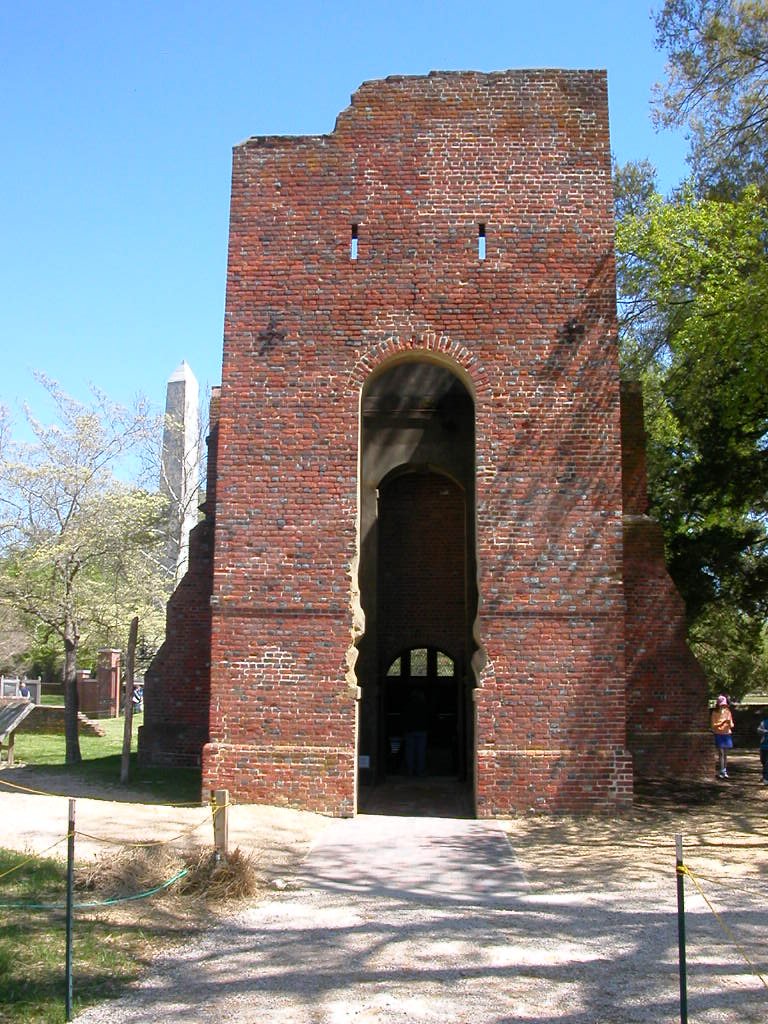
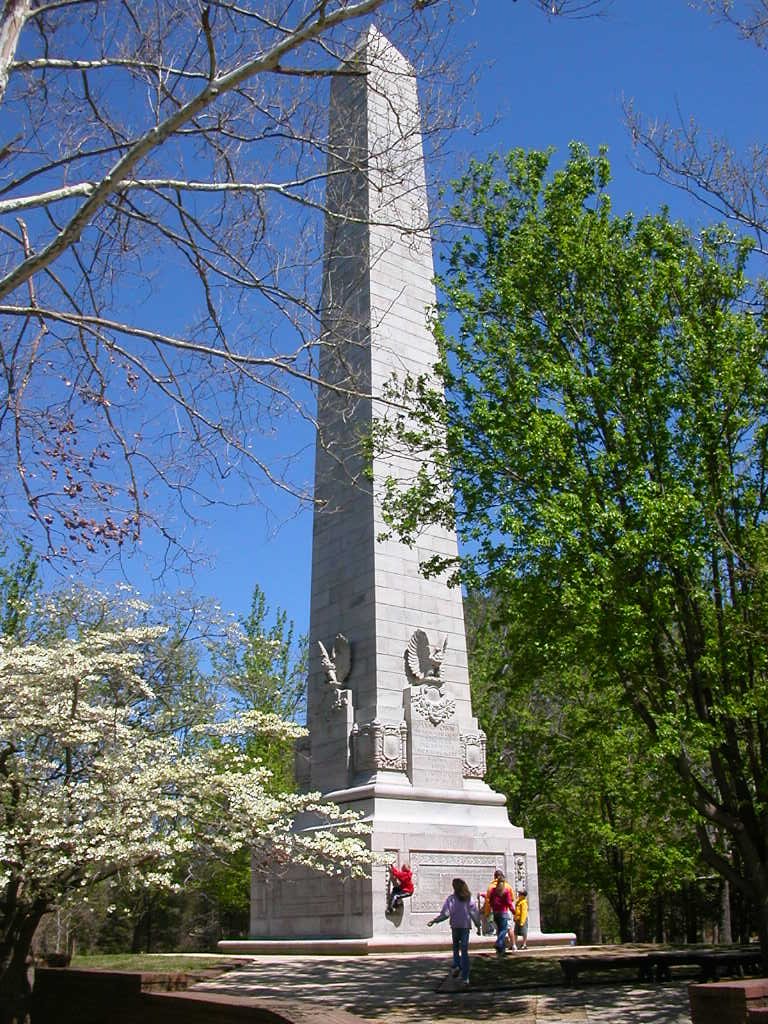
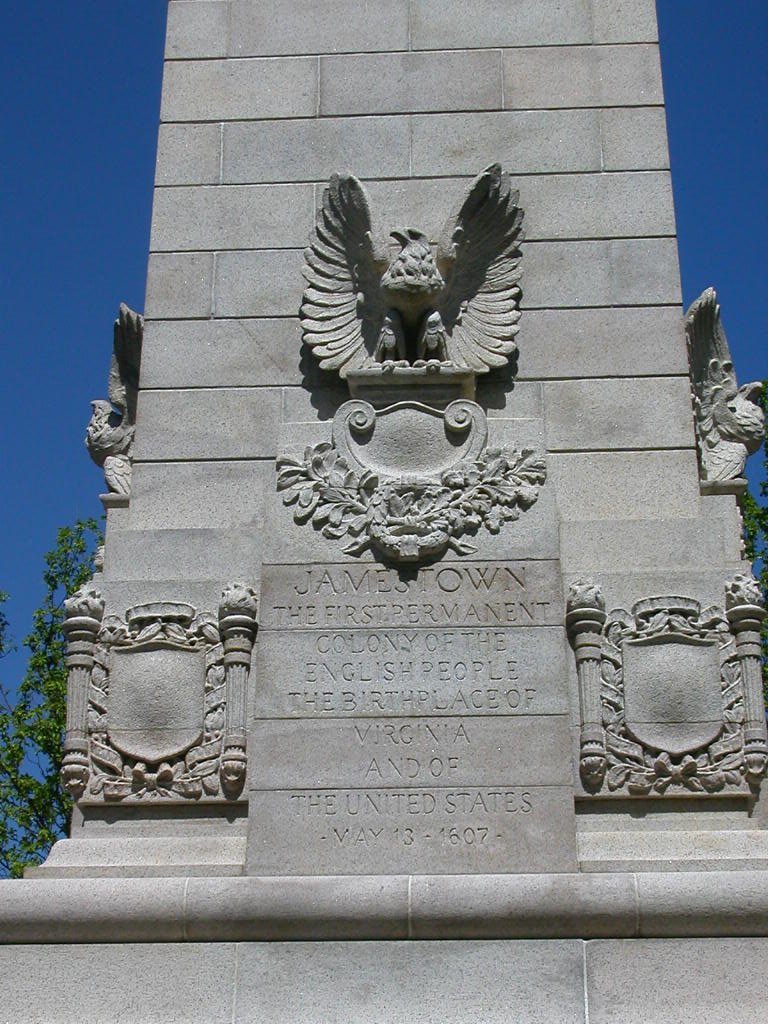
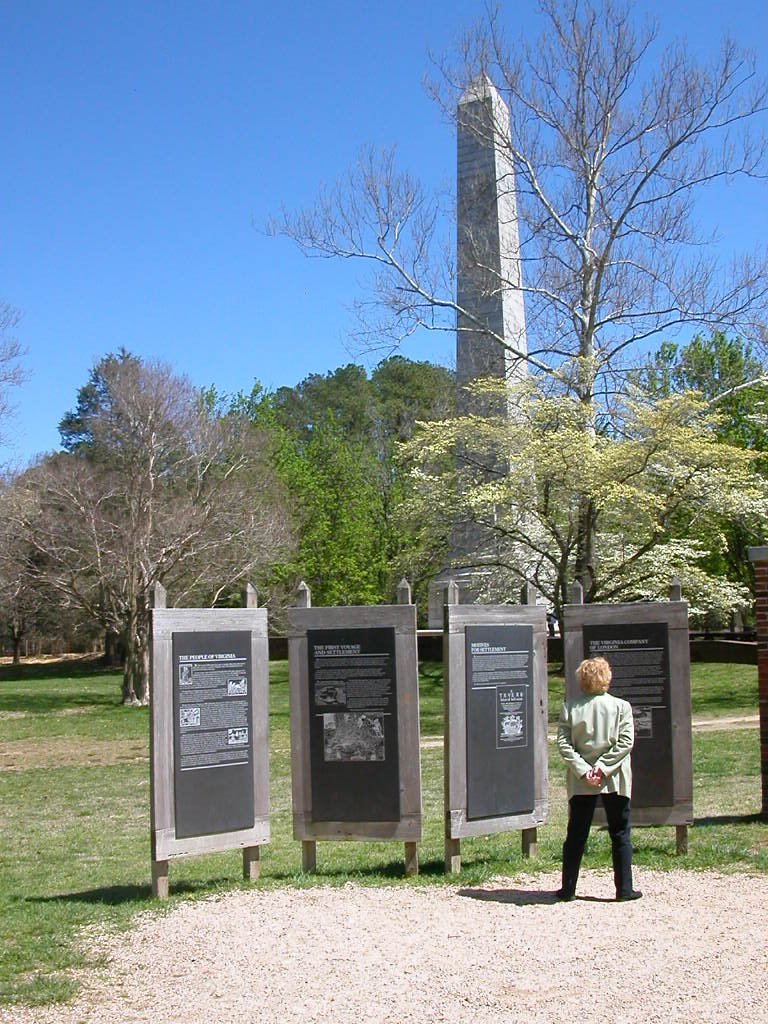
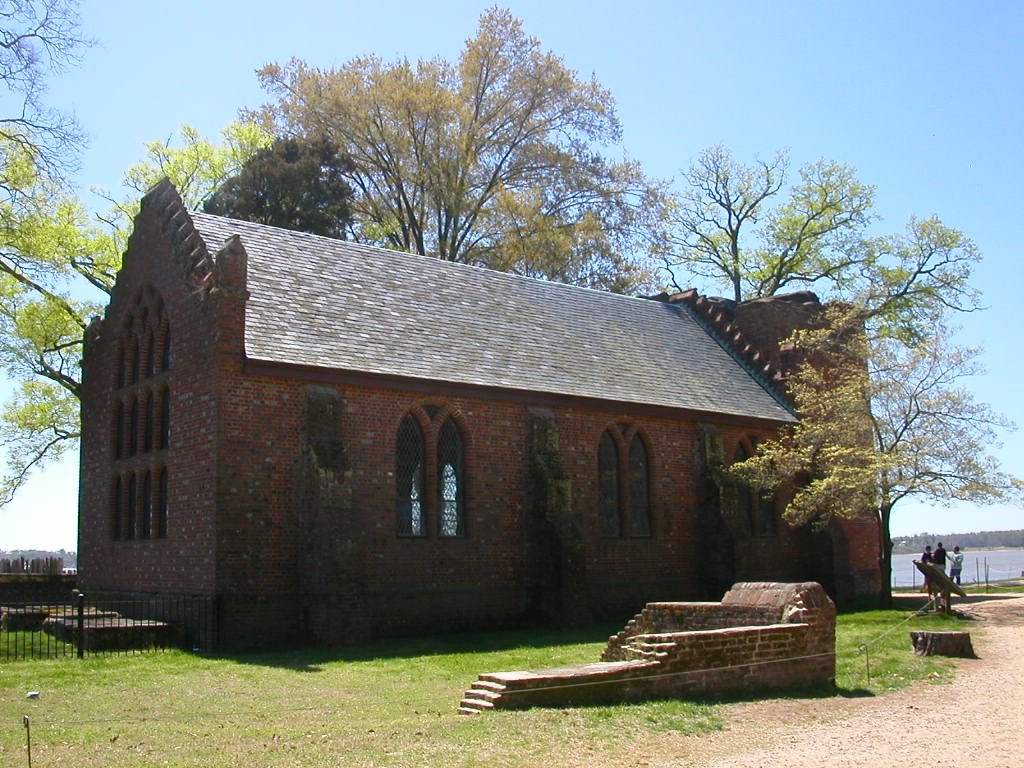
Preservation Virginia - formerly the Association for the Preservation of Virginia Antiquities (APVA) - has acquired key historic sites associated with the colonial period. The organization focused on the traditional interpretation of Virginia history, highlighting the role of the gentry. APVA acquired the powder magazine and the location of the colonial capitol in Williamsburg, three decades before John D. Rockefeller started to fund restoration there. It also obtained much of Jamestown Island in 1893, 23 years before the National Park Service was established.
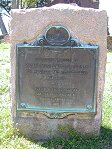
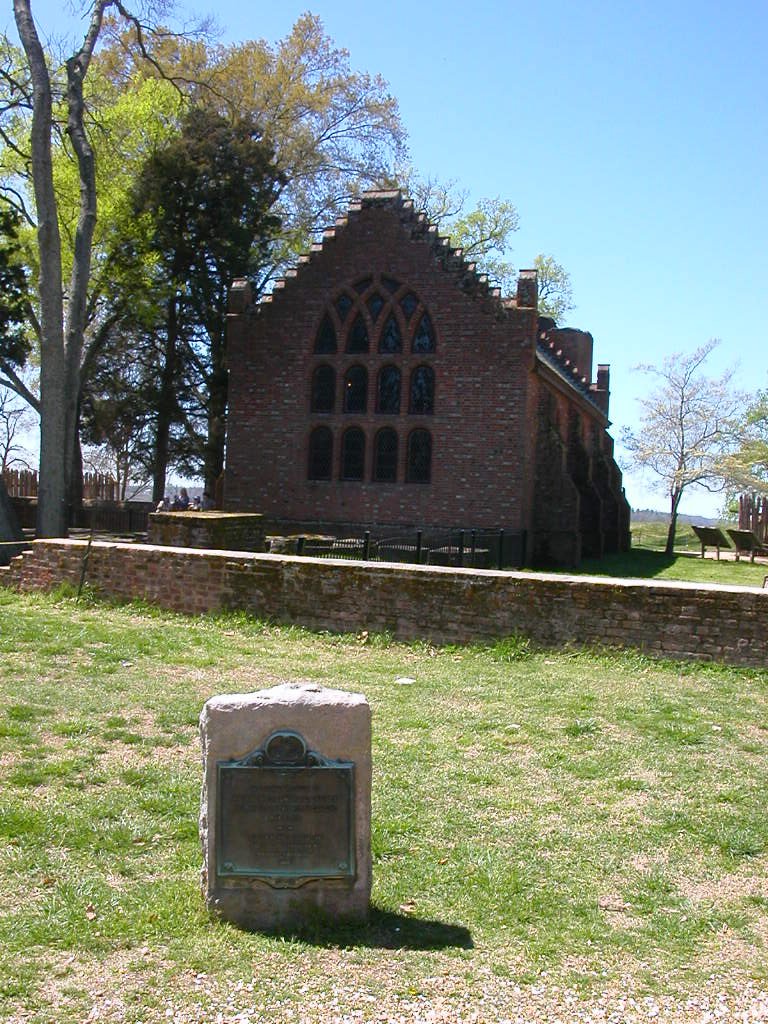
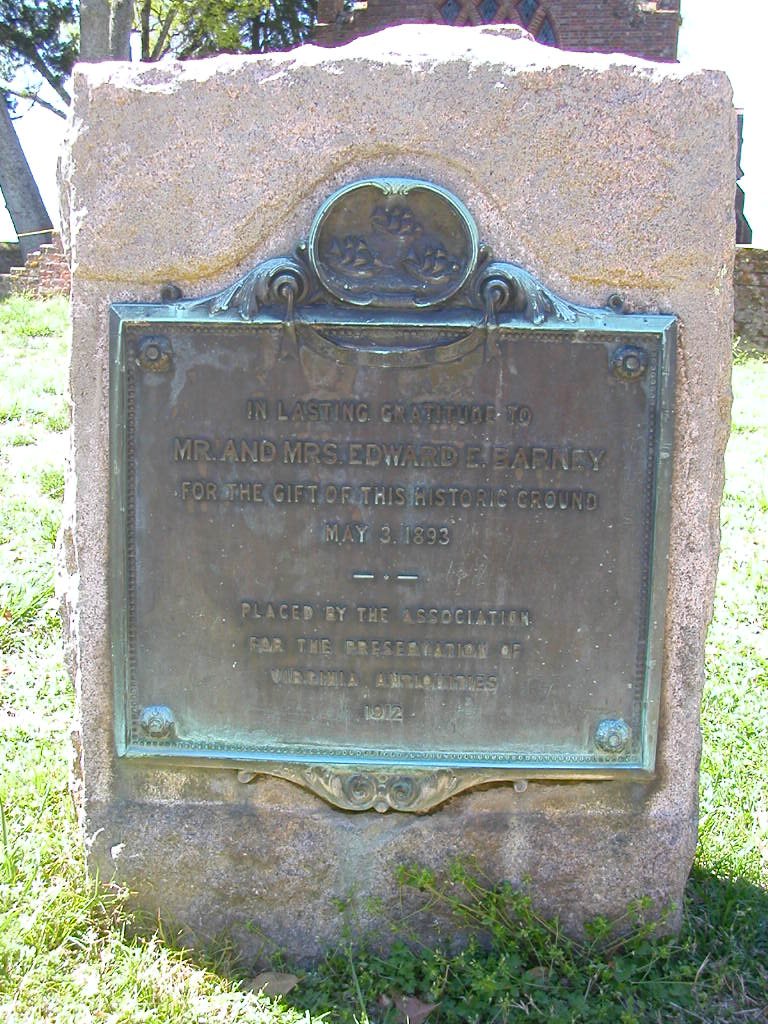
Barney monument at Jamestown Memorial Church (click on images for larger versions)
Keeping a historic site open for public visitation can be an economic drain on Preservation Virginia. The organizations owns Bacon's Castle in Surrey County, which was built in 1665. That structure is the oldest remaining brick house in Virginia, and was occupied by Nathaniel Bacon's rebels in 1676. Preservation Virginia keeps it open for 10 months each year, attracting 6,000 visitors - but needs 11,000 visitors per year to break even.9
Virginia has both an official "outdoor drama" and an official "historical outdoor drama," both designated in 1994 to stimulate tourism in southwestern Virginia.10
The Trail of the Lonesome Pine "outdoor drama" has been presented in Big Stone Gap since 1964. It is based on a 1908 novel by John Fox, Jr., which:11
- ...depicts the story of the great boom in Southwest Virginia when the discovery of coal and iron ore forced the lusty, proud mountain people into making many drastic changes in their way of life.
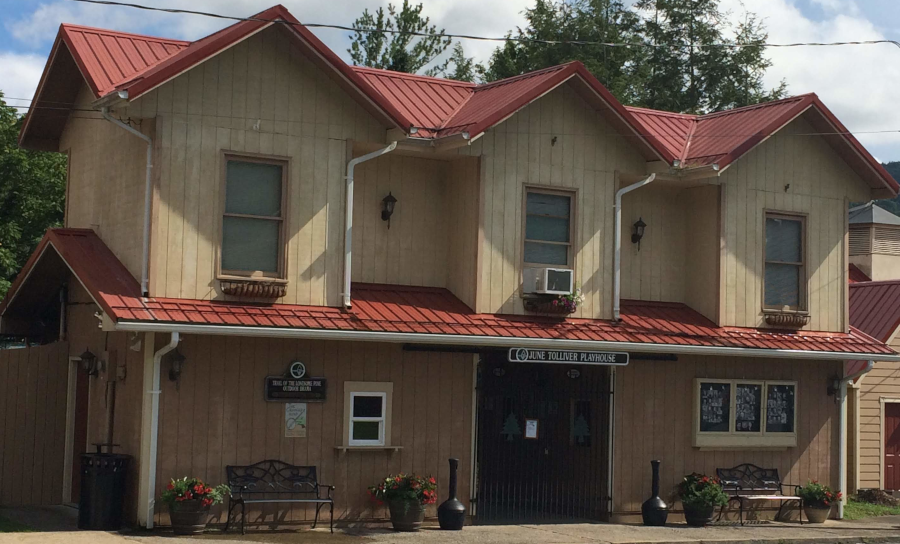
the June Tolliver Playhouse hosts the Trail of the Lonesome Pine outdoor drama, and draws tourists to Big Stone Gap
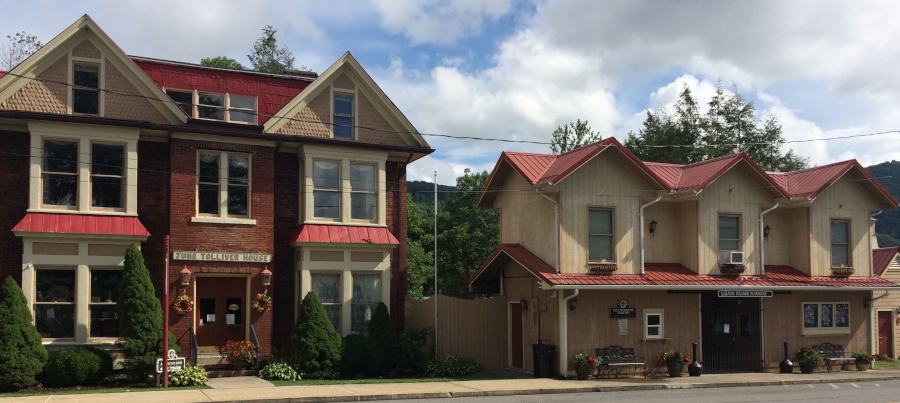
the June Tolliver house, next to the theater, sells items to tourists in Big Stone Gap
The "historical outdoor drama," The Long Way Home, was located in Radford. It told the story of Mary Draper Ingles, who was captured by Shawnee in 1755 and taken from her New River Valley home to Big Bone Lick on the Ohio River. The drama told how she escaped captivity and walked home, averaging 10 miles a day for 43 days while foraging for food.
The play was presented in the summer between 1971-99 at an amphitheater on the historic Ingles farm. The writing and acting were not complicated, and in the 1990's the show was packaged as a patriotic event. Lightning struck the amphitheater and destroyed the lighting equipment, and the drama did not reopen in 2000.
In 2017, a new version was reintroduced at the Nesselrod Bed and Breakfast. Bringing back the show had been "a key component of ongoing tourism efforts" in Radford since 2011. The 2017 presentation of Walk to Freedom: The Mary Draper Ingles Story was a success, and the four shows in 2017 were expanded to nine in 2018.
Post-COVID, the show is no longer part of the annual Mary Draper Ingles Festival.12
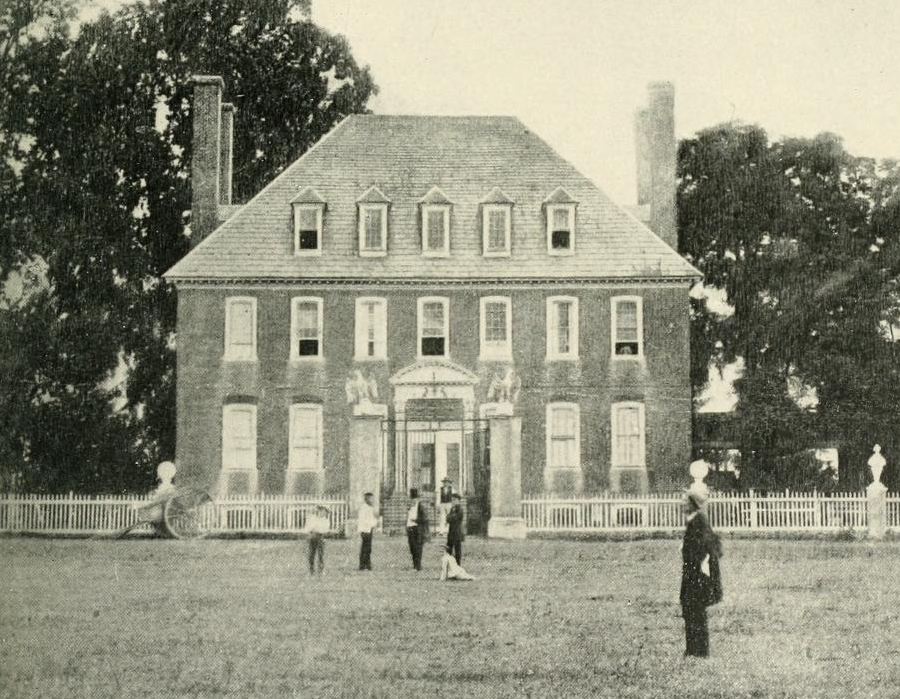
Westover was used as a Union general's headquarters when nearby Berkeley Plantation was converted into a major military base (Harrison's Landing) at the end of the 1862 Peninsula Campaign
Source: The Photographic History of the Civil War, Westover House: Headquarters of General Fitz John Porter, Harrison's Landing (p.334)
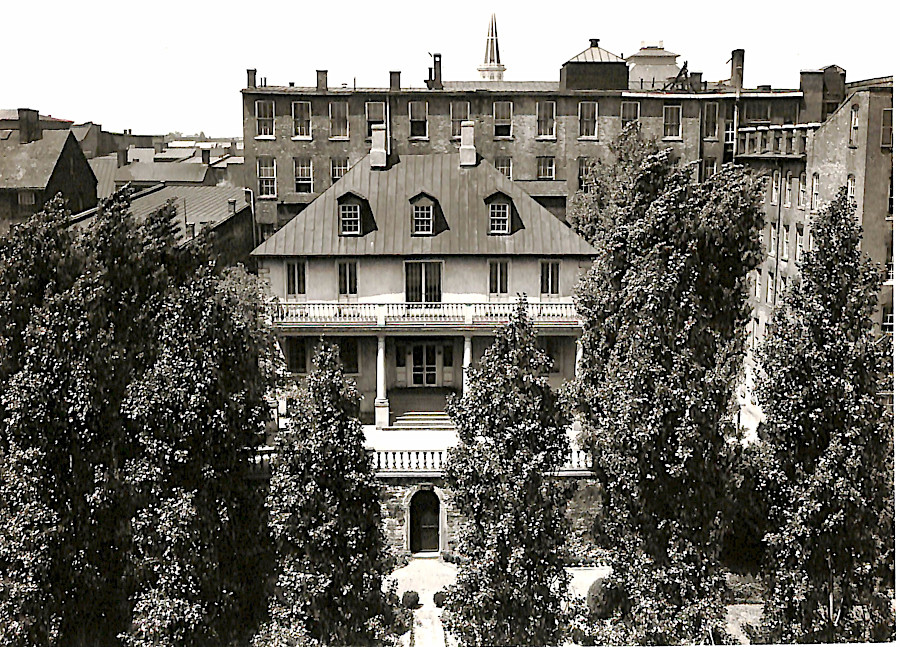
the Carlyle House in Alexandria, in 1929
Source: National Archives, Carlysle House in Alexandria, Virginia
Links
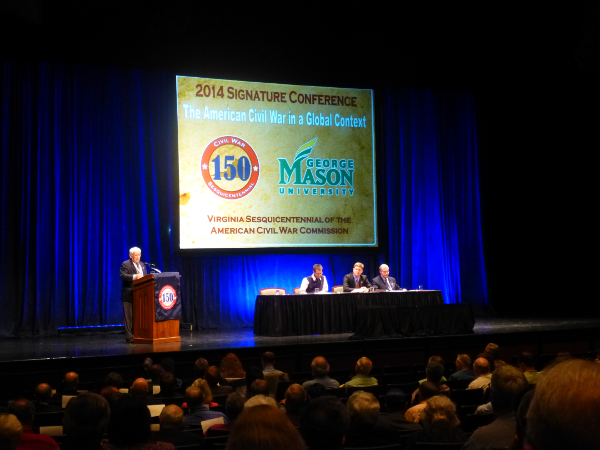
the 150th sesquicentennial of the Civil War included annual academic conferences at various universities, such as George Mason University in 2014
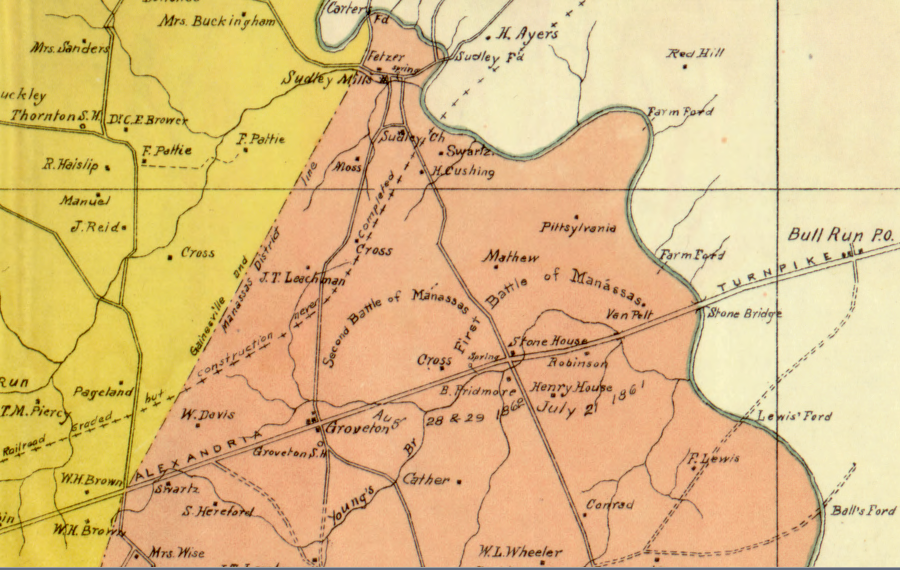
Prince William County in 1901
Source: Library of Congress, Manassas battlefields in 1901 (by William H. Brown, 1901)
References
1. "Wal-Mart campers like parking lots' low prices," Seattle Post-Intelligencer, http://seattlepi.nwsource.com/local/79628_walmart23.shtml (last checked March 8, 2014)
2. Alan Taylor, The Internal Enemy: Slavery and War in Virginia, 1772-1832, W. W. Norton, 2013, p.18, https://www.google.com/books/edition/The_Internal_Enemy/PRCaAAAAQBAJ (last checked March 1, 2024)
3. "Historic Kempsville project is a work in progress," The Virginian-Pilot, March 8, 2014, http://hamptonroads.com/node/709324; "Pleasant Hall, a onetime HQ, sets off skirmish of its own," The Virginian-Pilot, November 30, 2008, http://hamptonroads.com/2008/11/pleasant-hall-onetime-hq-sets-skirmish-its-own; "Historic Registers 101: Significance & Integrity," Virginia Department of Historic Resources (DHR), July 15, 2026, https://www.dhr.virginia.gov/blog-posts/historic-registers-101-significance-integrity/; "Historic Registers," Virginia Department of Historic Resources, https://www.dhr.virginia.gov/programs/historic-registers/ (last checked July 31, 2026)
4. "George Washington Birthplace National Monument Virginia," National Park Service, https://www.nps.gov/nr/travel/presidents/george_washington_birthplace.html; Addison Del Mastro, "Preserving Process," The Deleted Scenes blog, April 25, 2024, https://thedeletedscenes.substack.com/p/preserving-process (last checked May 21, 2024)
5. "Carter G. Woodson," NAAACP, https://naacp.org/find-resources/history-explained/civil-rights-leaders/carter-g-woodson; "State Superlatives in Historic Preservation," Virginia Department of Historic Resources, May 16, 2023, https://www.dhr.virginia.gov/blog-posts/state-superlatives-in-historic-preservation/ (last checked October 13, 2024)
6. "County of Prince William, Virginia $38,000,000 General Obligation Public Improvement Bonds, Series 2004 C," October 28, 2004, p.A-24 http://www.pwcgov.org/docLibrary/PDF/002974.pdf (last checked November 23, 2011)
7. "Tank museum leaving Blairs," Danville Register & Bee, June 12, 2014, http://www.godanriver.com/news/danville/tank-museum-leaving-blairs/article_1d0bc0be-f25d-11e3-9770-0017a43b2370.html (last checked June 17, 2014)
8. "History of the AWE Project," Americans in Wartime Experience, https://www.americansinwartime.org/the-project/history (last checked October 13, 2024)
9. "Bacon's Castle | Historical gem hides in Surry," The Virginian-Pilot, August 3, 2014, http://hamptonroads.com/node/724250 (last checked August 3, 2014)
10. "SB 588 Official outdoor dramas," Virginia Legislative Information System, 1994, http://lis.virginia.gov/cgi-bin/legp604.exe?941+sum+SB588; Code of Virginia, Title 1, Chapter 5, Section 1-510. Official emblems and designations, https://law.lis.virginia.gov/vacode/title1/chapter5/section1-510/ (last checked July 29, 2018)
11. Trail of the Lonesome Pine State Outdoor Drama, http://www.trailofthelonesomepine.com/ (last checked July 29, 2018)
12. "Mary Draper Ingles," Boone County Public Library, https://www.bcpl.org/cbc/doku.php/mary_draper_ingles; "Mary Draper Ingles outdoor drama returns for second season," Princeton Times, May 18, 2018, http://www.ptonline.net/news/local_news/mary-draper-ingles-outdoor-drama-returns-for-second-season/article_54488497-926d-5a25-b507-4ba1a29da1c4.html; "It's a homecoming for 'The Long Way Home' outdoor drama," The Roanoke Times, March 19, 2017, https://www.roanoke.com/news/local/giles_county/it-s-a-homecoming-for-the-long-way-home-outdoor/article_cab62c4e-9b5f-504b-b46b-280a9cc76a71.html; "Revisiting Mary's Story: Actor who portrayed Mary Draper Ingles collaborates with RU professor to revise script," The Southwest Times, June 5, 2017, https://www.southwesttimes.com/2017/06/revisiting-marys-story-actor-who-portrayed-mary-draper-ingles-collaborates-with-ru-professor-to-revise-script/; "Reviving the Long Way Home: City holds public forum to discuss new historic drama," Radford News Journal, November 25, 2011, https://radfordnewsjournal.com/uncategorized/reviving-the-long-way-home-city-holds-public-forum-to-discuss-new-historic-drama/; "Marey Draper Ingles estival," Glencoe Mansion Museum & Gallery, https://www.glencoemansion.org/mdifestival (last checked July 31, 2026)
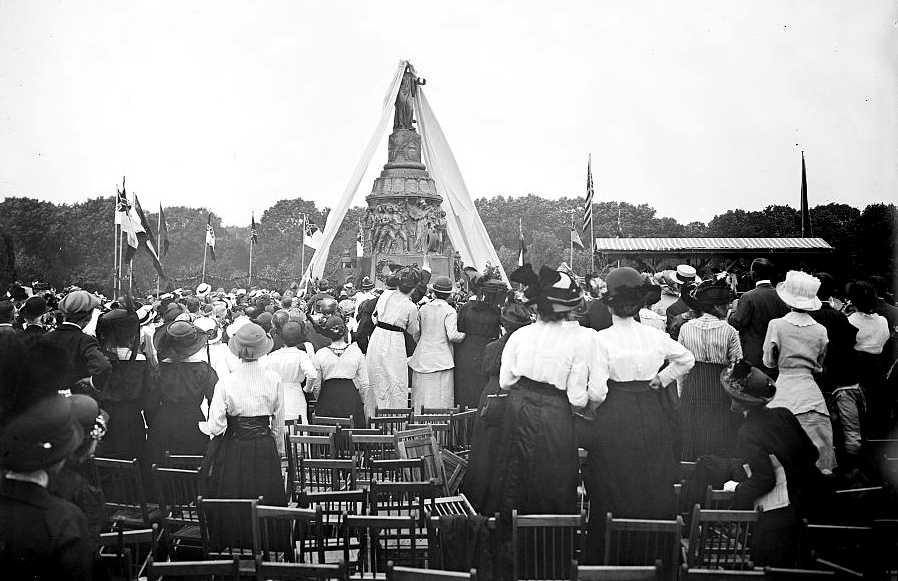
sites related to the Civil War are tourism attractions in Virginia, including Arlington National Cemetery
Source: Library of Congress, Unveiling Confederate Monument, Arlington, Virginia
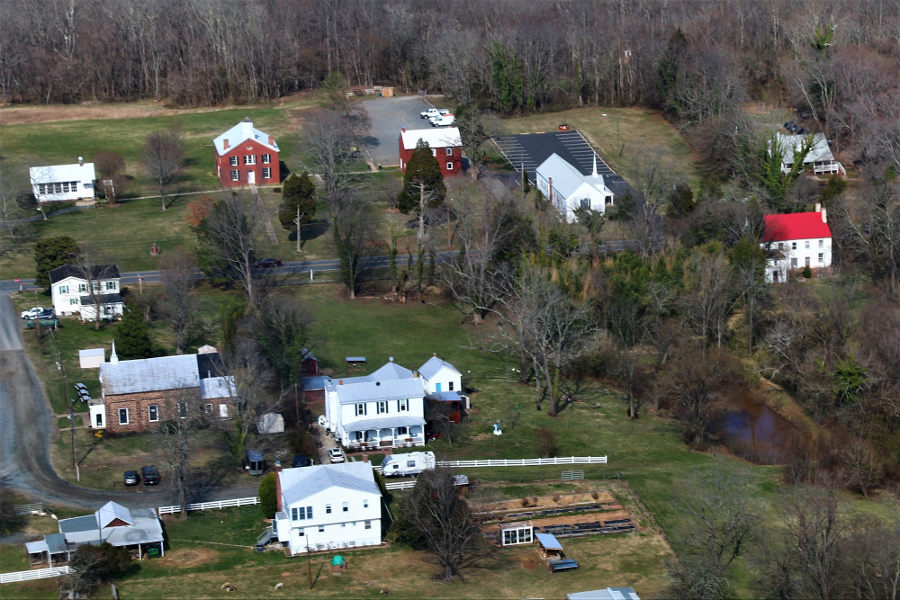
Prince William County has restored the Brentsville Courthouse complex and opened it as historic tourism attraction
Source: Historic Prince William, Brentsville Courthouse Historic Centre - #215
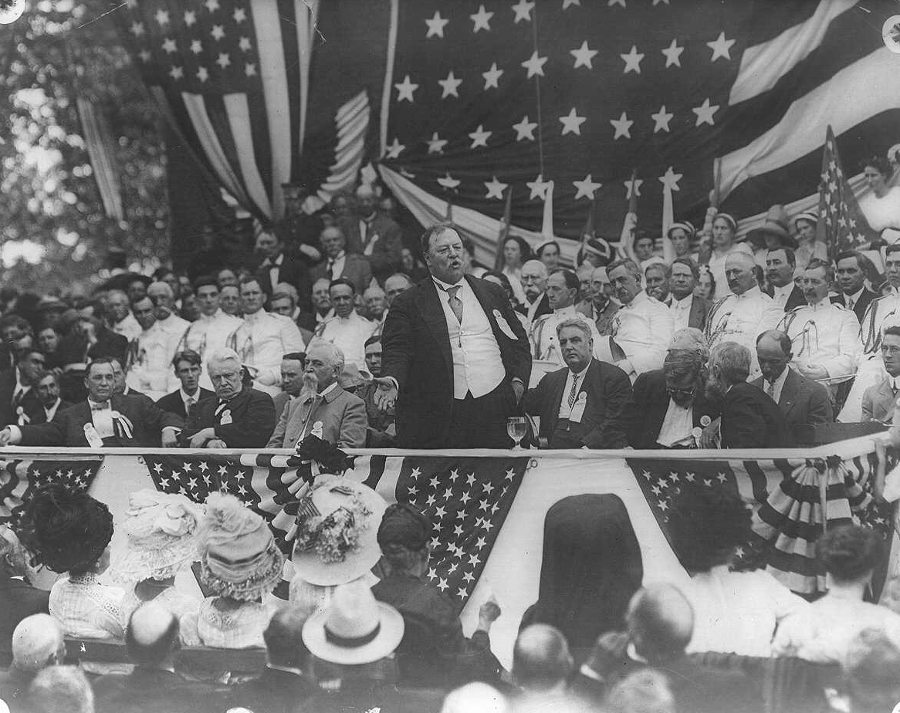
President Taft spoke on the courthouse grounds at the 1911 Manassas Jubilee
Source: Library of Congress, [President Taft speaking at Manassas Court House--Governor William H. Mann to Taft's right] (November 10, 1911)
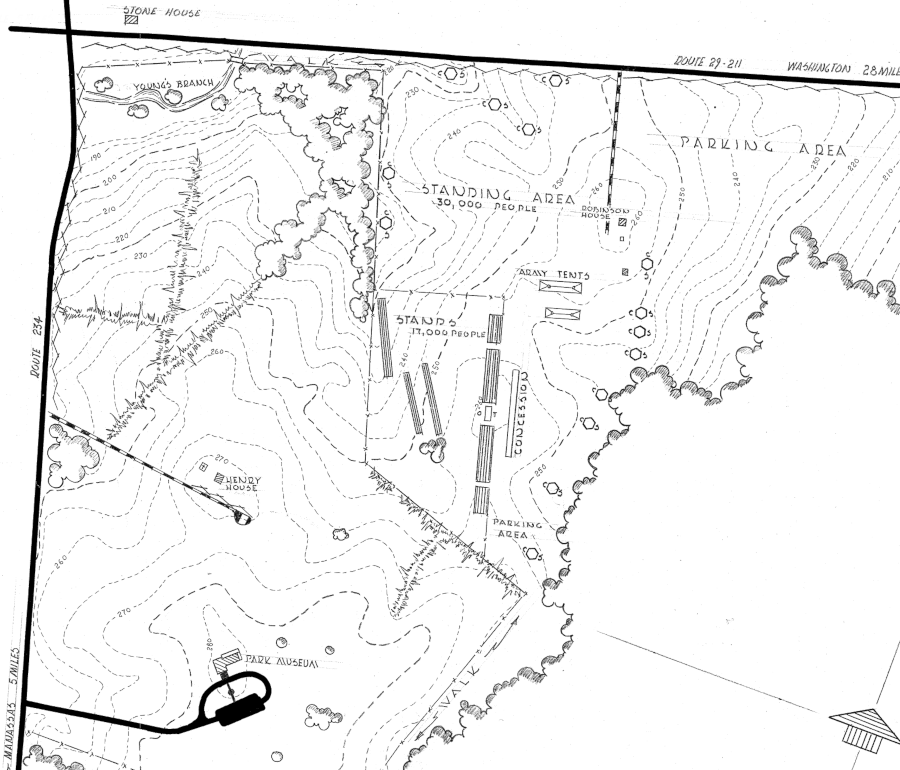
the National Park Service planned public re-enactments for the centennial of the Battle of First Manassas in 1961
Source: National Park Service, Re-Enactment Area of the Battlefield of First Manassas
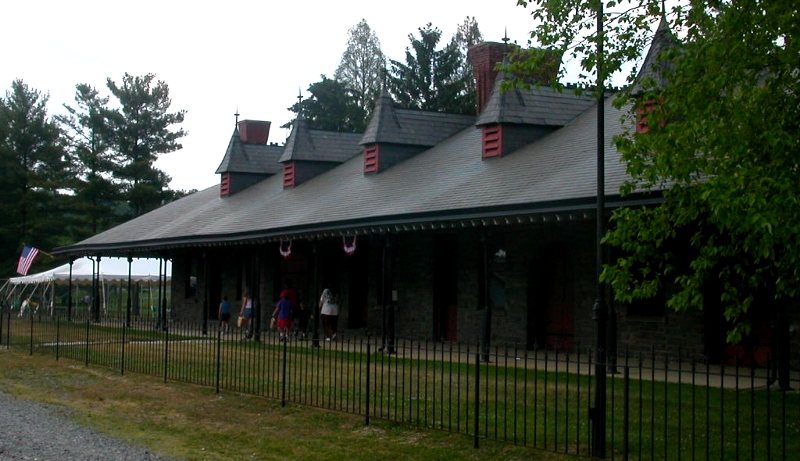
Pulaski Train Station, built in 1880's and renovated a century later, before it burned in November 2008
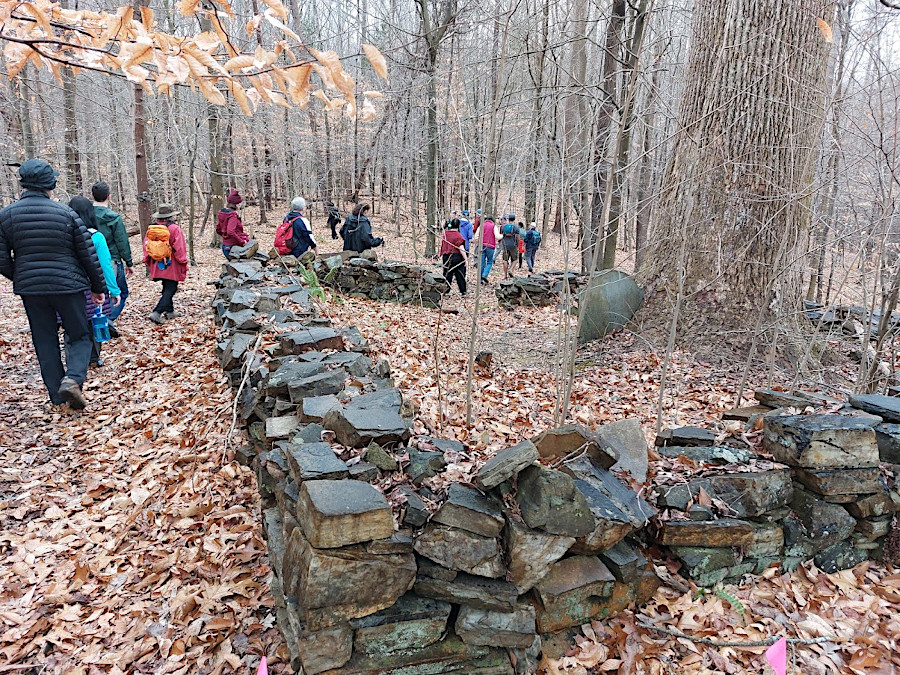
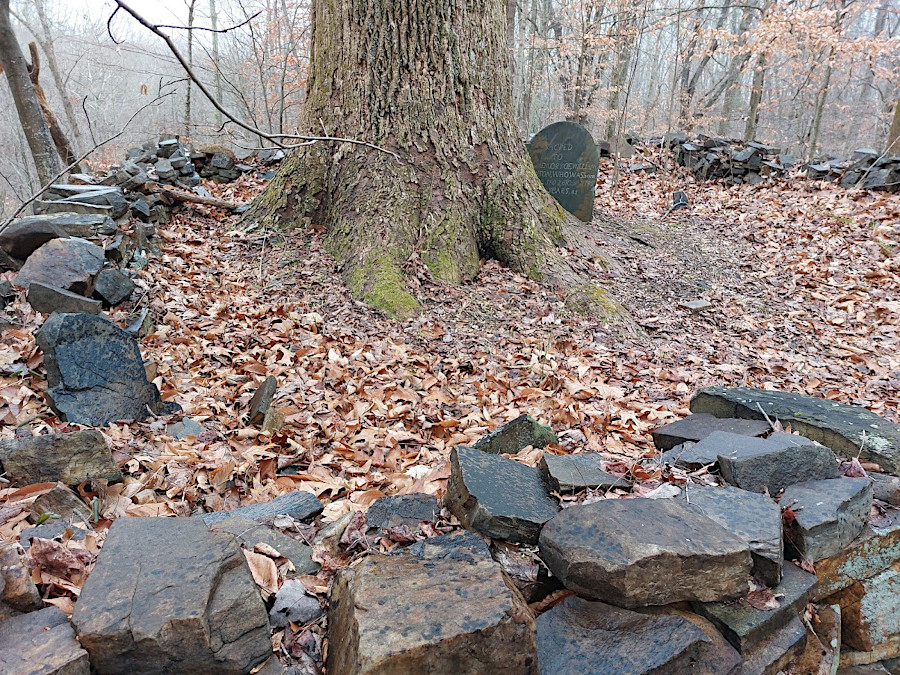
trails at Bull Run Mountain Natural Area Preserve make the Dawson and other cemeteries accessible to hikers
Parks, Forests and Tourism
Virginia Places