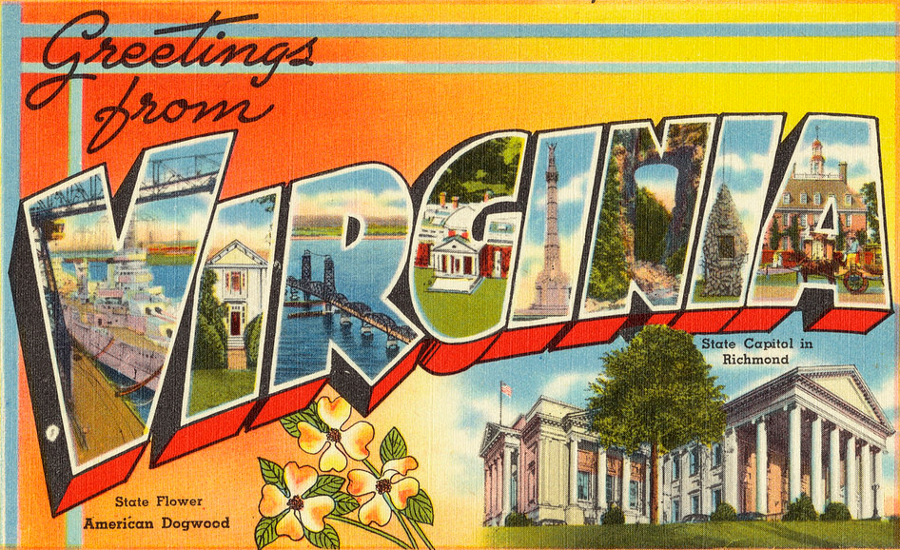
a pre-World War II postcard encourages tourists to visit Virginia
Source: Boston Public Library, The Tichnor Brothers Collection, Greetings from Virginia
a pre-World War II postcard encourages tourists to visit Virginia
Source: Boston Public Library, The Tichnor Brothers Collection, Greetings from Virginia
Any place can have a rollercoaster or a waterslide. Communities that want people to drive to their area and spend money must have something extra, something special, something unique. In Virginia, communities that encourage tourism have discovered two strong "draws" - Virginia's natural beauty and Virginia's extensive history.
By 2021, 16.45% of Virginia was designated as a "protected area," included within boundaries established by national, state, regional and local governments or private organizations such as The Nature Conservancy. The Department of Conservation and Recreation has mapped over 7 million acres with the highest natural resource and historic values, helping to prioritize future acquisitions for conservation. A key official in that agency stated:1
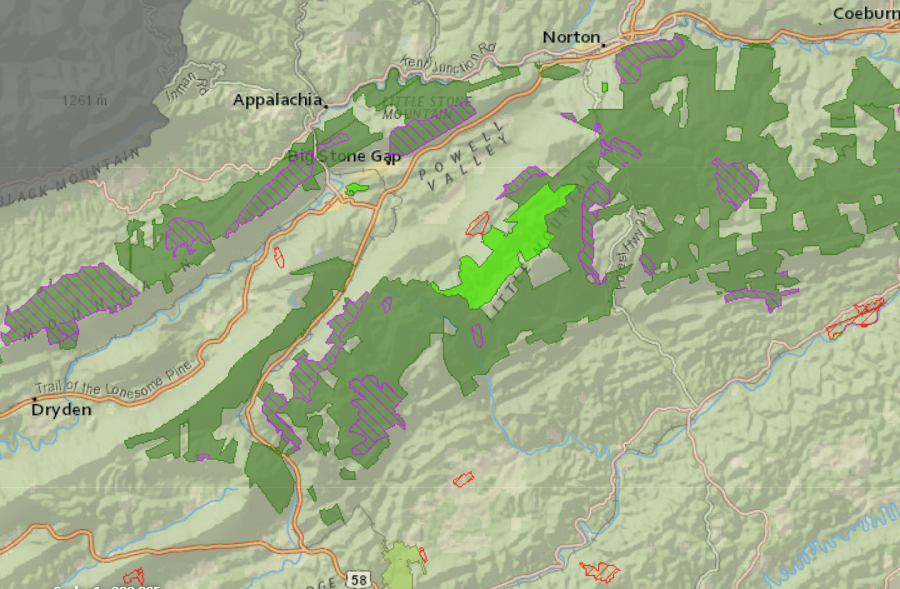
public and private conservation and recreation lands in Southwest Virginia along the Clinch River
Source: Virginia Department of Conservation and Recreation (DCR), Natural Heritage Data Explorer
Tourists support local stores and provide tax revenue with every purchase, while demanding a minimum of services and creating little water or air pollution. In particular, tourists do not send children to the local schools. In rural Virginia, a majority of the county tax levy may be dedicated to paying teachers, repairing schools and running the school bus system. If visitors pay a lot of taxes, then elected officials can set a low property tax rate for local residents while providing a high level of services.
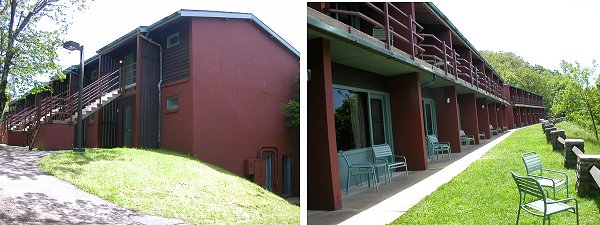
overnight rental units at Big Meadows, in Shenandoah National Park
The oldest public park in the United States is Boston Common. It was initially private land, but in 1634 Massachusetts Bay Colony settlers taxed themselves to purchase 44 acres. The "Common Land" was used as a pasture for cows and sheep until 1830. Today it is the starting point for many tourists to explore the Freedom Trail.
As Americans have become richer, tourism has become a major growth industry. International tourism was dramatically affected by the terrorist attacks in 2001 and then the 2009 recession, but by 2012 jurisdictions in Hampton Roads targeted China, Brazil, and Germany as potential sources of new tourists.
The Virginia Beach Convention & Visitors Bureau objective is to make the city a year-round tourist destination, in part by drawing international visitors looking to see more of the United States beyond the gateway cities such as San Francisco, New York, and Washington DC. After a marketing campaign, 8% of the visitors to Virginia Beach came from Canada to enjoy the sun and fun.
Only 1% of visitors to Colonial Williamsburg come from outside the United States/Canada, so that historical destination has the opportunity to expand its market substantially.2
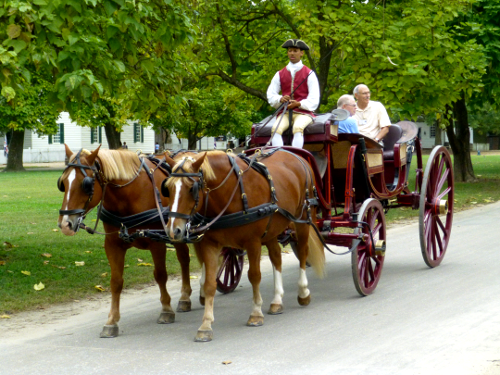
reconstruction of Colonial Williamsburg started in the Great Depression
Nearly all levels of government are encouraging tourism. It is a "green" industry that more than pays its way economically, and politicians are proud to obtain Federal or state funding for local projects.
Politicians compete for units of the Smithsonian Institution to build in their state/Congressional District, just as they compete for military bases. Virginia nearly lost out to an attempt by Colorado politicians to have the Smithsonian Air and Space Museum expand in that western state, but managed to defeat the National Air and Space Museum Expansion Site Selection Act of 1992 (calling for a competitive site selection process) and retain the funding for what is now the Udvar-Hazy Center at Dulles International Airport.
Prince William County wanted a fisheries-related unit of the Smithsonian Institution to locate near a convention center planned at Belmont. The county then planned the Belmont Bay Life Science Center with the Science Museum of Virginia as the academic/science partner for what the county envisioned as a tourist magnet, predicting 750,000 visitors annually. The Washington Post headline, announcing the first $400,000 in state funding, included "Tourists Seen Flocking to Science Center." The facility ended up being a part of George Mason University, used for college classes rather than as a tourist destination.3
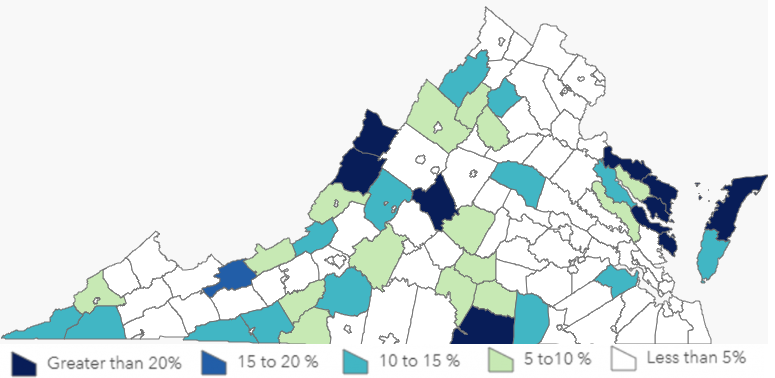
counties with a high percentage of vacation homes are concentrated in the mountains, along saltwater, or at Kerr Reservoir
Source: University of Virginia StatChat, Where are the vacation homes in Virginia?
Plans for tourist-based projects constantly evolve to match funding opportunities/challenges. Virginia voters approved $5 million for construction of the Belmont Bay Life Science Center in the General Obligation Bond referendum in 2002, but that was less than 10% of projected costs. In 2009, the Science Museum of Virginia transferred responsibility for the Belmont Bay Life Science Center to George Mason University (which renamed it the "Potomac Science Center"), and cancelled plans for similar science centers in Bristol and Harrisonburg, because the museum was unable to raise enough funding. State officials considered using one-time federal "stimulus" funds for the Belmont Bay Life Science Center in 2009, but ultimately transferred that money to support sheriff's offices.4
In 2001, plans for a national slavery museum in Fredericksburg were announced by former Governor L. Douglas Wilder, the first black person elected governor in the United States. The Silver Companies, developer of the Celebrate Virginia project nearby, donated land that the corporation valued at $10-12 million.
Fundraising was not sufficient to pay the bills to the architect or the taxes to the city, however, and the organization declared bankruptcy in 2011. An anonymous donor promised to pay the debt, the bankruptcy was cancelled - but the taxes were never paid.
By 2013 the City of Fredericksburg claimed $400,000 in property taxes were overdue, based on its appraisals. In 2012, the city assessor said the 38 acres were worth $7.6 million. An independent 2013 appraisal was 90% lower, reflecting land use restrictions on property donated for the museum.
In the Fall of 2013, the city's lawsuit to force the sale of the slavery museum site appeared resolved when a minor league baseball team in Hagerstown, Maryland agreed to buy the land, pay the back taxes, and build a new ballpark.
The end of the plans for a slavery museum in Fredericksburg triggered a rush of proposals to build an equivalent museum in two other locations. Hampton University highlighted that it is located where slaves were first brought to Virginia in 1619, and where the Union Army first agreed to provide shelter to "contrabands" who fled Virginia plantations in 1861.
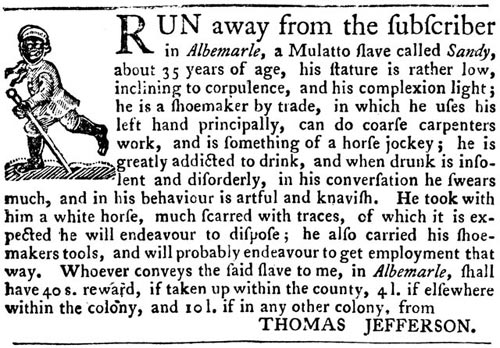
Monticello has revised its interpretation to note that Thomas Jefferson was a slaveowner, as well as prime author of the Declaration of Independence
Source: Library of Congress, Thomas Jefferson: Creating A Virginia Republic
At the same time, the mayor of Richmond proposed building a slavery museum (together with another minor league baseball stadium in Shockoe Creek), highlighting the city's own prominent history with slavery. In both cases, a museum dealing with one of the most difficult aspects of American history was viewed as an economic plus for attracting tourists.5
Explore Park, 1,100 acres on the Blue Ridge Parkway near Roanoke, provided excellent historical interpretation for several years but never attracted enough visitors to cover costs. After the legislature stopped funding local museums with regular earmarks, the Virginia Recreational Facilities Authority and Roanoke County could not recruit regional support, the living history portion of Explore Park closed in 2007.
The Federal government declined to purchase the property and add it to the Blue Ridge Parkway, and the General Assembly refused to make the site into a state park. In 2013, the authority abandoned its once-ambitious plans and transferred control over Explore Park to Roanoke County, giving Roanoke County a 99-year lease for just $1/year.6
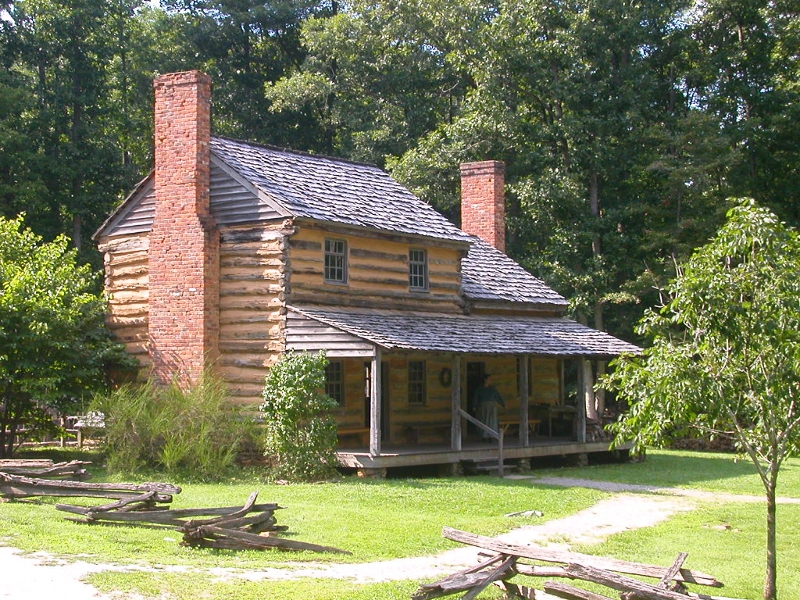
Explore Park is now closed; that frontier version of Williamsburg was an economic failure
Why would communities seeking tourists highlight museums in their advertising? Perhaps they know that more people visit museums each year than attend a professional sports event. The American Alliance of Museums listed 166 members in Virginia in 2019.7
Tourism does have negative impacts, such as construction of roads and parking lots that alter the natural habitats that hikers, birdwatchers, and visitors come to see.
Anglers are not thrilled when boat ramps built with funds from license fees become swimming holes for teenagers or families; loud parties on the shoreline and splashing in the river disrupt the traditional fishing experience. The Virginia Department of Game and Inland Fisheries (DGIF) now posts signs at boat ramps built with DGIF funds, warning that boat ramps are for fishing only.
In Fairfax County, Burke Lake is owned and managed by DGIF, and surrounded by a county park. Kayakers who want to practice their Eskimo rolls in flat water are banned; the only acceptable kayak in Burke Lake is a kayak from which someone is fishing.
Occasionally there is a backlash against tourism. Virginia Beach police confronted black college students at the Greekfest festival in 1989, risking a boycott after local residents complained that vacation behavior had gotten out of hand.8
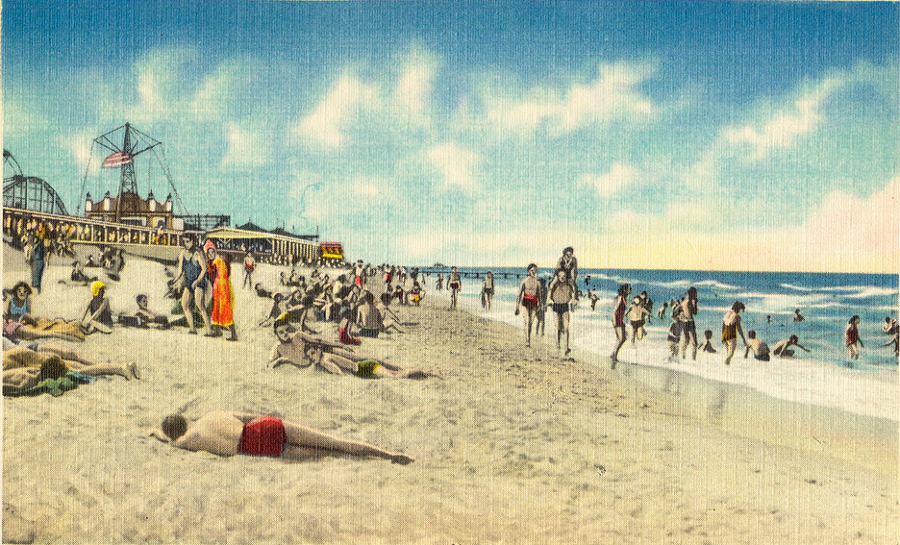
a pre-World War II postcard shows vacationers swimming in the Chesapeake Bay at Norfolk
Source: Boston Public Library, The Tichnor Brothers Collection, On the beach, Ocean View Park, Norfolk, VA
Northern Fauquier residents feared commercial sprawl would overwhelm their county when Disney America was proposed near Haymarket in adjacent Prince William County. The Fauquier county supervisors have also struggled to control noise affecting residents adjacent to wineries, which have expanded from agricultural outlets showcasing wine into generic event centers hosting weddings and large groups.9
The benefits of tourism outweigh the costs, in most circumstances. Virginia competes intensely with other states, and communities within Virginia compete with each other, to attract money-spending tourists - just as communities compete to attract businesses to locate in their area. Competition between jurisdictions can handicap efforts to draw people to a region, such as the Roanoke Valley or Hampton Roads, since states, counties, and cities are reluctant to share the rewards (tax revenues) that come with success.
Mother Nature ignores the political boundaries separating the states, or the counties and cities within Virginia. The Chambers of Commerce are far more conscious of those boundaries, however. Advertising intended to draw tourists to the Outer Banks of North Carolina rarely mentions the charms of Virginia Beach - and don't hold your breath waiting for the Virginians to encourage visitation to sites in North Carolina either.
Collection and distribution of tax revenues are based on political geography, so tourism advertising often reflects political rather than ecological boundaries. Nearly all the listings for accommodations on the Chincoteague Chamber of Commerce Web site have (surprise!) a Chincoteague mailing address. Hotels/motels in Chincoteague might benefit from joint marketing with Ocean City to attract customers from the Washington, DC area, but the business community on the Virginia island does not want any of the tourism business to leak across the border into Maryland.10
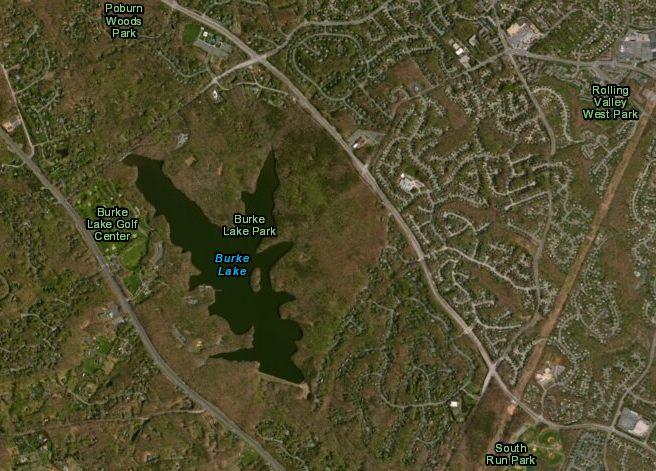
the Fairfax County Park Authority manages parkland around Burke Lake for typical suburban activities - but recreational use of the lake itself is reserved for just anglers
Source: ESRI, ArcGIS Online
Some partnerships work. The National Football League, Major League Baseball, and other professional leagues share some revenues among all the teams, because they know that no single team can thrive independent from the league.
Virginia localities occasionally demonstrate team spirit and finance joint advertising campaigns, and the Virginia Tourism Corporation awards Tourism Marketing Grants to spur consolidated advertising. Costs, but not revenues, are shared with other jurisdictions in a tourism marketing region; the sales taxes, meals taxes, and lodging taxes paid by tourists are retained by local governments.
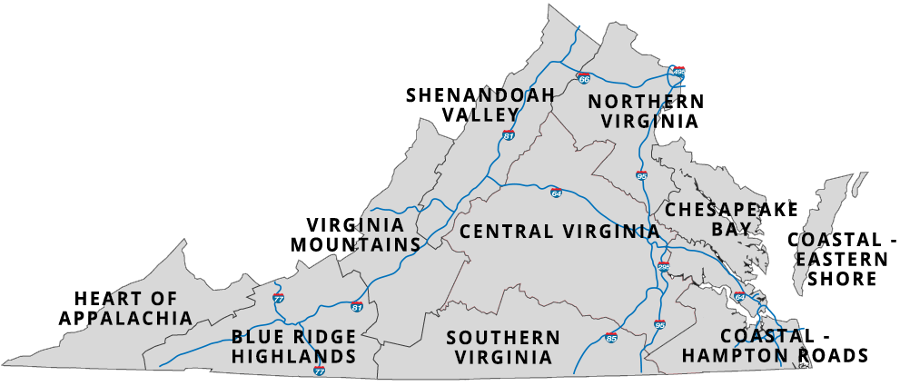
the Virginia Tourism Corporation markets different regions of Virginia
Source: Virginia Tourism Corporation, Virginia Map
 In Fall 2013, a $25,000 state grant helped to fund a joint, three-year effort by Discover Prince William & Manassas, the Alexandria Convention & Visitors Association, Arlington Convention & Visitors Service, Visit Fairfax and Visit Loudoun to attract Canadian tourists to Northern Virginia. As one tourism official noted, the advertising effort targeted the largest source of international visitors that come to Virginia, and drawing more Canadians to any of the jurisdictions in Northern Virginia gave each one a chance to increase revenue:11
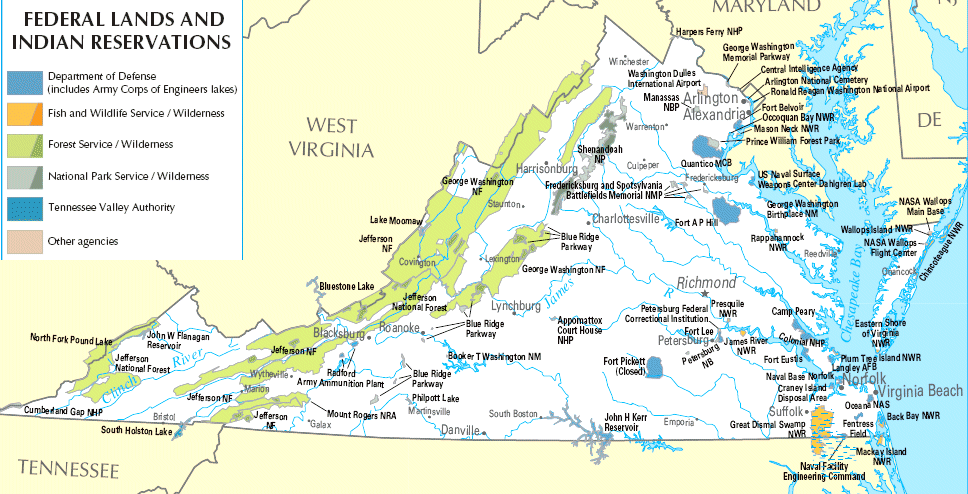
National Forests (managed by the US Forest Service) are in western Virginia, while National Wildlife Refuges (managed by the US Fish and Wildlife Service) are in eastern Virginia
Source: National Atlas, Federal Lands and Indian Reservations in Virginia
In many Virginia communities, there are even rival Chambers of Commerce for different parts of a county, or a city may have a separate Chamber that cooperates only occasionally with the equivalent organization in the county. In Prince William County, after development was spurred on the eastern end of the county by construction of I-95, there were two Chambers of Commerce - one centered on the eastern end, one based in Manassas - until the groups merged in 2010.
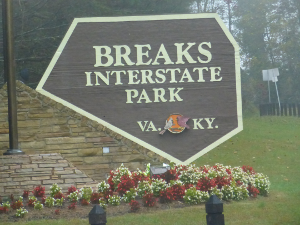
Occasionally, however, you can find some cross-border initiatives. After World War Two, Virginia and Kentucky partnered to create Breaks Interstate Park, one of just two multi-state parks in the United States (together with Palisades Interstate Park in New York/New Jersey).
Local leaders in Dickenson and Buchanan counties, and their counterparts in Kentucky, had hoped the 1,000' deep canyon carved by the Russell Fork would become a national park attracting tourists. When the National Park Service said the site lacked national significance, Kentucky and Virginia got the US Congress to approve an interstate compact to create an interstate park.12
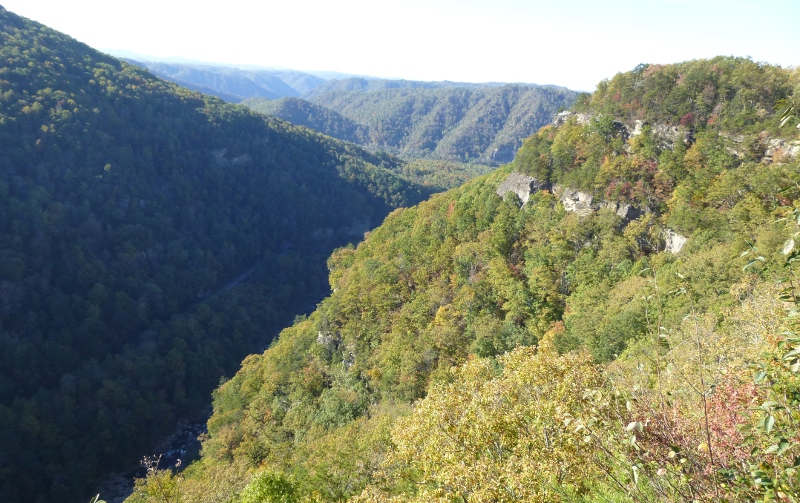
Breaks Interstate Park claims it is the largest gorge (1,000 feet deep) east of the Mississippi River
The Charles Kuralt Trail links national wildlife refuges (and one fish hatchery) in southeastern Virginia and northeastern North Carolina. Kuralt had previously hosted a series of "On the Road" and "Sunday Morning" broadcasts for CBS News, highlighting the beauty of America's natural places as well as unusual people/locations across the country.
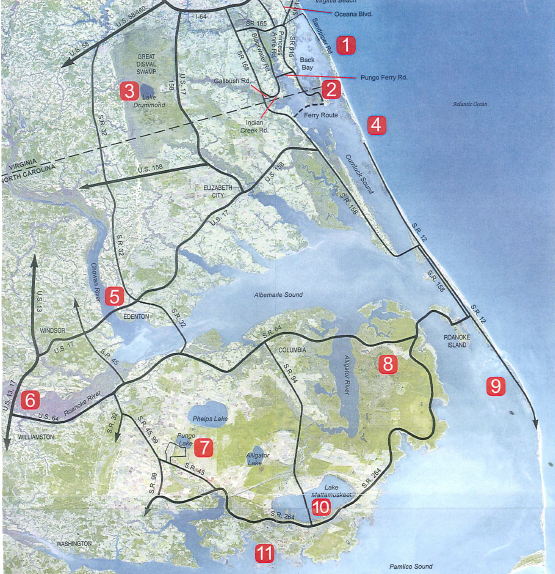
the Charles Kuralt Trail is a rare example of interstate cooperation involving tourism
Source: US Fish and Wildlife Service (FWS), Charles Kuralt Trail
Kuralt was a native of North Carolina, but he thought in broader ecological terms such as "watershed" rather than in jurisdictional terms such as "state" or "taxing district." The sites on the Charles Kuralt Trail are all within the Roanoke-Tar-Neuse-Cape Fear ecosystem, draining into Albemarle Sound.
Great Dismal Swamp and Back Bay National Wildlife Refuge in Virginia are connected with 10 North Carolina sites. In southeastern Virginia and northeastern North Carolina, the physical geography makes interstate cooperation particularly appropriate. Drivers in a car can reach Mackay Island National Wildlife Refuge, which is mostly in North Carolina, only via a road from Virginia.
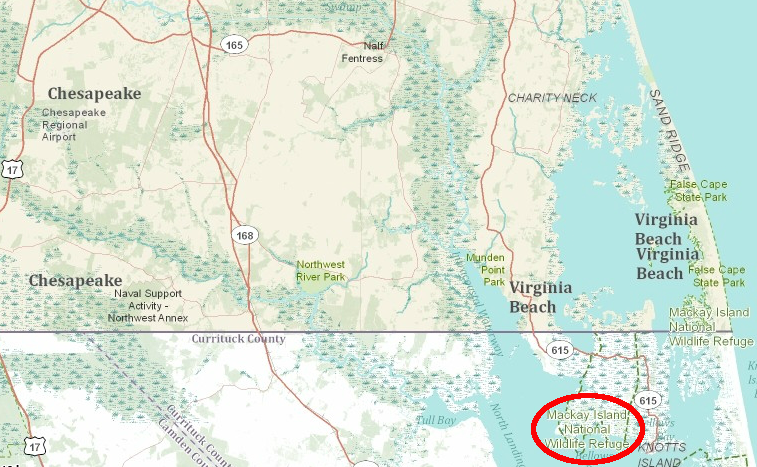
road access to Mackay Island National Wildlife Refuge in North Carolina requires driving through Virginia
Source: US Fish and Wildlife Service (FWS), Wetlands Mapper
The Virginia Birding and Wildlife Trail highlights natural areas across the state, independent of political jurisdictional boundaries. Loops on the trail are lumped into three categories - Coastal, Piedmont, and mountain (including the Valley and Ridge physiographic province.)
Birds migrate along the Atlantic flyway in a seasonal pattern that ignores state boundaries. The coastal birding trails for adjacent states could cross-advertise together, but state tourism agencies traditionally emphasize cooperation with a state but competition against neighboring states.
Florida, Georgia, and South Carolina can advertise when springtime migrants have left for northern breeding grounds, funneling birders sequentially to North Carolina, Virginia, Maryland, Delaware, and New Jersey sites. In the fall, the northern states can return the favor. That would require a regional, flyway-based perspective, rather than one based on political jurisdictions or taxing districts interested in the economic benefits from tourism. It could be done, as demonstrated by Journey North's Monarch Butterfly Migration Tracking Project.
Outdoor recreation is an industry, as well as an avocation for individuals. Businesses that manage campgrounds, rent bikes/canoes, offer sightseeing tours, and support a wide range of activities outdoors are only a small part of the economic base of Virginia. Large and small corporations often select locations for opening new units based on the quality of life available and the ability to attract talented employees:13
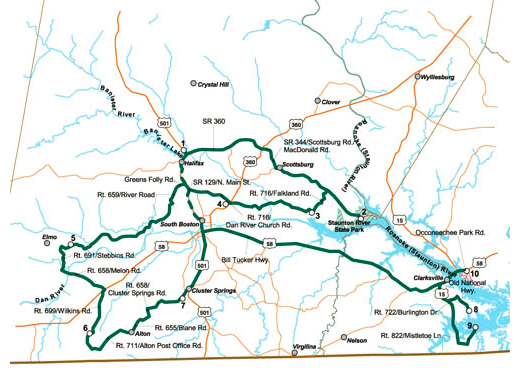
Dan River Loop of the Virginia Birding and Wildlife Trail stays on just the Virginia side of the border
Source: Virginia Department of Game and Inland Fisheries (DGIF), Virginia Birding and Wildlife Trail- Dan River Loop
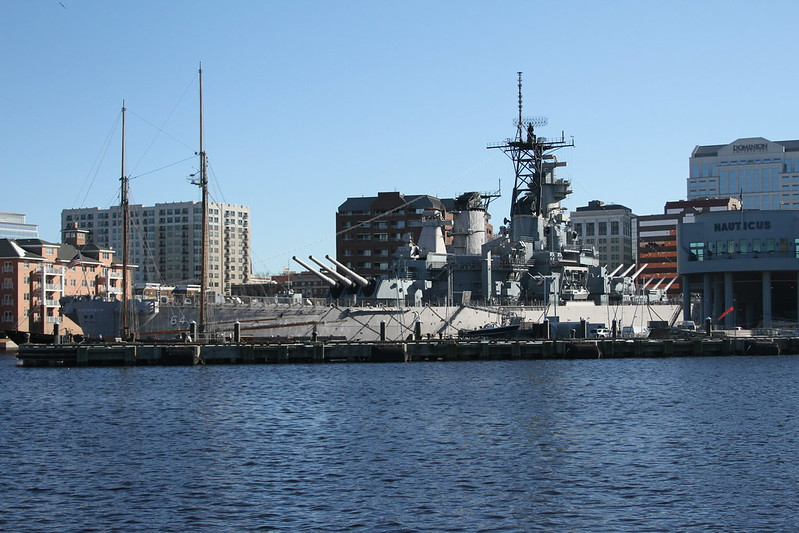
the USS Wisconsin battleship is now a tourist attraction in Norfolk
Source: US Army Corps of Engineers, IMG_4592
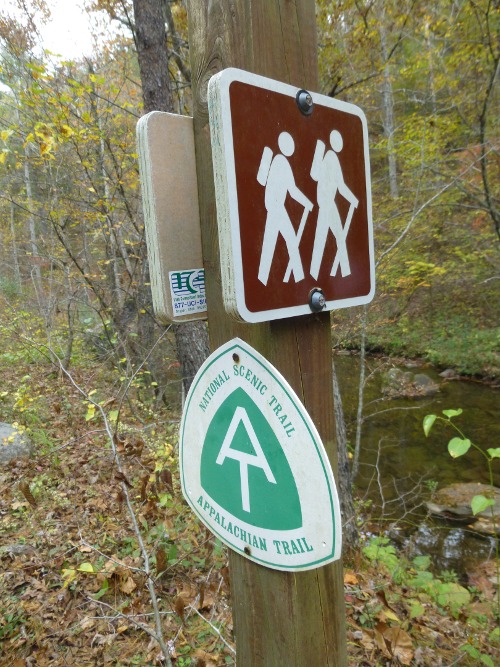
over 500 miles of the Appalachian Trail runs through Virginia
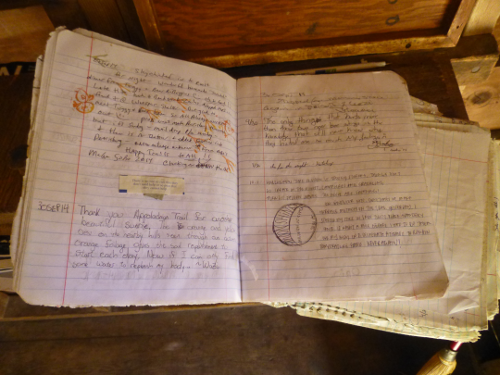
Appalachian Trail hikers record their experiences, as in this notebook at Bailey's Gap Shelter (Giles County)
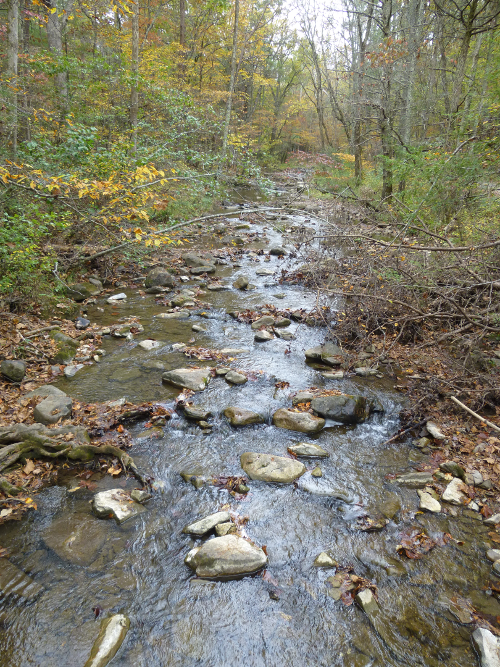
mountain streams attract trout anglers, as well as hikers on nearby trails
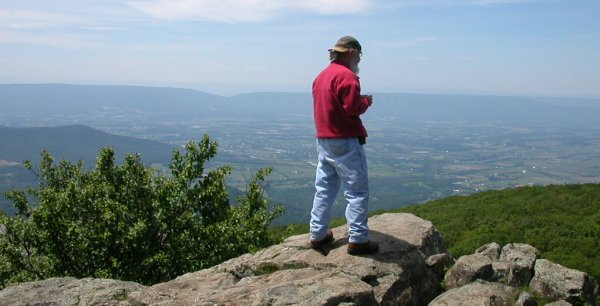
View from Big Meadows, Shenandoah National Park
the iconic "Virginia Is For Lovers" advertising campaign was launched in 1969
Source: Governor of Virginia, Governor McAuliffe Unveils First "Welcome to Virginia" Sign at Dulles International Airport (January 6, 2015)
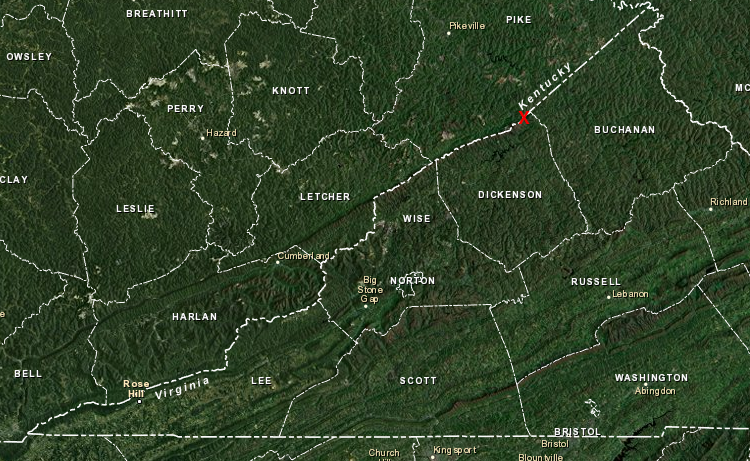
Breaks Interstate Park is in southwestern Virginia
Source: ESRI, ArcGIS Online
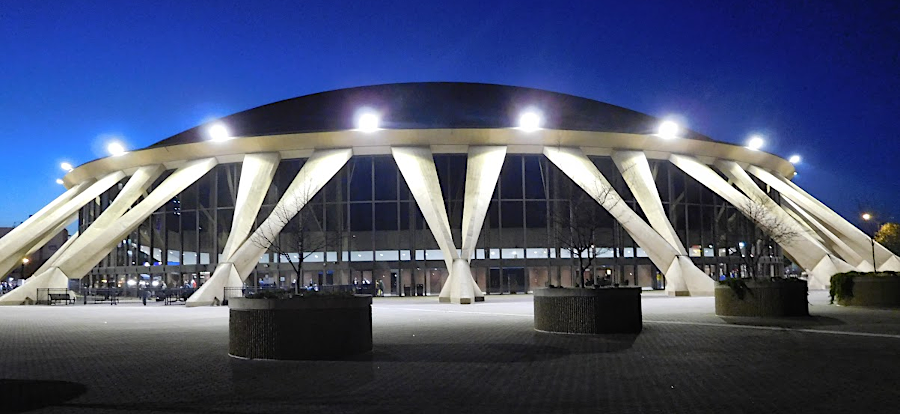
Scope Arena in Norfolk