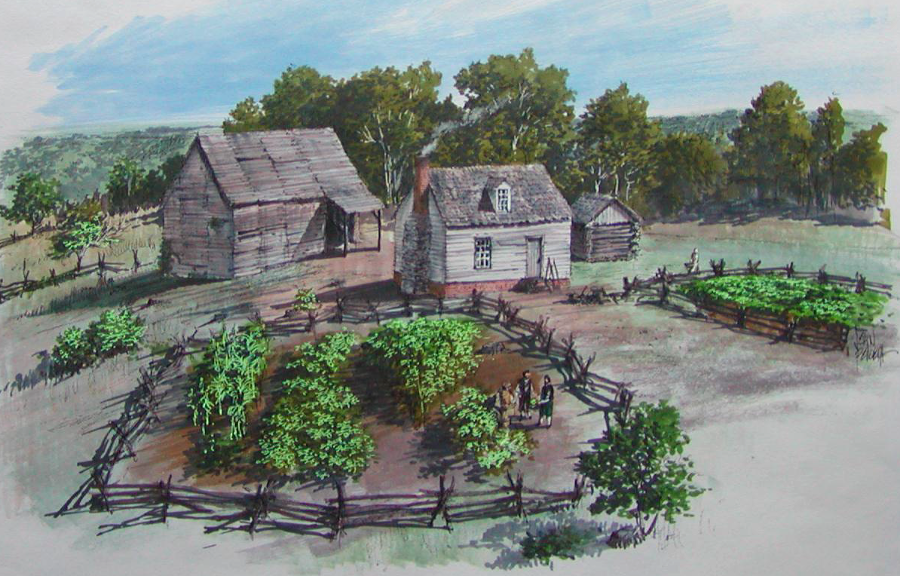
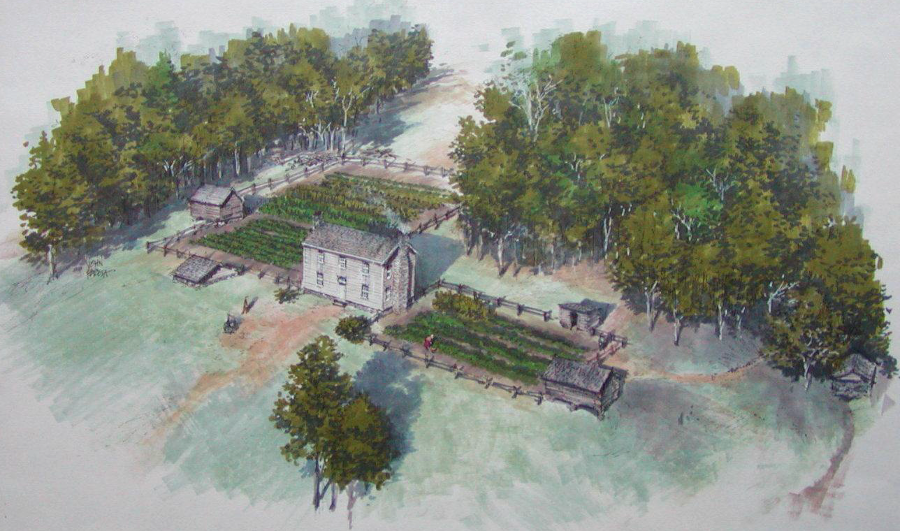
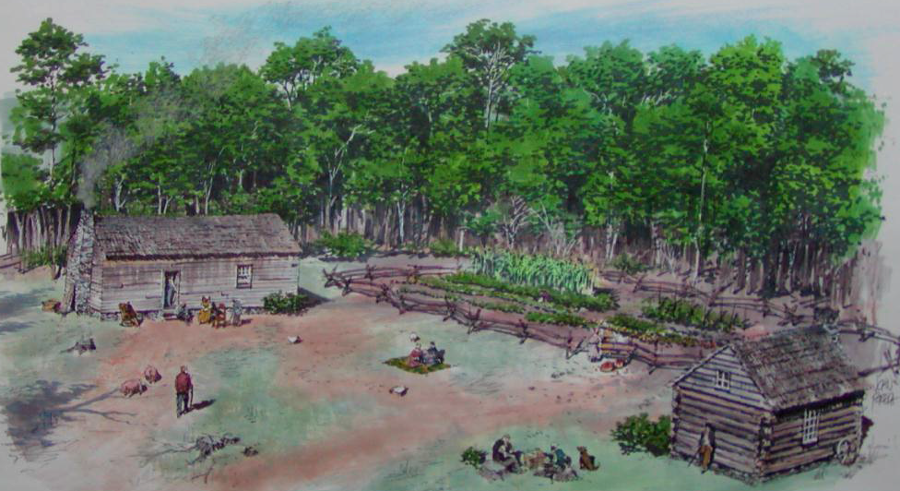
many farmers in Northern Virginia shifted from tobacco to wheat and other crops around the time of the American Revolution
Source: National Park Service, Archeology in the Prince William Forest Park
many farmers in Northern Virginia shifted from tobacco to wheat and other crops around the time of the American Revolution
Source: National Park Service, Archeology in the Prince William Forest Park
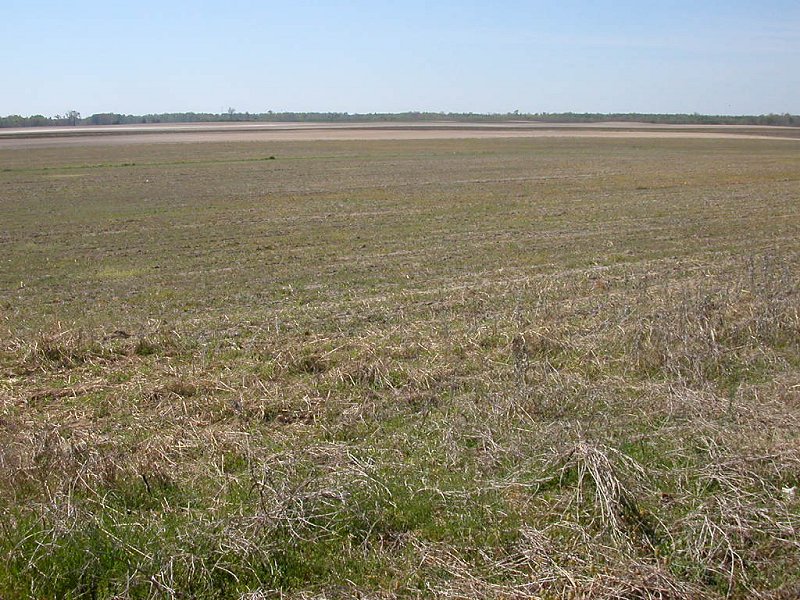
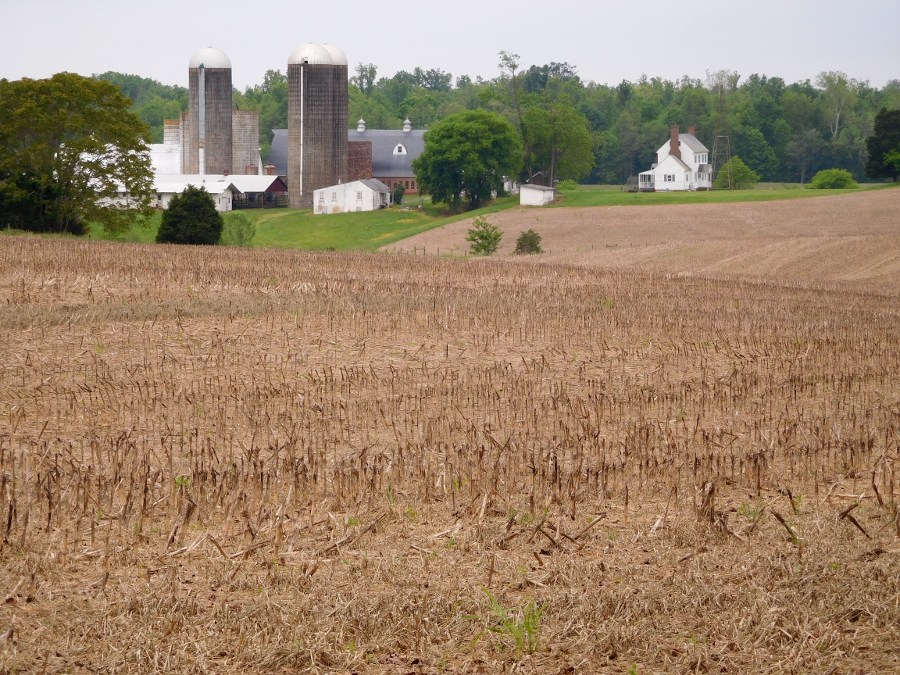
flat farm field next to Bacon's Castle (Surry County)
Agriculture was a recent development for the humans who had arrived about 20,000 years ago. For the last 3,000 or so years before the English arrived, Native Americans planted seeds and harvested crops on purpose. If all the 4.6 billion years of the earth's existence were considered as an annual calendar, the emergence of humans would appear at around 11:30pm on December 31, the last day of the year. The development of agriculture would occur after 11:59pm, in the last minute of the entire year.
The oldest known plowed field was discovered in an archeological dig at Kalibangan in India. Farmers there were ploughing furrows in 2,700 BCE (Before Common Era) to grow crops, perhaps barley or mustard.
Agriculture developed independently in the Western Hemisphere. None of the eight "founder" crops of agriculture in Eurasia - emmer wheat, einkorn wheat, barley, lentil, pea, chickpea, bitter vetch, and flax - were native and available for domestication in the Americas.
In Virginia, the Native American fields were not ploughed. Fields included separate mounds of earth, piled around corn, squash, bean, and other seeds by using bones of elk and bison as shovels. Planting and weeding with stics and bones was suitable physically for both men and women but ploughing required upper body strength. Cultures that relied upon plough-based agriculture developed gender differences, with males becoming responsible for outdoor activities such as farming.1
The grain, beans, and vegetables grown in Virginia were intended for trade and taxes as well as use by the farmers themselves. When the Europeans arrived here, the first Virginians were more than simple subsistence farmers.
A subsistence" farmer raises just enough food to feed the family, with none left over for commercial sale. When Jamestown was settled in 1607, Native American villages in Virginia did not have the luxury of consuming all the agricultural products produced by that village. Powhatan demanded a stiff contribution from his subordinate tribes, collecting "surplus" corn and storing it for later redistribution.
The European colonists were engaged from the beginning (almost...) in market-oriented farming. Within the first decade, the Virginia colonists were raising tobacco for export rather than food for subsistence. For the first 5 or more years, the colonists depended upon the resupply shipments from England plus trade with the local Indians for a substantial portion of their food supply. The Native Americans knew that control over the food supply was important. When the Patawomeck who lived at Aquia Creek sold corn to the English, Powhatan lost leverage.
The English sailed to Aquia Creek because that was the edge of Powhatan's control. Transporting the corn in their ships was relatively inexpensive.
Modern transport has dramatically altered agricultural operations. During the winter in Virginia, grocery stores sell fresh vegetables that have been grown in Chile (which, after shipping, may not be as tasty as local crops in season). It is possible to pick a green tomato in the Central Valley of California, ship it as a rock-hard item in a crate, artificially ripen it in an ethylene-filled warehouse chamber, and sell it at the local grocery store - but it will never taste as good as a locally-grown tomato in August.
no-till corn field on Duncan Store Road (Cumberland County)
Source: Clean Water Coalition, Conservation Farming in Virginia
According to some sources, the oldest family-owned business in North America is Shirley Plantation, which has been growing tobacco and other crops since 1615. Since 1638, members of the Hill and Carter familes have owned and operated it. Indentured servants were the first labor force, then enslaved workers grew the crops and tended to the animals until the Civil War.
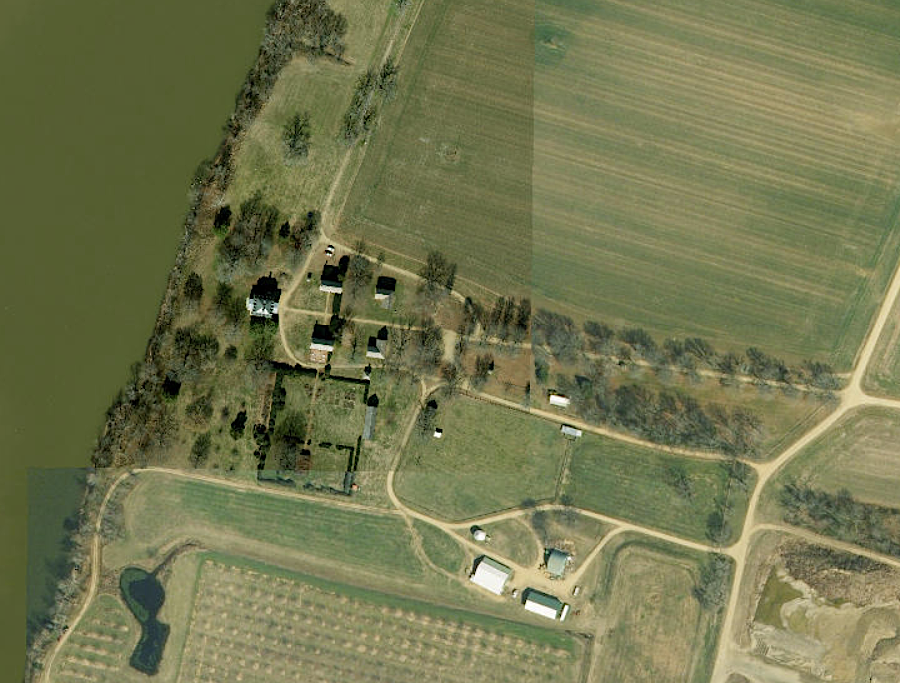
colonists began farming fields at Shirley Plantation in 1615
Source: ESRI, ArcGIS Online
According to other sources, the oldest land continuously farmed in the European style in the United States is Mainland Farm nearby in James City County. To preserve the site from development, the county purchased the farm in 2013, placed a conservation easement on it with Historic Virginia Land Conservancy restricting land use to just agriculture and forestry, and leased the 214 acres for commercial farming.
According to the James City County Historical Commission, crops have been grown at the site since 1619 - or perhaps even earlier:2
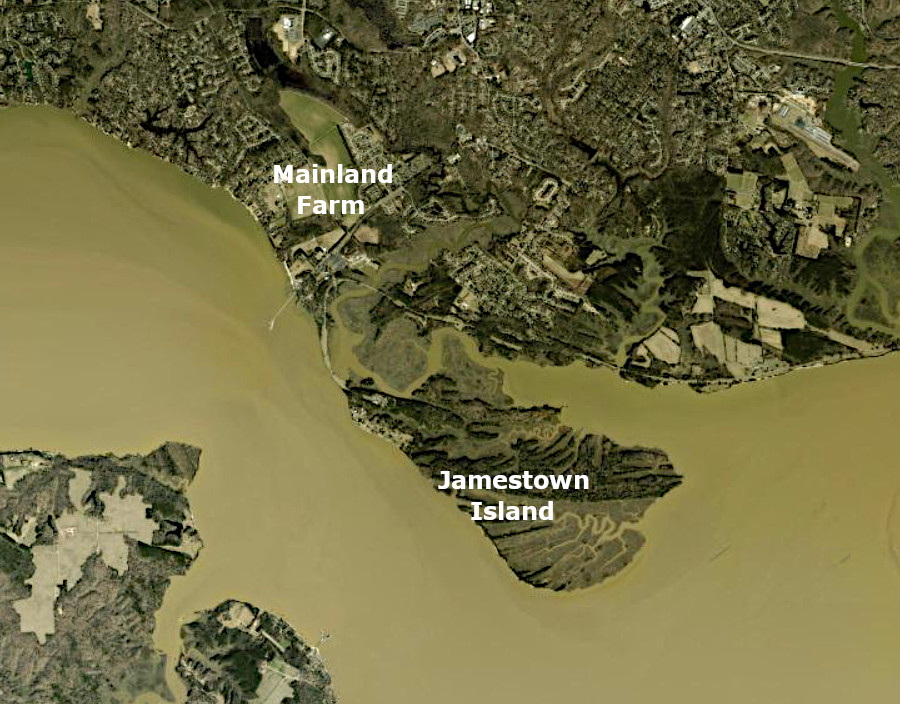
English colonists started raising crops at Mainland Farm over 400 years ago
Source: ESRI, ArcGIS Online
Today Augusta, Rockingham and Shenandoah counties in the Shenandoah Valley produce one-third of the state's agricultural products, as measured by market value. Grains and poultry products, including milk and eggs, are processed in facilities between Winchester and Waynesboro.3
Local farm markets offer an alternative to purchasing food that has traveled long distances to grocery store shelves. In Virginia, there's still a market for "truck farming" where crops are trucked from the farm to the city to be sold fresh, eliminating the costs and quality reduction associated with shipping and selling through a middleman such as Giant, Kroger, or Whole Foods.
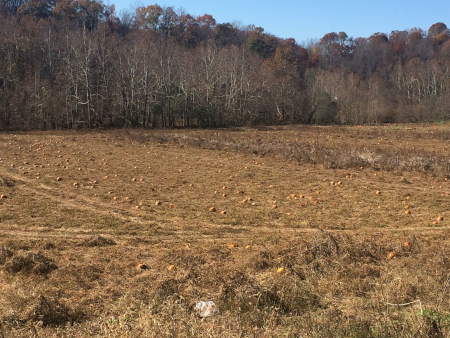
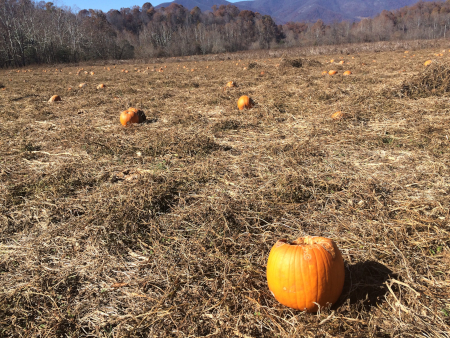
ripe pumpkins in the field after Halloween (Nelson County)
Truck farming got its name originally from the word for bartering (Middle English "trukken," based on the Old French "troquer"). When you go to a farmers market now and purchase vegetable from the bed of the truck, it is the negotiation over price - not the vehicle that transported the food - that is the basis for the name "truck farming."4
Number of Farms and Land in Farms - 2000
1998 Statistical Abstract of the United States. Total surface area includes 107.9 million acres of water areas. Source: Virginia Department of Agriculture and Consumer Services |
||||||||||||||||||||||||||||||||||||||||||||||||||||||||

silo in the Shenandoah Valley, 1941
Source: Library of Congress, Scenes of the northern Shenandoah Valley, including the Resettlement Administration's Shenandoah Homesteads (by Ben Shahn, 1941)
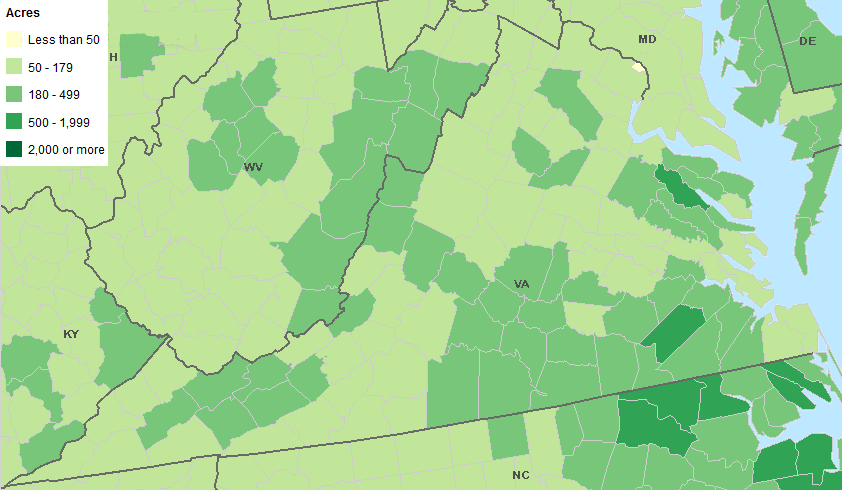
Virginia farms in the Shenandoah Valley are typically smaller than in Southside
Source: United States Department of Agriculture, Ag Census Web Maps, Average Size of Farms in Acres: 2012
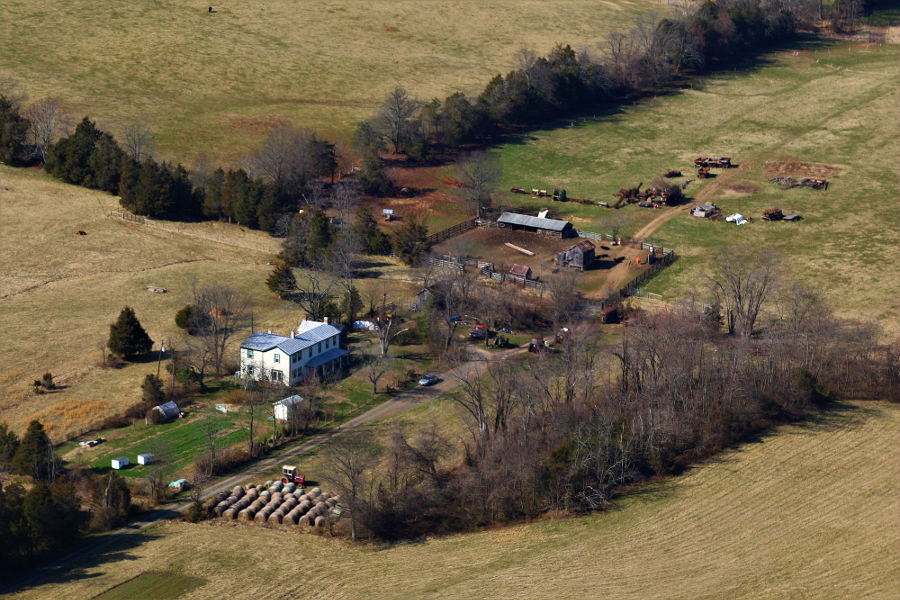
suburbanization has not yet converted this farm at Antioch, in Prince William County, into a housing subdivision
Source: Historic Prince William, Farm at Antioch and I-66 - #283
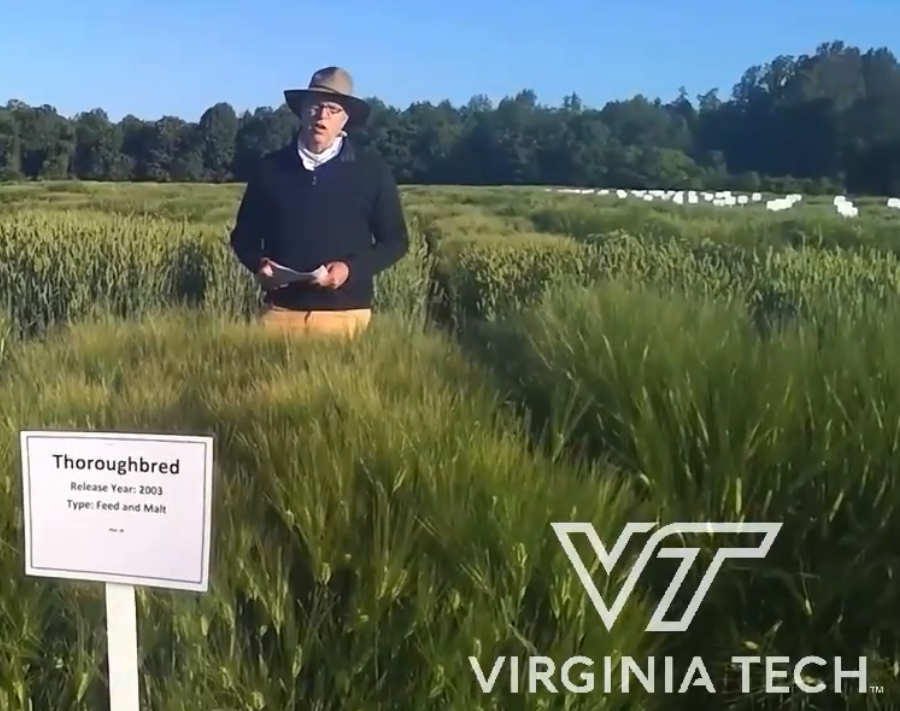
Agricultural Research & Extension Centers across the state host "farm days" to transfer the latest research to farmers
Source: Eastern Virginia Agricultural Research & Extension Center, Virginia Small Grains Field Day (May 21, 2020)
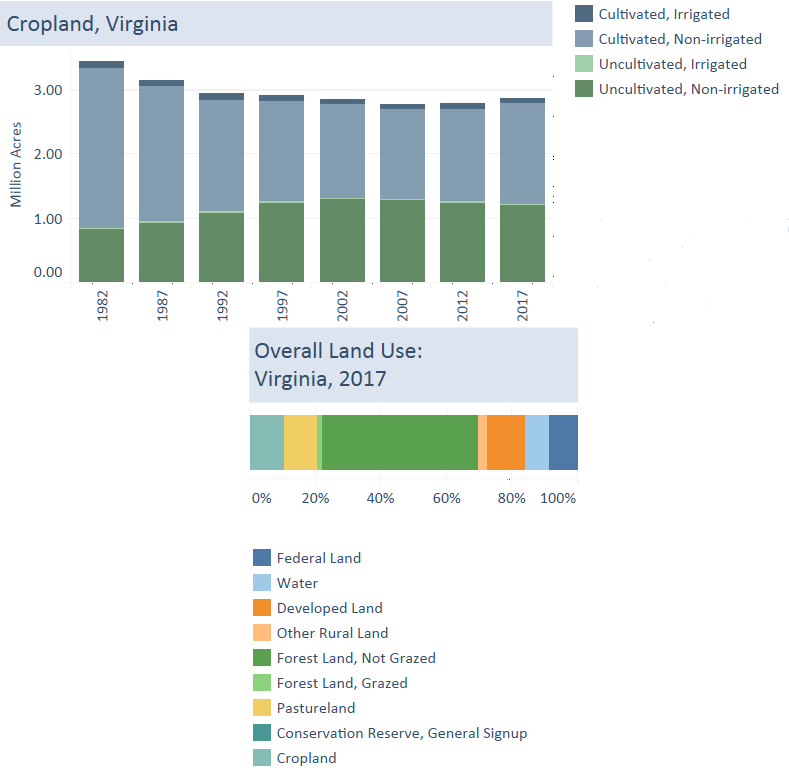
cropland trends in Virginia, 1982-2017
Source: Natural Resources Conservation Service RCA Data Viewer, Land Use Trends
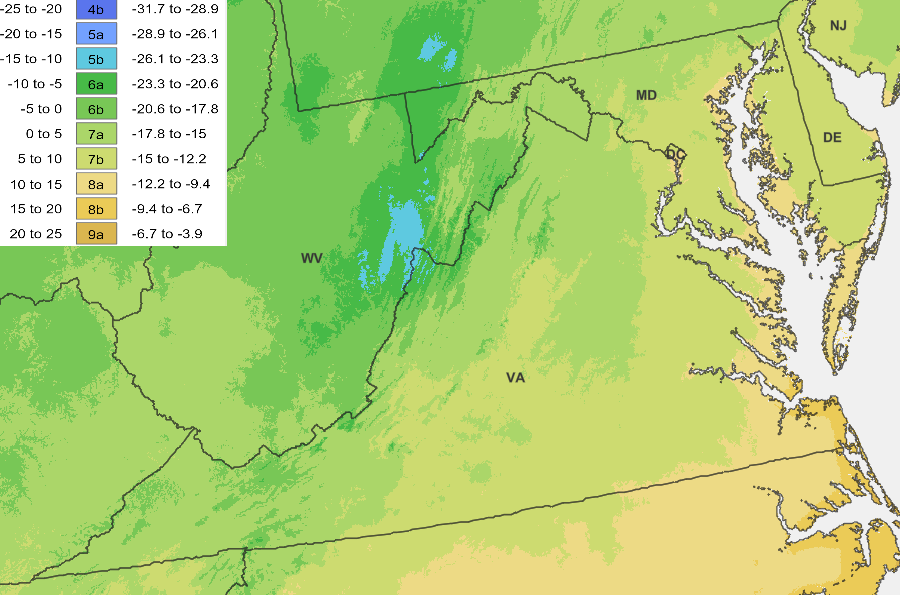
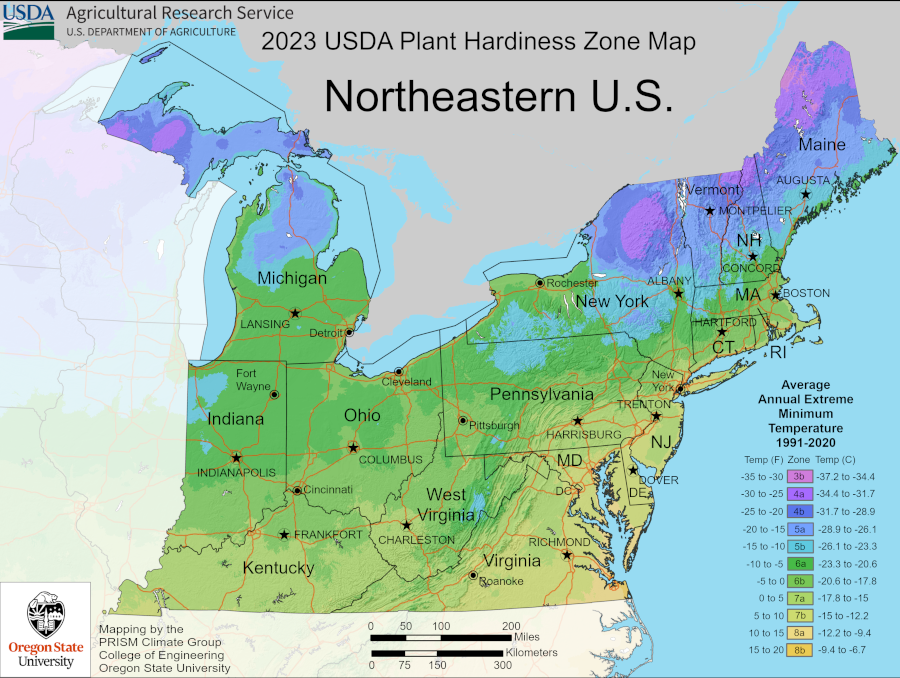
the average annual extreme minimum winter temperature defines the plant hardiness zones for Virginia
Source: US Department of Agriculture (USDA), USDA Plant Hardiness Zone Map (2023)

Virginia soybeans arrive in Port of Dandong, China
Source: News Release, Governor McDonnell Announces Soybean Export, Business Agreements between Perdue Agribusiness and China's Dandong Port Group (September 15, 2011)
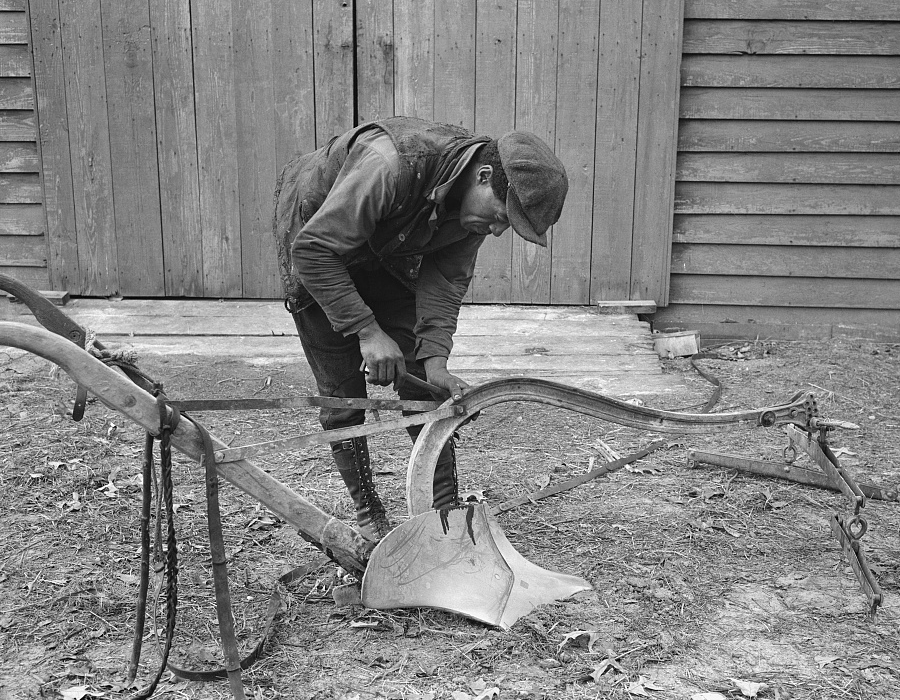
plows pulled by horses/mules to till the soil required sharpening and repair
Source: Library of Congress, Mending a plow which has been bought through funds advanced by the Resettlement Administration. Virginia (by Arthur Rothstein, 1935)
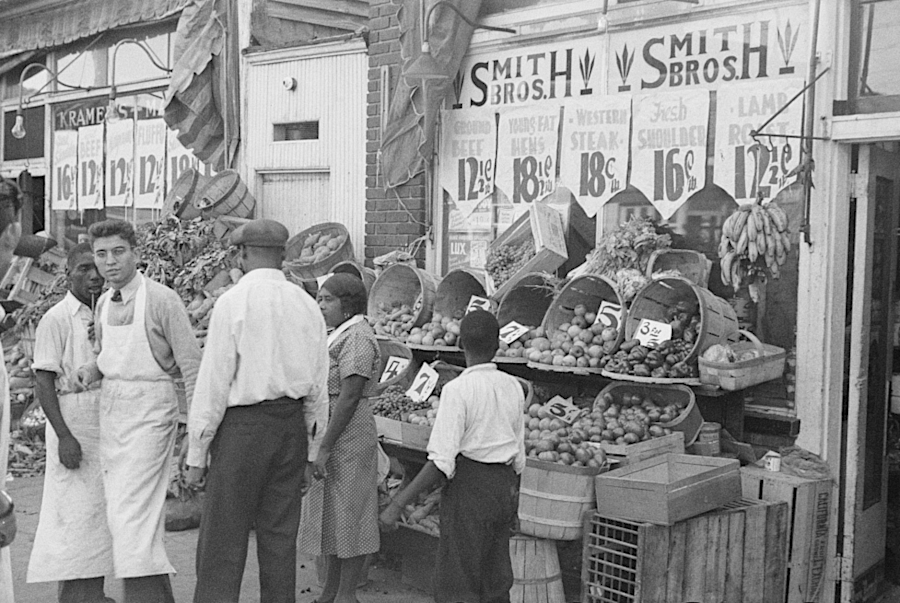
nearby markets are essential for agriculture, so transportation costs are low enough for farmers to make a profit
Source: Library of Congress, Market in the Negro section, Newport News, Virginia (by Paul Carter, 1936)
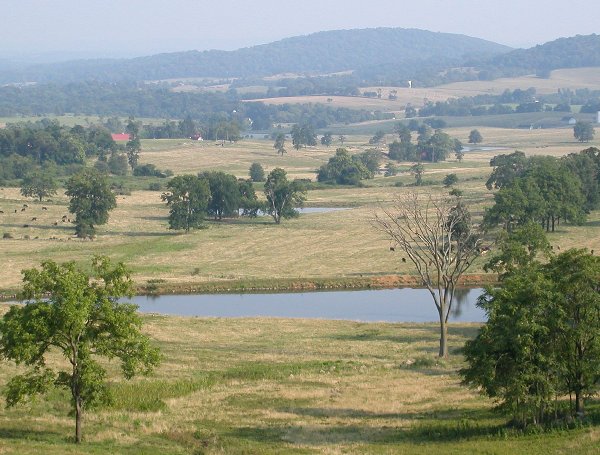
Farm ponds in Fauquier County (at Paris)
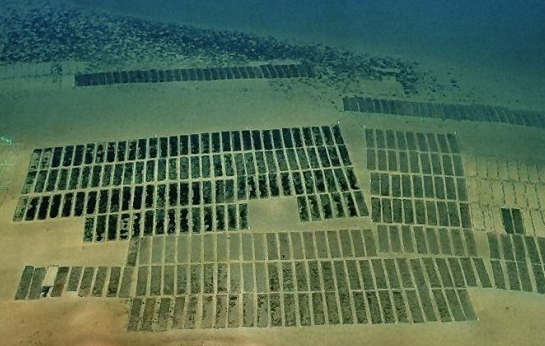
in commercial aquaculture operations, clams are protected by netting to reduce loss to predators
Source: Virginia Marine Resources Commission, Shellfish Aquaculture, Farming and Gardening
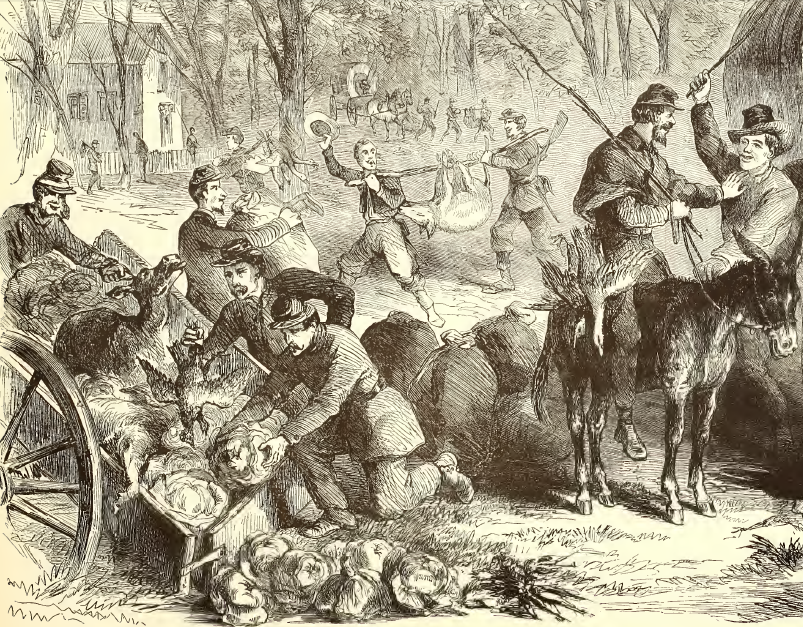
Federal and Confederate foraging parties in the Civil War stole livestock, poultry, and crops from local farmers
Source: Frank Leslie's Illustrated History of the Civil War, The Return of a Federal Foraging Party Into Camp Near Annandale Chapel, VA (p.31)
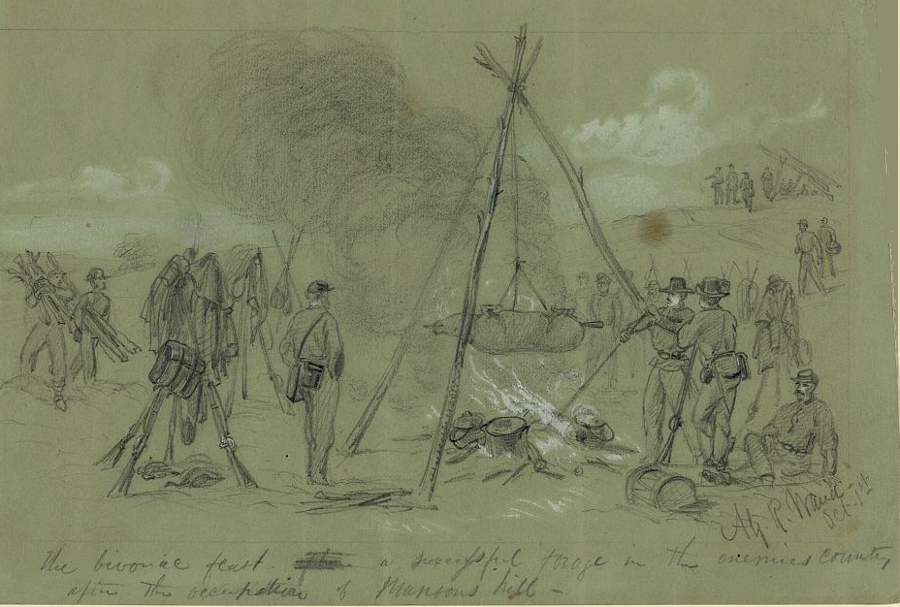
soldiers on both sides raided Virginia farms during the Civil War, supplementing official rations with "captured" beef, pork, and chicken
Source: Library of Congress, The bivouac feast after a successful forage in the enemies country after the occupation of Munson's hill (October, 1861)
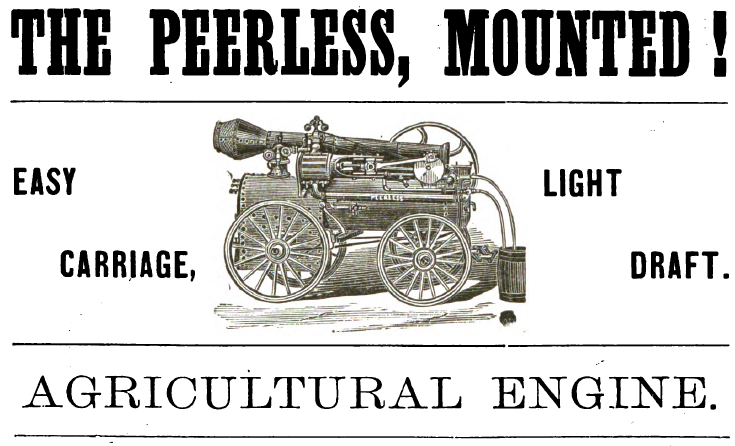
after slavery ended, Virginia farmers sought new technology to reduce the need for farm labor
Source: The Chesapeake & Ohio Railway Directory, Containing an Illustrated History and Description of the Road (p.119)


