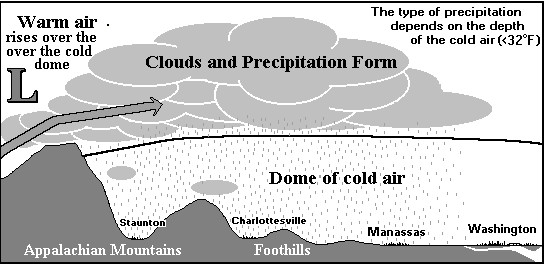
the height of a cold air mass east of the Blue Ridge can determine if the Piedmont will experience snow or sleet
Source: National Weather Service, Mid-Atlantic Winters
the height of a cold air mass east of the Blue Ridge can determine if the Piedmont will experience snow or sleet
Source: National Weather Service, Mid-Atlantic Winters
When temperatures drop below freezing, water droplets transform into ice in the atmosphere. Nucleation is facilitated by microbes (primarily bacteria and fungal spores) at temperatures above -7°F. Inorganic dust particles can stimulate formation of ice particlres below that temperature.
Frozen precipitation can fall to the ground in the form of hail or snow. Snow is an insulator filled with air. It typically melts slowly, so it dores not flow as quicly into nearby streams as rain. Because it melts slower, snow recharges groundwater more than the same amount of precipitation that falls as rain.
As the climate gets warmer, denser snowflakes are forming in the atmosphere. Dense snowflakes fall faster, creating heavier-than-average snowstorms.
Snowflakes are famously unique. Some are flat plates with arms that look like tree branches, "dendritic" in shape. Others are shaped like columns, sometimes with attachments on the ends that resemble weightlifting bar-bells. Flakes shaped like needles produce the powdery snow beloved by skiers. Most flakes, however, are irregular shapes created as 100,000 tiny droplets of water freeze onto a crystal over 30-45 minutes.
Northeasters bring moisture from the Atlantic Ocean as easterly winds move from the relatively warm water across the cold land in Eastern Virginia. The temperature change can trigger large snowfalls that impact Hampton Roads while Fall Line cities receive only a dusting.
Moist air can also move up from the Gulf of Mexico and the Blue Ridge can block air masses on the west side. When cold air is trapped on the east side and warm air is pushed from the west side across the mountains, rainfall dropping through the cold air freezes as it falls to the ground. If the cold air mass is thick enough, the precipitation reaches the ground east of the Blue Ridge as snow. A thinner air mass produces sleet and ice storms.
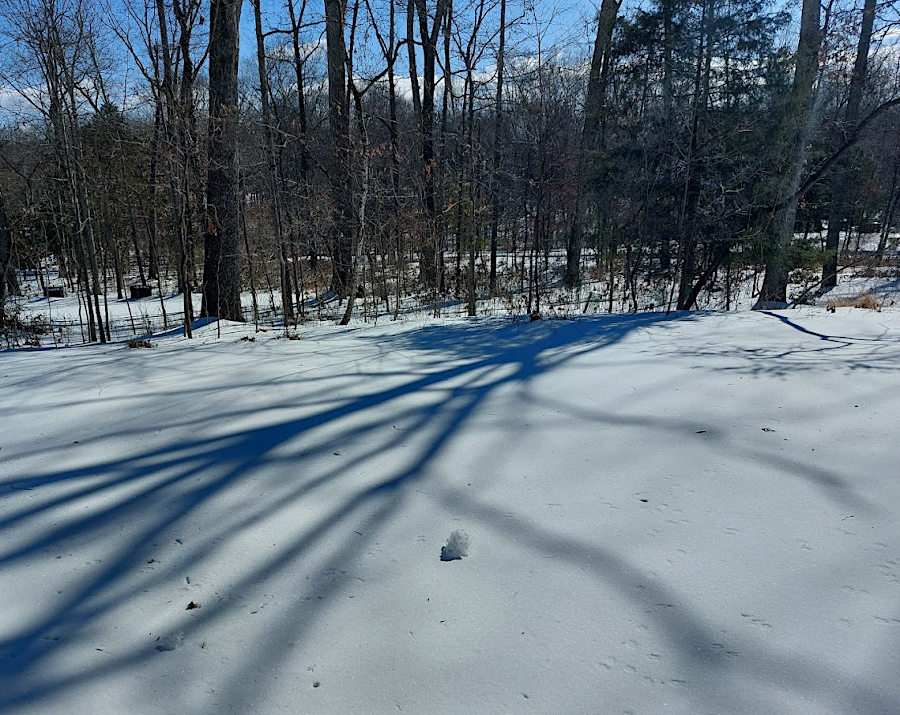
snow blankets the ground, making it harder for birds to find food
The distinctive crystal shapes of snowflakes are determined by the unique path each frozen water molecule takes before reaching the ground:1
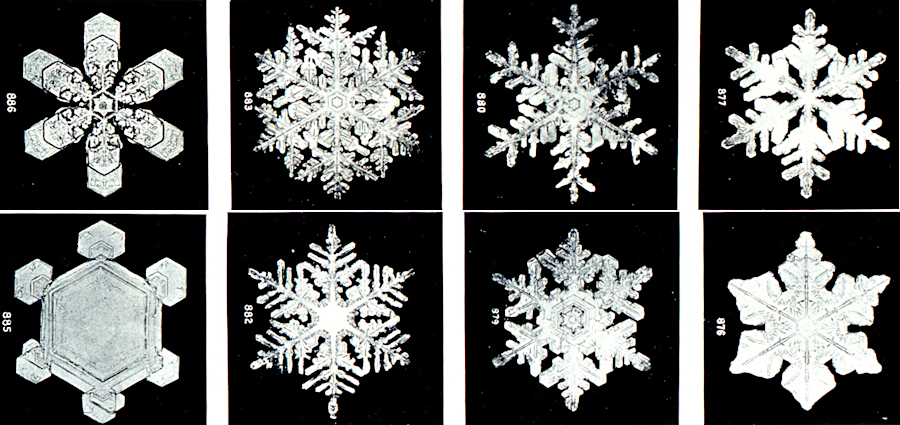
unique paths through temperature and humidity conditions result in unique shapes of snowflake crystals
Source: National Oceanic and Atmospheric Administration (NOAA), How do snowflakes form? Get the science behind snow
The shapes of the flakes created by artificial snow-making machines have a different character:2
The upper reaches of mountains in Virginia are colder than valley floors, the Piedmont, or the Coastal Plain. Precipitation at higher elevations can fall as snow, while lower the same clouds can generate raindrops hitting the ground.
Though Grayson County is known as the "roof of Virginia," the jurisdiction with the greatest annual snowfall is on the Appalachian Plateau. Between 1985-2015, the average snowfall in Wise County exceeded 52 inches annually.
On the planet, southern Chile receives the most snow. About 2,000 inches falls annually on the 10,000' high Andes Mountains, the first landmass encountered by the westward-flowing jet stream that gathers moisture as it crosses the Pacific Ocean. The snowiest location in North America is in Alaska. The Chugach Mountains there get around 1,250 inches annually.3
On state-maintained roads in counties (except Henrico and Arlington) and some towns, the Virginia Department of Transportation (VDOT) plows snow and also applies sand and deicing material of salty brine and occasionally beet juice (the sugars make salt stick to the roads). Independent cities are responsible for plowing snow from their roads.
The Virginia Department of Transportation prioritizes plowing first the primary roads (highways numbered 1-599, including interstate highways). Secondary roads, starting with Route 600 and higher numbers, are secondary priority for maintenance. Secondary roads providing access to emergency and public facilities, plus the roads with the most traffic, get plowed before low volume roads. Roads within subdivisions are plowed just enough to be "passable;" plows do not try to clear to bare pavement or open the road curb-to-curb.4
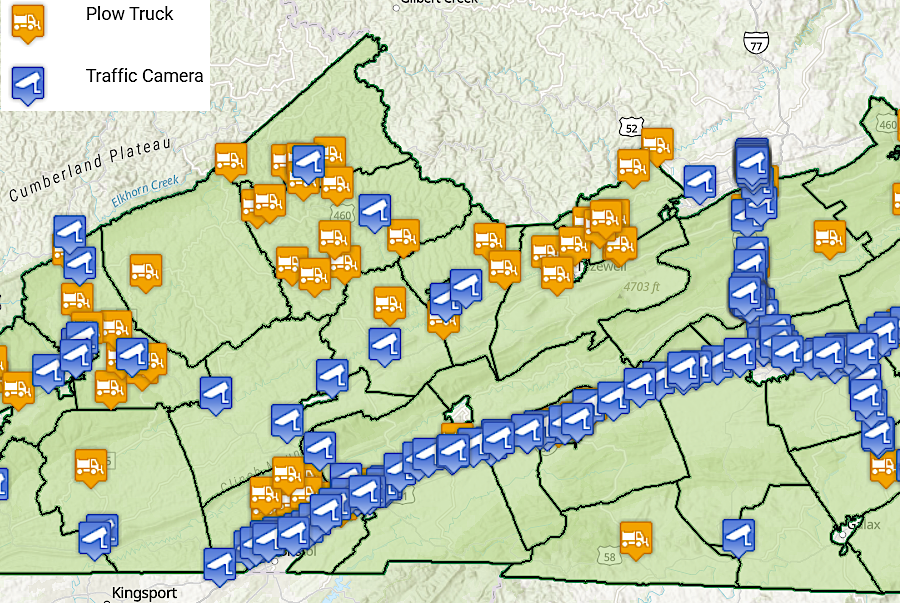
after clearing I-81 and I-77 (lined with cameras), VDOT snow plows were busy in Southwest Virginia on January 27, 2026
Source: Virginia Department of Transportation (VDOT), Plows
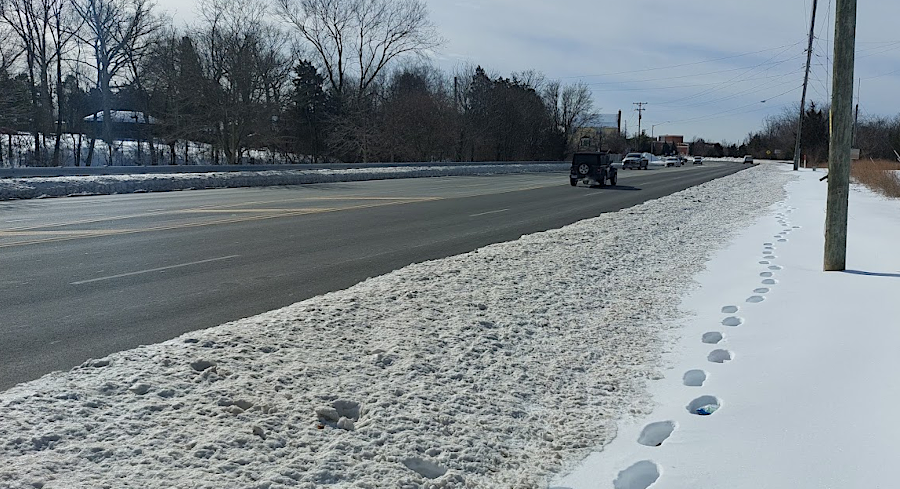
freezing temperatures following the January 24, 2026 snow created "snowcrete" that blocked sidewalks in Northern Virginia for two weeks
Virginia Beach gets snow, but not often enough to invest in snow-removal equipment that could clear it away quickly. The city estimates it would need to purchase 300 more trucks to plow snow from every neighborhood. Plowing is feasible only when snow reaches a depth of two inches, and Virginia Beach anticipates that a fleet of snowplows would sit idle for years between storms that required plowing the streets.
When the city did get a 13-inch snowfall in March 1980, the governor mobilized the National Guard. It cleared neighborhood roads, but in the process the equipment broke side mirrors off parked cars, cracked windshields, and created piles of snow that blocked driveways. Rather than repeat that experience, the city has a snow removal plan based on using its own equipment to plow primarily the major highways. The National Guard was not mobilized for the storm that dropped 13 inches of snow in February, 2025.5
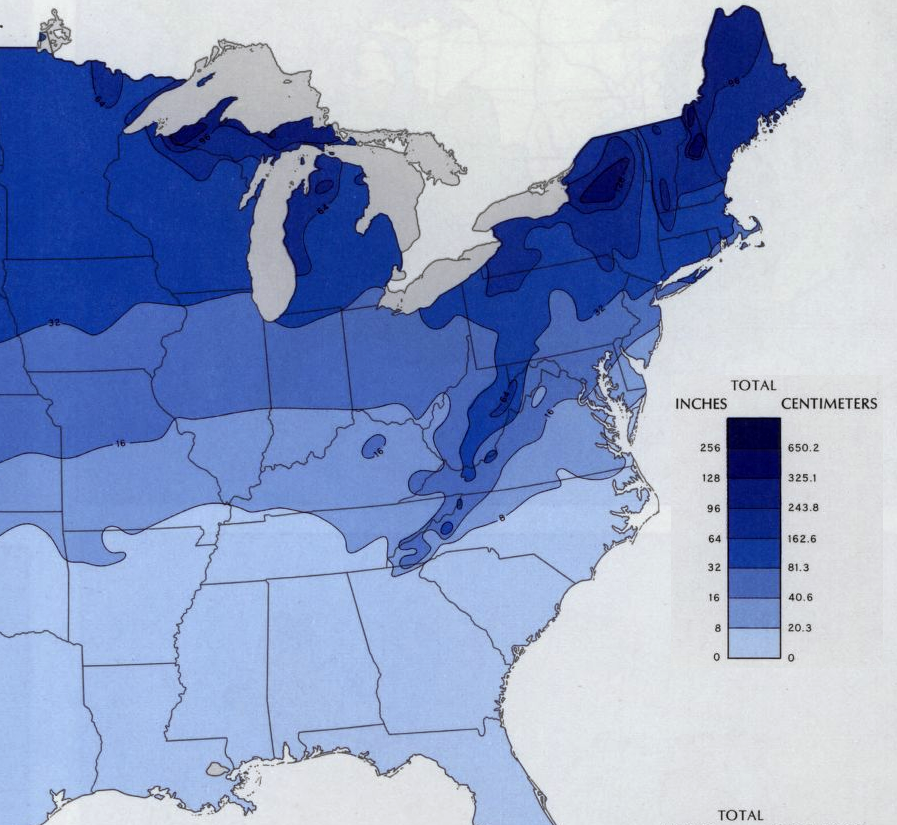

counties closer to the Atlantic Ocean get fewer inches and fewer days of snow each year
Source: Library of Congress, "The national atlas of the United States of America," Snowfall
Maximum snowfall in one day was over 36 inches at Round Hill in Loudoun County, in 2006. Only three other localities in Virginia have received over 30 inches of snow in one day since documentation of climate records began at the end of the 19th Century.
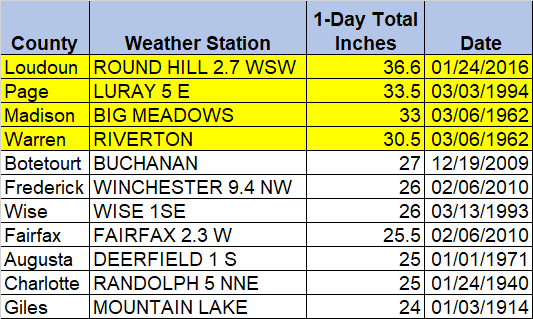
the record Virginia snowfall within one day was over three feet at a Loudoun County weather station in 2006
National Oceanic and Atmospheric Administration (NOAA), Snowfall Extremes
Most major snowstorms last two-three days. Big Meadows in Madison County holds the Virginia record for receiving the most snow over a three-day period. In the Blizzard of 1996 (January 6-8, 1996), 49" of snow fell.
Only two other places in Virginia have experienced over 40 inches of snow since documentation of climate records began at the end of the 19th Century. Those were Luray in Page County in 1994, and Riverton in Warren County in 1962 also received over 30" of snow in just one day.6
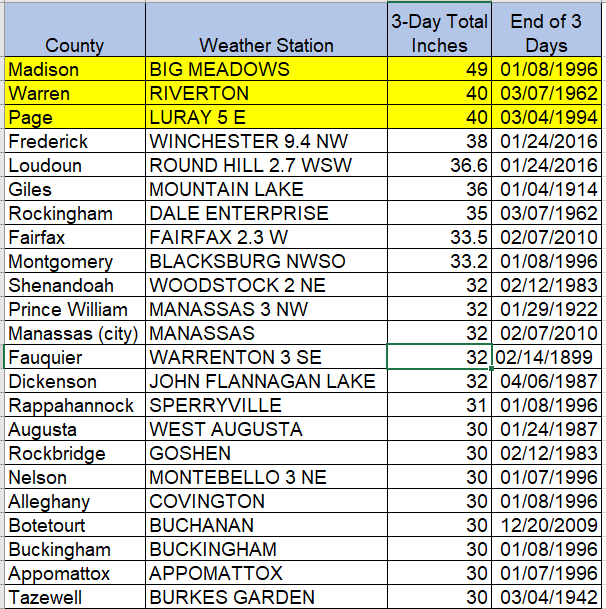
only Madison, Warren and Page counties have experienced three-day snowfalls exceeding 40 inches
National Oceanic and Atmospheric Administration (NOAA), Snowfall Extremes
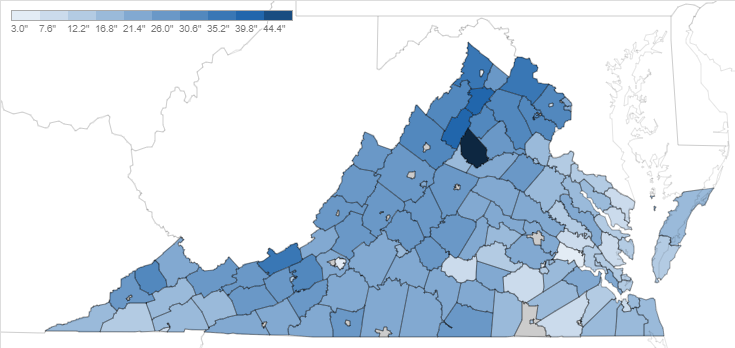
three-day snowfalls in the Coastal Plain are less than west of the Fall Line
National Oceanic and Atmospheric Administration (NOAA), Snowfall Extremes
The Great Storm of 1857, a January blizzard known for decades in Central Virginia as "Cox's Snow," trapped Dr. Joseph Cox on the ride home in his buggy. He was traveling back to his Clover Hill plantation in Chesterfield County after seeing a patient in Peterburg. Dr. Cox was 700 yards away from the house when the buggy was trapped in a snowdrift 7' high and he froze to death.
When the Works Progress Administration (WPA) collected folklore in the 1930's, two formerly enslaved women suggested that Dr. Cox had been drinking while on the buggy ride home. One person said he was found the next day sitting up in the buggy, holding the reins in his hands with a frozen horse still in harness. The other said that his daughter and enslaved workers inside the house had heard someone calling from outside that evening, but chose to go upstairs to bed rather than venture outside in the storm. The next day the horse came to the barn with an empty buggy and Dr. Cox was found "stiff in de snow."
Dr. Cox was considered to be a mean slaveowner, and one person told the Works Progress Administration that his death was God meting out justice. According to one recollection in the 1930's:7
The Knickerbocker Storm on January 28, 1922 dropped 19" in Richmond and 28" in Washington, DC. The snow collapsed of the roof of the Knickerbocker Theater in Washington, killing 98 people and resulting in upgraded building codes.8
The Blizzard of 1996 from January 6-8, 1996 shut down nearly all movement in Northern Virginia during the Saturday-Monday when snow fell. closing many schools and facilities for a week. The storm ranked as a "5" on the Northeast Snowfall Impact Scale.. At Dulles International Airport, 24.6 inches were recorded.
After a cold week, the snow melted rapidly on just one warm day. The resulting flood is counted as #6 on the list of major floods at Great Falls.9
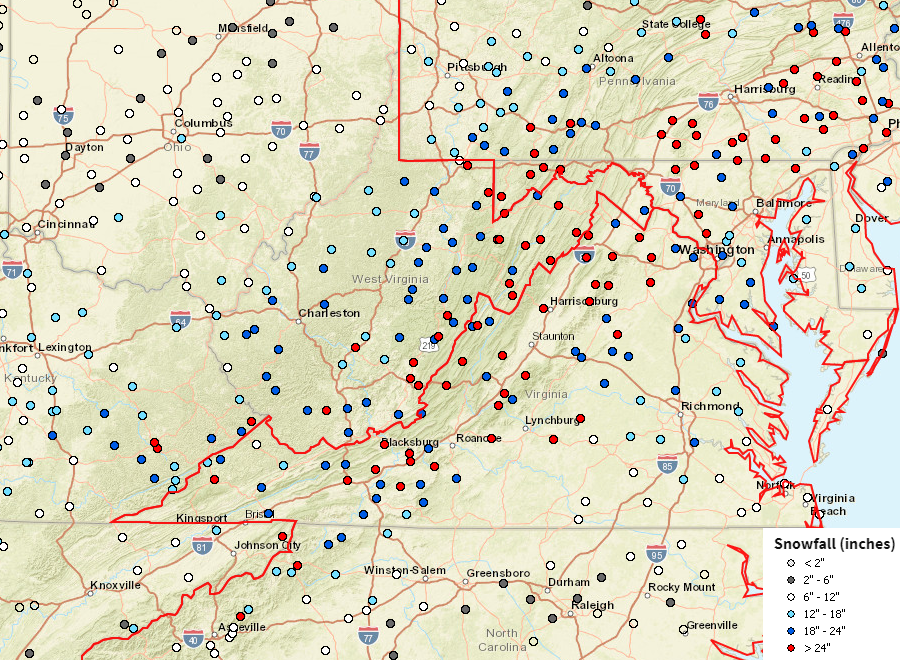
the three-day Blizzard of 1996 (January 6-8, 1996) dropped over two feet of snow in many Virginia locations
National Oceanic and Atmospheric Administration (NOAA), Regional Snowfall Index (RSI) Map
The Snowmageddon event on February 5-6, 2010 also paralyzed Northern Virginia. At Dulles, 32.4" of snow fell. A year later, one resident shared the worst memory of the experience:10
In January 2022, a tractor-trailer accident during a 12" snowfall congealed traffic on I-95 between Richmond and Washington. Senator Tim Kaine was trapped in his car near Fredericksburg for 27 hours. For nourishment he had only two cups of coffee and a Dr Pepper, but said later:11
Those snowstorms may pale in comparison to the Washington-Jefferson snowstorm on January 26-28, 1772. The event, before the start of reliable modern records by the War Department in 1870, was documented by Thomas Jefferson and George Washington.
Thomas Jefferson and his new bride Martha ("Patty") had to struggle through the snow to get from their wedding site in Charles City County to Monticello. The honeymoon was spent in the South Pavillion, a square cottage just 18' in each direction. Martha Jefferson had her first child nine months later.
Jefferson wrote in his Garden Book on January 26, 1772 that the deepest snow ever seen in Albemarle County had reached three feet deep.

Thomas Jefferson recorded the depth of the 1772 blizzard, almost three feet, in his Garden Book
Massachusetts Historical Society, Thomas Jefferson's Garden Book, 1766-1824
At Mount Vernon, Washington recorded that the snow began on the evening of the 26th. By the 29th, he also estimated the snow to be three feet deep.12
Source: Thomas Jefferson's Monticello, Thomas Jefferson on the Winter of 1772
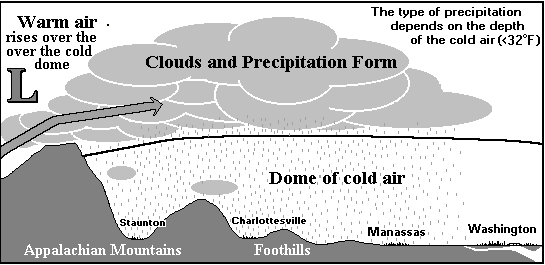
sleet occurs in Northern Virginia when rain falls through a shallow mass of cold air blocked from moving west by the Blue Ridge
National Weather Service, Mid Atlantic Winters
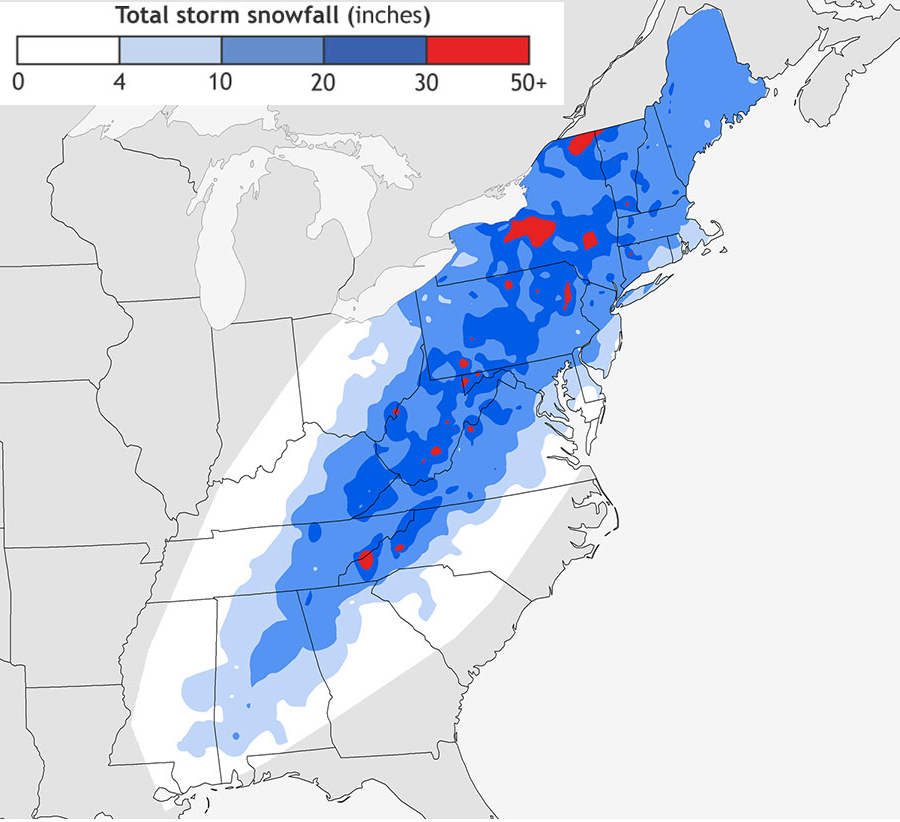
the 1993 "Storm of the Century" affected the western half of Virginia primarily
National Oceanic and Atmospheric Administration (NOAA), On This Day: The 1993 Storm of the Century
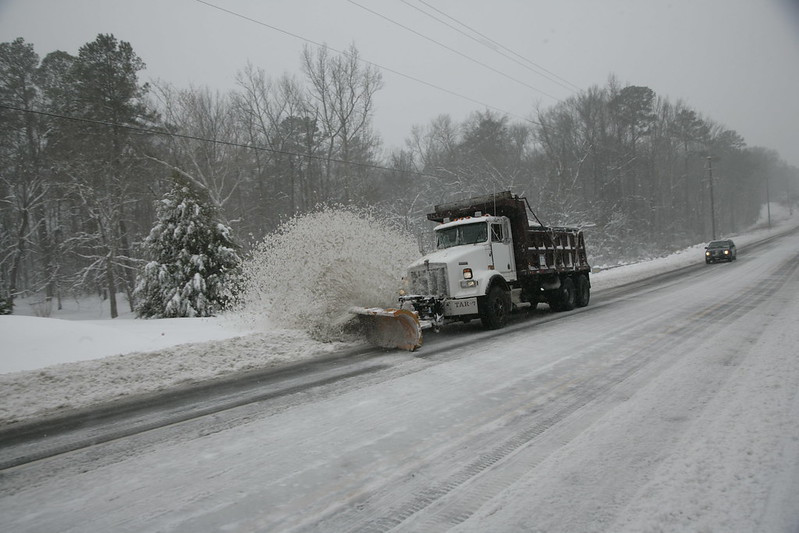
the Virginia Department of Highways plows snow from public roads in all counties except Henrico and Arlington
Source: Virginia Department of Transportation, Blizzard of '09
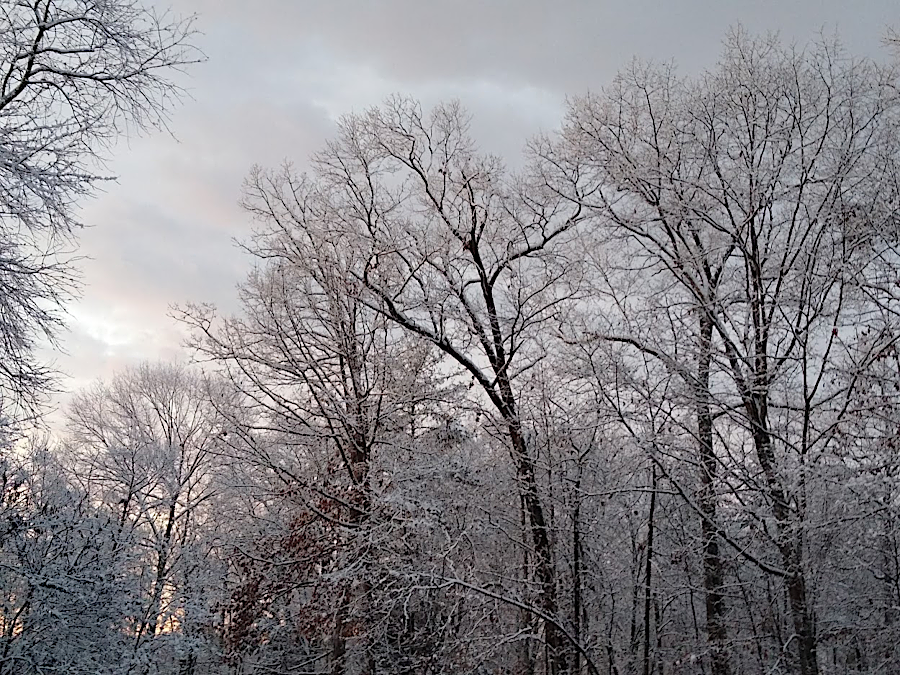
snow melts slowly, recharging groundwater aquifers
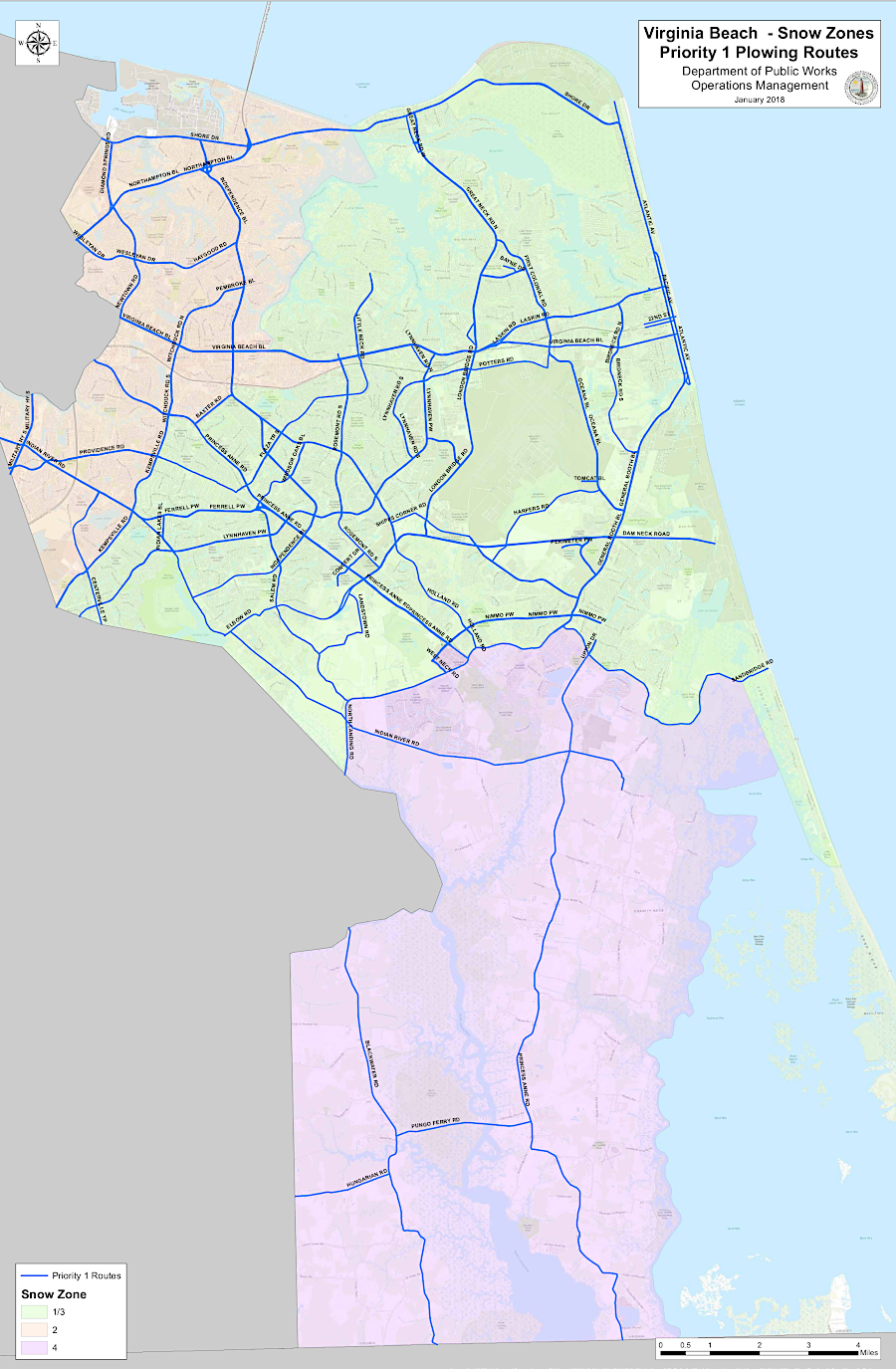
Virginia Beach's snow removal plan focuses on plowing major routes, not neighborhood roads
Source: City of Virginia Beach, Citywide Priority 1 Plowing Routes
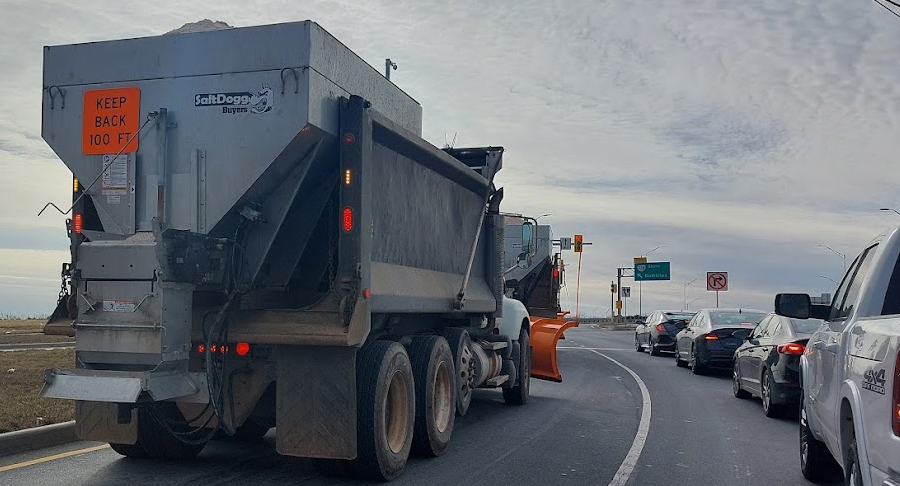
Virginia Department of Transportation (VDOT) applies salt and clears snow from state-maintained highways
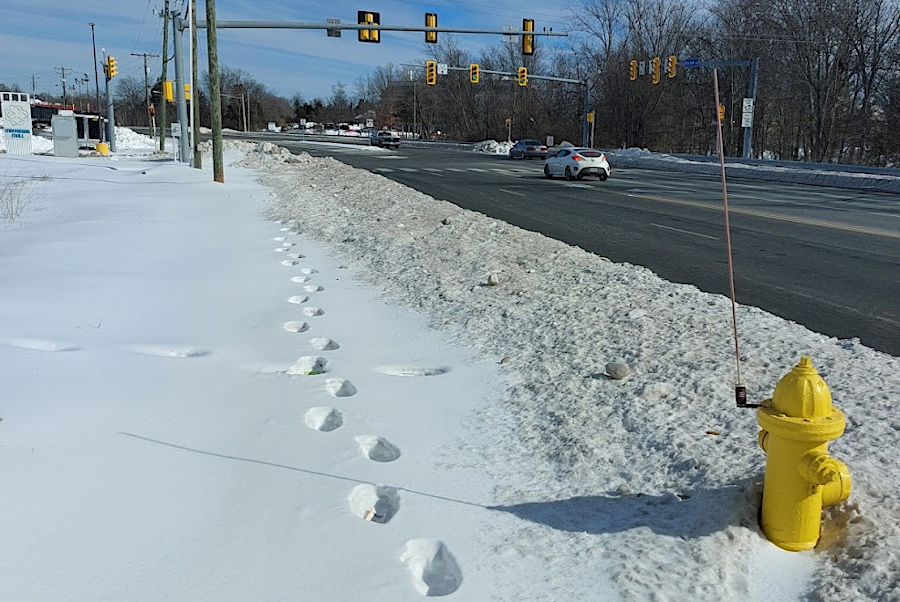
Virginia Department of Transportation (VDOT) does not clear snow from sidewalks and shared use paths